
Loose Gemstones: Expert Guide to Quality & Value
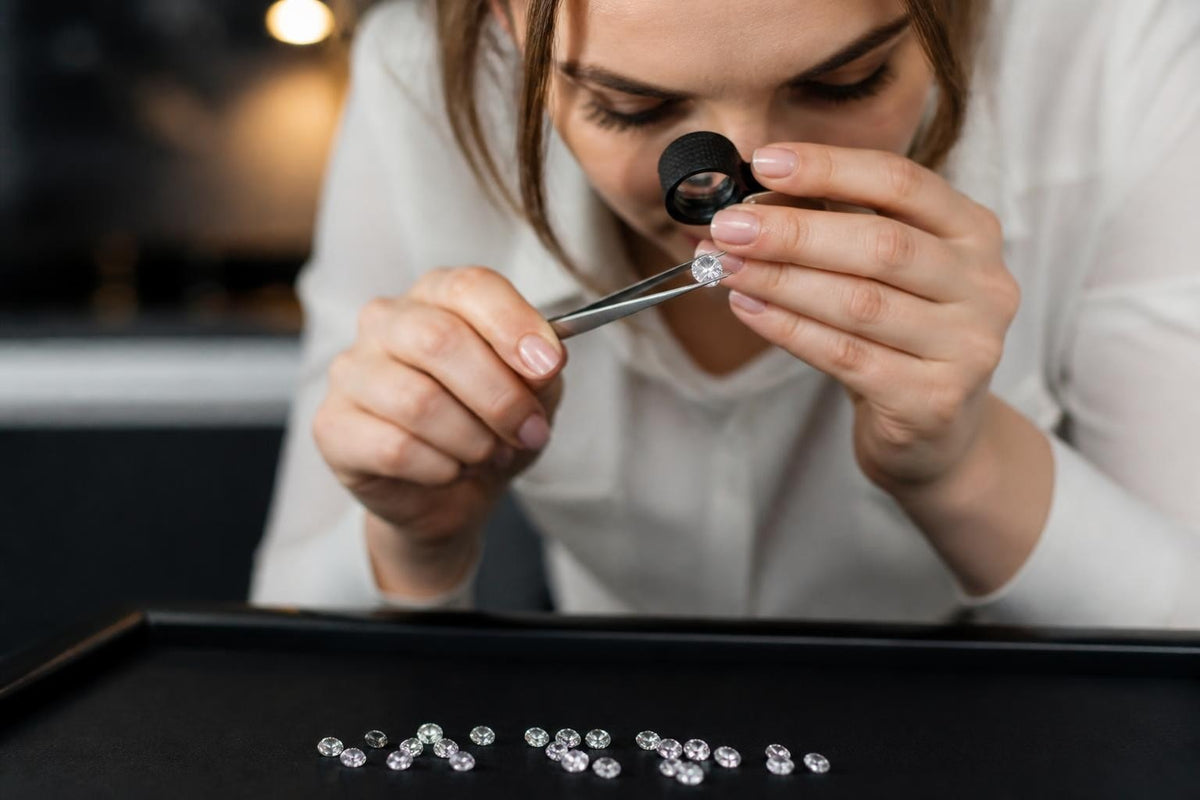
The world of loose gemstones represents a fascinating intersection of natural wonder, scientific precision, and artistic possibility. Unlike finished jewelry pieces, loose gemstones offer collectors and jewelry enthusiasts the opportunity to examine pure quality without the influence of setting or design. These unmounted treasures provide complete transparency in evaluation, allowing you to assess every facet, inclusion, and color nuance before making a commitment. Whether you're creating a custom engagement ring, building an investment portfolio, or simply appreciating nature's artistry, understanding loose gemstones is essential for making informed decisions in the fine jewelry market.
Understanding the Fundamentals of Loose Gemstones
Loose gemstones are precious or semi-precious minerals that have been cut, faceted, and polished but remain unmounted in jewelry settings. This form allows for comprehensive evaluation and versatile application in custom jewelry creation.
The definition and classification of gemstones encompasses minerals, rocks, and organic materials that possess beauty, durability, and rarity. Diamonds, rubies, sapphires, and emeralds constitute the traditional "precious" category, while hundreds of other varieties fall into the semi-precious classification, though this terminology is becoming outdated as many previously overlooked stones command premium prices in 2026.
Why Collectors Choose Unmounted Stones
The unmounted format offers distinct advantages for discerning buyers:
- Complete visibility of the entire stone from all angles
- Accurate weight measurement without metal interference
- Precise color assessment under controlled lighting conditions
- Detailed clarity evaluation using magnification
- Flexibility for custom design projects
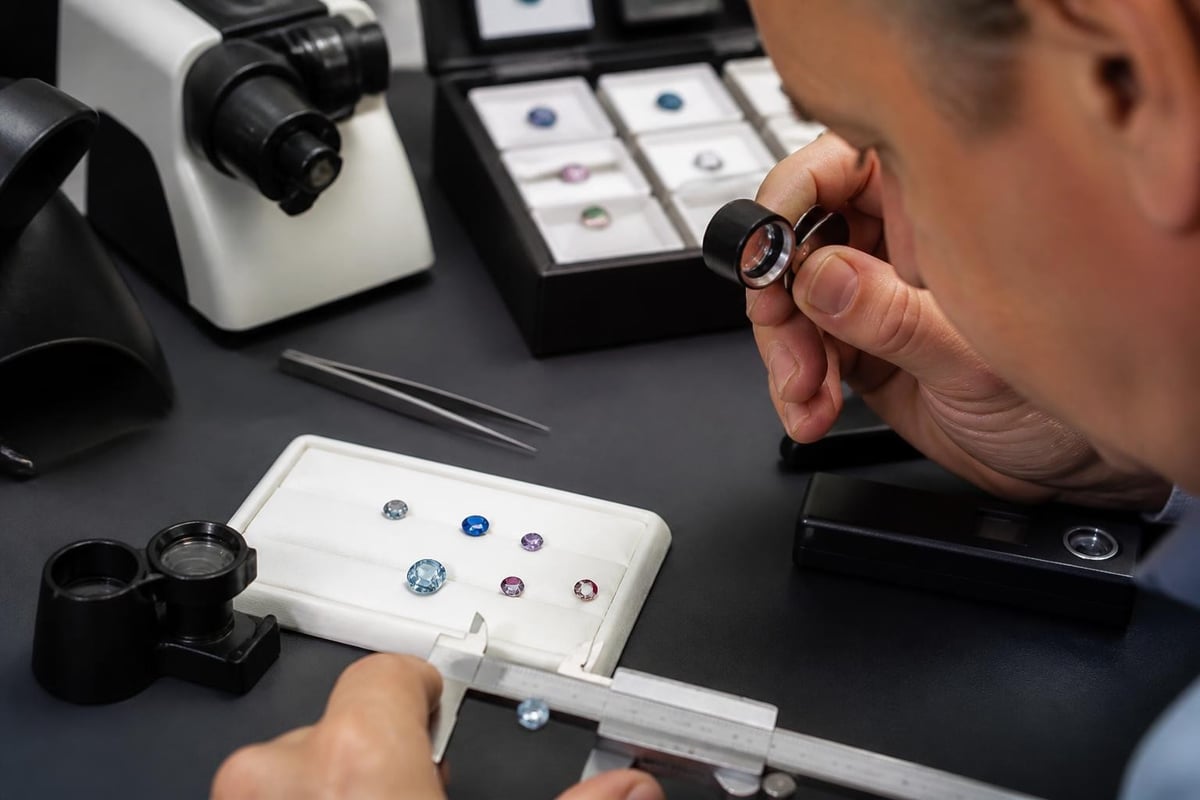
Professional collectors and jewelry designers consistently prefer working with loose precious stones because the absence of a setting eliminates visual distractions. This transparency ensures that the stone's inherent qualities, rather than clever metalwork or design elements, justify the investment.
The Four Cs: Evaluating Quality and Value
Quality assessment for loose gemstones follows established criteria that determine both beauty and market value. While the "Four Cs" originated with diamond grading, these principles apply universally across gemstone varieties.
Cut: Precision and Light Performance
Cut refers to proportions, symmetry, and polish quality rather than shape. A well-executed cut maximizes brilliance, fire, and scintillation. Master cutters calculate precise angles to optimize light return, creating the visual impact that distinguishes exceptional stones from merely adequate specimens.
Poor cutting wastes potential and diminishes value significantly. Even high-quality rough material performs poorly when proportions fall outside ideal ranges. Modern cutting technology in 2026 enables unprecedented precision, yet handcrafted stones from experienced artisans often exhibit superior character.
Color: Saturation, Tone, and Hue
Color evaluation involves three components:
- Hue - the basic color (red, blue, green, etc.)
- Saturation - the intensity or purity of color
- Tone - the lightness or darkness
| Quality Level | Saturation | Tone | Value Impact |
|---|---|---|---|
| Exceptional | Vivid | Medium | Premium pricing |
| Fine | Strong | Medium-dark | Above average |
| Commercial | Moderate | Light-medium | Standard market |
| Low | Weak | Very light/dark | Discounted |
The most valuable colored stones typically exhibit vivid saturation with medium tone, allowing maximum color intensity without appearing too dark or washed out. Natural certified loose gemstones require careful examination under standardized lighting to accurately assess these characteristics.
Clarity: Inclusions and Transparency
Clarity grades reflect the quantity, size, position, and visibility of internal characteristics (inclusions) and external features (blemishes). Unlike diamonds, where flawless stones exist in commercial quantities, many colored gemstone varieties form with characteristic inclusions.
Emeralds almost universally contain visible inclusions, making eye-clean specimens extraordinarily valuable. Rubies and sapphires from certain origins display distinctive inclusion patterns that actually verify authenticity and geographic source.
Carat Weight: Size and Density Considerations
Carat weight measures mass, with one carat equaling 200 milligrams. However, different gemstone species possess varying densities, meaning a one-carat ruby appears smaller than a one-carat emerald of comparable cut.
Price progression accelerates at certain weight thresholds. A two-carat sapphire doesn't simply cost twice as much as a one-carat stone of equivalent quality; premium pricing applies because larger high-quality stones are exponentially rarer.
Certification and Authentication
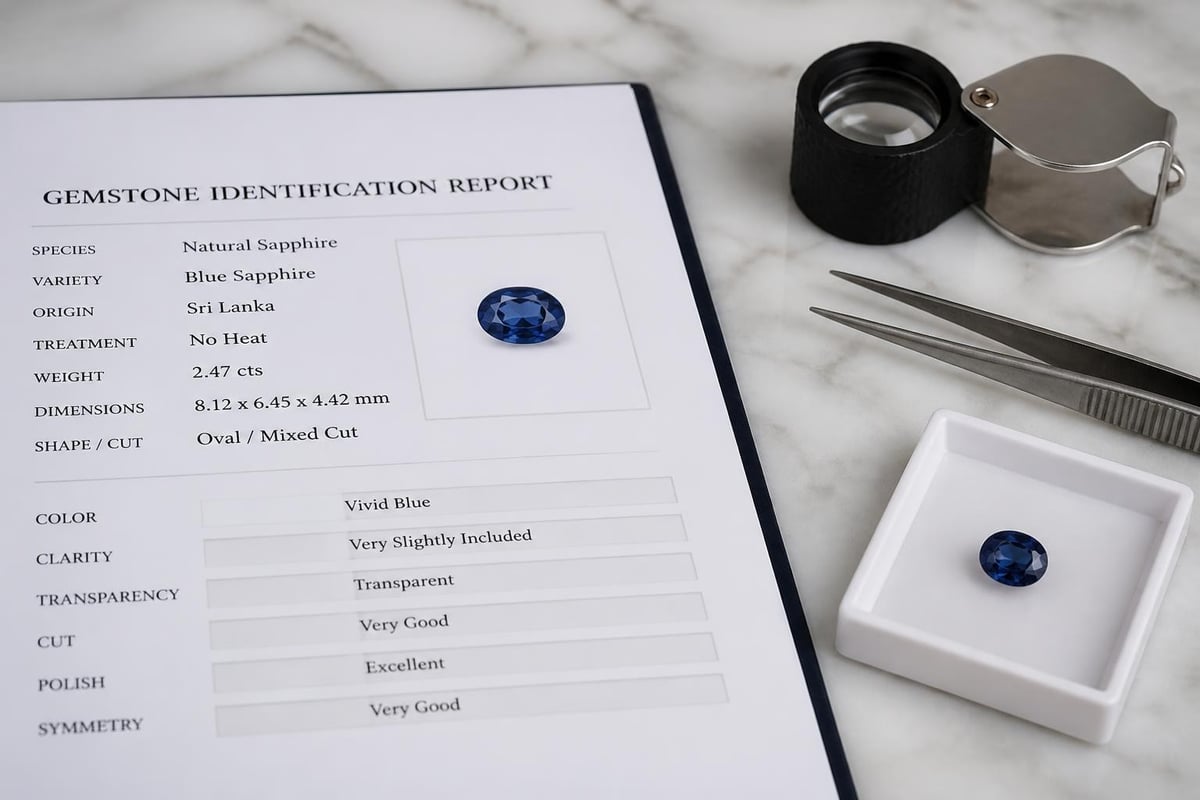
Professional certification provides essential protection when purchasing loose gemstones. Independent gemological laboratories verify authenticity, identify treatments, and document quality characteristics through scientific testing.
Major Certification Laboratories
Reputable institutions include:
- Gemological Institute of America (GIA) - Industry standard for diamond and colored stone reports
- American Gemological Laboratories (AGL) - Specialists in colored gemstone analysis
- Swiss Gemological Institute (SSEF) - Renowned for colored stone expertise
- Gübelin Gem Lab - Premium certification with detailed origin reports
Each laboratory employs advanced spectroscopic equipment, microscopy, and chemical analysis to determine natural versus synthetic origin, identify treatments, and when possible, establish geographic provenance.
Understanding Treatment Disclosure
Modern gemology recognizes numerous enhancement methods:
- Heat treatment - enhances color and clarity in sapphires, rubies, and many species
- Oil/resin filling - improves emerald appearance by filling surface-reaching fractures
- Irradiation - creates or intensifies color in topaz, diamonds, and other varieties
- Diffusion - introduces color-causing elements into the surface layer
Treatment disclosure dramatically affects value. Unheated sapphires command significant premiums over heat-treated counterparts of similar appearance. Complete transparency about enhancements protects buyers and maintains market integrity.
Sourcing and Purchasing Strategies
Multiple channels exist for acquiring loose gemstones, each offering distinct advantages and considerations for collectors building their acquisitions.
Established Fine Jewelry Houses
Purchasing through reputable jewelers like La Maison Val D'or's curated collection provides several benefits. Established houses maintain long-term supplier relationships, ensuring consistent quality and ethical sourcing. They also offer expertise in matching stones to specific design requirements and provide authenticity guarantees backed by their reputation.
Premium jewelers typically stock certified stones with complete documentation, eliminating guesswork about treatments or origins. Their selection process filters out problematic material before it reaches clients.
Direct Mining Company Sales
Some collectors establish relationships directly with mining operations or cutting houses. This approach potentially reduces costs by eliminating intermediaries but requires substantial gemological expertise to evaluate quality independently.
Online Marketplaces and Auction Platforms
Digital commerce expanded significantly in 2026, with sophisticated photography and video documentation enabling remote evaluation. However, purchasing unseen stones carries inherent risks despite technological improvements. Professional certification becomes absolutely critical in online transactions.
Investment Considerations and Market Trends
Loose gemstones function as alternative investments, though market dynamics differ substantially from traditional securities. Rarity, quality, and provenance drive long-term value appreciation.
Factors Influencing Gemstone Investment Value
| Factor | Impact on Value | Considerations |
|---|---|---|
| Rarity | Very High | Limited supply from depleted mines |
| Quality | Very High | Top grades exponentially more valuable |
| Size | High | Large fine stones increasingly scarce |
| Origin | Moderate-High | Kashmir, Burma, Colombia command premiums |
| Treatment status | High | Unheated/untreated preferred |
| Market trends | Moderate | Fashion influences demand cycles |
Colored diamond values particularly appreciated in recent years, with rare hues like pink, blue, and green achieving record auction prices. Traditional precious stones from historically significant sources maintain strong demand among serious collectors.
Portfolio Diversification Through Gemstones
Financial advisors increasingly recognize tangible assets as portfolio stabilizers. Loose gemstones offer:
- Portability and compact storage
- Privacy in ownership
- No ongoing maintenance costs
- Inflation hedge characteristics
- Emotional enjoyment beyond financial return
However, liquidity limitations and the specialized knowledge required for optimal buying and selling timing make gemstones suitable primarily for long-term holdings rather than short-term trading.
Custom Jewelry Design Applications
The primary advantage of purchasing loose gemstones lies in unlimited design flexibility. Working with unmounted stones enables creation of truly personalized pieces that reflect individual style and preferences.
Collaboration with Master Jewelers
Successful custom projects require close collaboration between client, gemstone, and jeweler. The process typically unfolds through several stages:
- Stone selection based on design concept and budget
- Design consultation to create complementary settings
- Metal choice considering color harmony and durability
- Setting technique to secure and showcase the gemstone
- Craftsmanship execution by skilled bench jewelers
Experienced jewelers like those at La Maison Val D'or understand how different setting styles affect gemstone appearance. Prong settings maximize light entry, while bezel settings offer superior protection for softer stones. Halo designs amplify visual impact, while solitaires showcase the center stone without distraction.
Matching Stones for Symmetrical Designs
Creating coordinated jewelry sets requires exceptional matching skills. Paired earrings demand stones of virtually identical color, size, and quality. Multi-stone bracelets and necklaces require carefully graduated or perfectly matched suites.
Professional dealers maintain extensive inventory to facilitate matching, though assembling ideal sets can require months or years for rare varieties. The challenge of matching explains why completed suites often command premiums beyond the sum of individual stone values.
Care, Storage, and Maintenance
Proper handling preserves loose gemstones and maintains their value over generations. Different species require specific care protocols based on their physical properties.
Hardness and Durability Factors
The Mohs hardness scale ranks scratch resistance from 1 (talc) to 10 (diamond). Diamonds, rubies, and sapphires rate 9-10, making them suitable for daily wear in any jewelry application. Emeralds despite being precious stones, rate only 7.5-8 and exhibit brittleness due to typical inclusions.
Softer stones like opals (5.5-6.5) and pearls (2.5-4.5) require protective settings and careful handling to prevent damage. Storage should isolate stones to prevent harder materials from scratching softer ones.
Professional Cleaning and Inspection
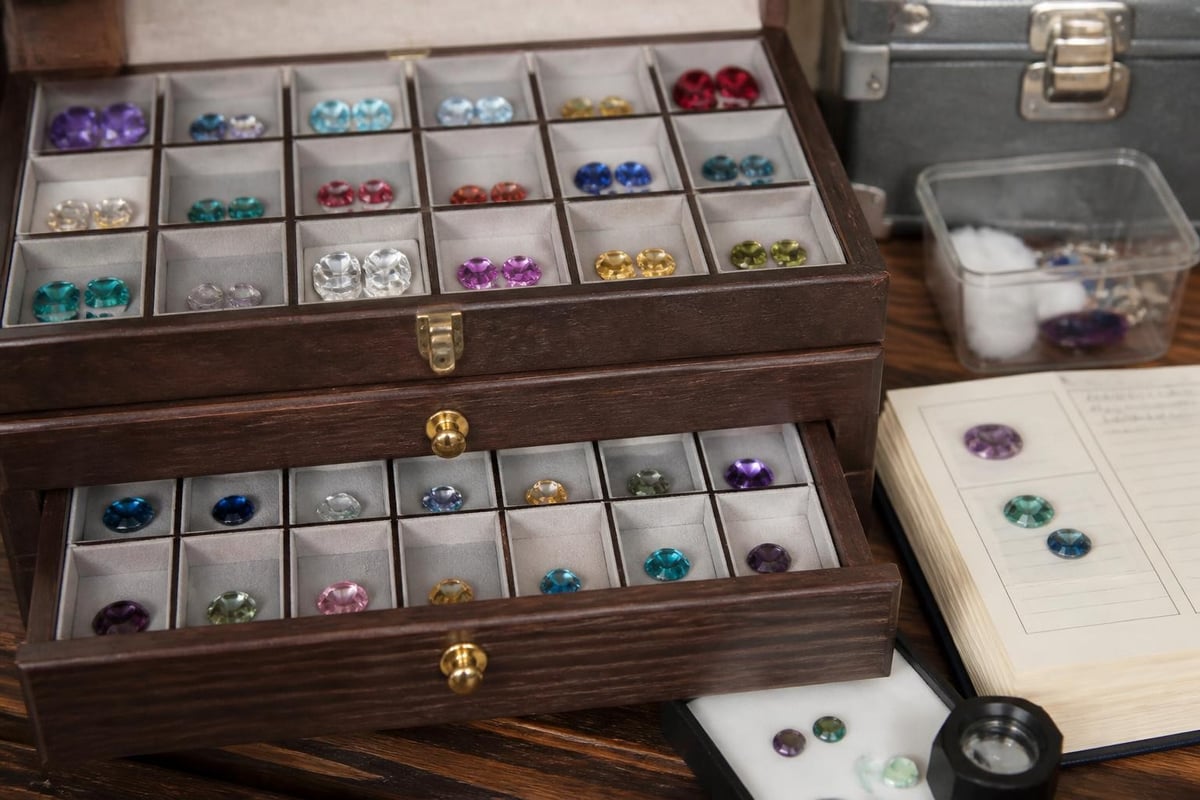
- Store each stone separately in soft pouches or compartmented boxes
- Avoid ultrasonic cleaners for emeralds, opals, and organic gems
- Schedule annual professional inspections for high-value stones
- Document condition with detailed photographs
- Maintain certification paperwork in secure locations
Environmental factors also affect certain gemstones. Opals can crack or craze in extreme dryness. Kunzite and topaz may fade with prolonged sun exposure. Understanding species-specific vulnerabilities protects your investment.
Ethical Sourcing and Sustainability
Conscientious collectors in 2026 increasingly prioritize ethical sourcing, seeking stones extracted and processed under fair labor conditions with minimal environmental impact.
Traceability and Chain of Custody
Modern supply chain transparency enables tracking from mine to market. Blockchain technology and digital documentation systems record each transaction, establishing provenance and ensuring conflict-free sourcing.
Responsible dealers provide detailed origin information and support artisanal mining communities through fair pricing. La Maison Val D'or's collections exemplify commitment to ethical standards, sourcing exclusively from verified suppliers who maintain comprehensive social and environmental protocols.
Laboratory-Grown Alternatives
Synthetic gemstones created through controlled laboratory processes offer ethical and environmental advantages. Modern techniques produce chemically and optically identical stones at lower costs, though natural origin still commands premiums in the collector market.
Full disclosure distinguishes ethical synthetic sales from fraudulent misrepresentation. Legitimate dealers clearly identify laboratory origin, allowing consumers to make informed choices based on personal priorities.
Market Outlook and Future Trends
The loose gemstone market continues evolving in response to technological advancement, changing consumer preferences, and global economic conditions.
Technology Integration
Advanced imaging techniques enhance remote evaluation capabilities, while artificial intelligence assists in quality assessment and pricing. Research in automated gemstone classification demonstrates machine learning's growing role in gemological analysis.
Multiphoton microscopy for detailed gemstone imaging provides unprecedented insights into internal structures, potentially revolutionizing clarity grading and treatment detection.
Emerging Market Dynamics
Several trends shape the 2026 marketplace:
- Increased demand for rare colored diamonds and unique varieties
- Growing appreciation for previously overlooked species like spinel and tsavorite garnet
- Sustainable sourcing becoming a primary purchasing criterion
- Customization preference driving loose stone sales over ready-made jewelry
- Digital marketplaces expanding access to global inventory
Younger collectors demonstrate particular interest in stones with distinctive character rather than traditional flawless perfection, valuing individuality and natural beauty over standardized criteria.
Building Your Collection
Whether acquiring stones for investment, custom jewelry creation, or pure appreciation, strategic collection building requires patience, education, and disciplined decision-making.
Establishing Collection Parameters
Define clear objectives before beginning acquisitions:
- Budget allocation across different quality tiers
- Species focus versus diversified holdings
- Size preferences balancing rarity with wearability
- Quality standards matching your expertise level
- Time horizon for holding period expectations
Specialized collections focused on specific varieties, origins, or characteristics often appreciate more consistently than scattered acquisitions. Deep knowledge in narrow categories provides competitive advantage in identifying value opportunities.
Continuing Education Resources
Serious collectors invest in ongoing education through gemological courses, industry publications, and museum exhibitions. Hands-on experience examining thousands of stones develops the subtle discrimination that separates exceptional quality from merely good material.
Professional memberships in organizations like the Gemological Institute of America Alumni Association provide networking opportunities and access to expert knowledge. Attending gem shows and trade events exposes collectors to breadth of material unavailable through retail channels.
Understanding loose gemstones requires combining scientific knowledge with aesthetic appreciation, evaluating both measurable characteristics and intangible beauty. Whether you're selecting a centerpiece for custom rings or building an investment collection, the principles of quality assessment, certification verification, and ethical sourcing ensure confident purchasing decisions. La Maison Val D'or's expertise in curating exceptional loose gemstones and transforming them into timeless jewelry provides the guidance and quality assurance that discerning collectors deserve-explore their carefully selected collection to begin your journey with confidence.