
Understanding the diamond loose price landscape requires more than a cursory knowledge of gemstone characteristics. For collectors and connoisseurs seeking investment-quality stones, the pricing mechanisms governing loose diamonds represent a complex interplay of measurable attributes, market dynamics, and certification standards. In 2026, the market continues to evolve with increased transparency and sophisticated valuation methodologies that empower informed purchasing decisions.
The Foundation of Diamond Pricing: The 4Cs Framework
The diamond loose price begins with four fundamental characteristics that have shaped valuation for decades. Carat weight, cut quality, color grade, and clarity grade form the baseline for every pricing conversation, though their relative importance shifts based on market preferences and individual stone characteristics.
Carat Weight and Price Progression
Carat weight serves as the most immediately recognizable factor in diamond valuation. However, the relationship between weight and diamond loose price follows a non-linear progression that surprises many first-time buyers.
- Prices increase exponentially at certain weight thresholds
- A 0.99-carat diamond costs significantly less than a 1.00-carat stone of identical quality
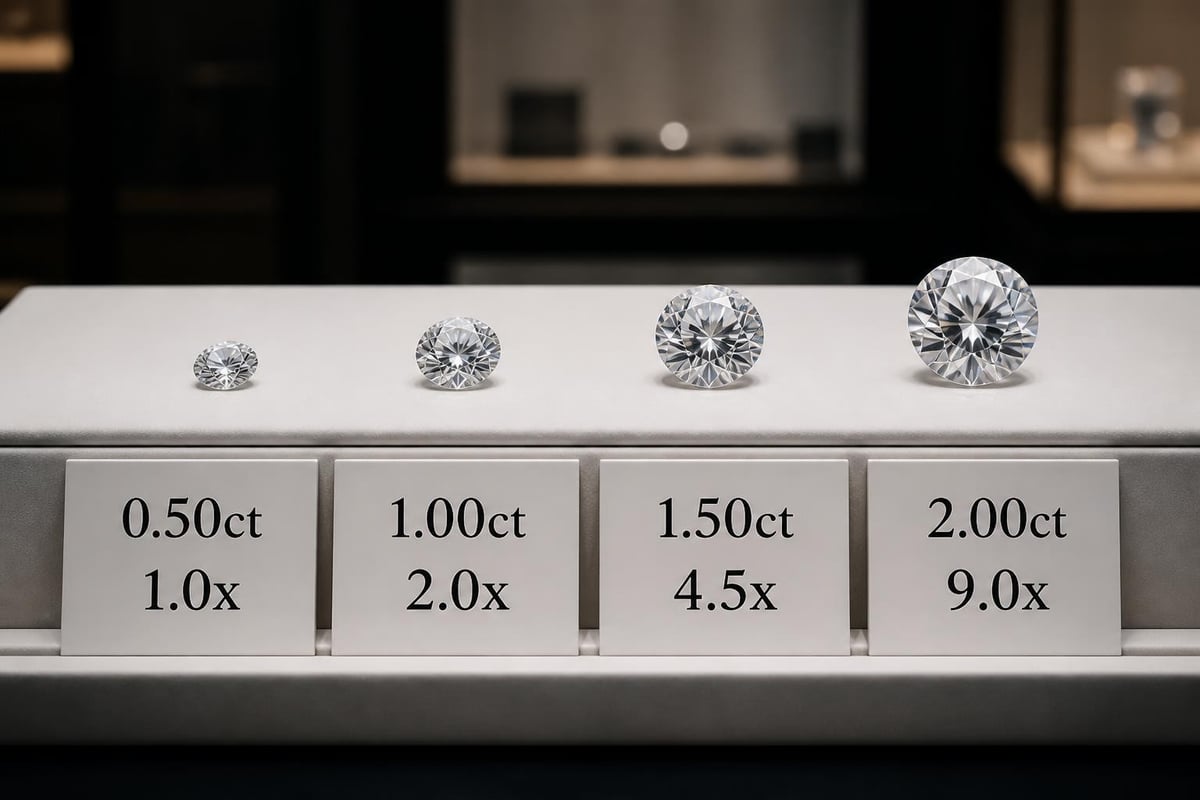
- Half-carat increments (0.50, 1.00, 1.50, 2.00) represent psychological pricing barriers
- Larger stones command premium pricing due to rarity
The comprehensive guide to loose diamond pricing factors demonstrates how subtle weight differences create substantial price variations. Strategic buyers often target stones just below major weight thresholds to maximize value without sacrificing visual appearance.
| Carat Weight | Approximate Price Multiplier | Market Availability |
|---|---|---|
| 0.50-0.74 | 1.0x baseline | Abundant |
| 0.75-0.99 | 1.8-2.2x | Common |
| 1.00-1.49 | 3.0-3.8x | Moderate |
| 1.50-1.99 | 5.5-7.0x | Limited |
| 2.00+ | 9.0x+ | Rare |
Cut Quality's Disproportionate Impact
Cut quality influences diamond loose price through its direct effect on brilliance, fire, and scintillation. A masterfully cut diamond transforms light into visual performance that justifies significant price premiums.
Excellent and ideal cut grades command 15-25% higher prices than very good cuts of identical weight, color, and clarity. The precision required to achieve optimal proportions, symmetry, and polish requires exceptional skill and results in greater weight loss during manufacturing, which further elevates costs.
Critical cut parameters affecting value:
- Table percentage (optimal 53-58% for round brilliants)
- Depth percentage (ideal 59-62.5%)
- Crown angle and pavilion angle relationships
- Girdle thickness and consistency
For those exploring engagement ring options, cut quality represents the difference between a beautiful stone and an extraordinary one.
Color and Clarity Grading Systems
The Gemological Institute of America (GIA) established standardized grading that creates predictable pricing structures across the diamond industry. These systems allow buyers to compare diamond loose price across vendors with confidence.
Color Grading Economics
Color grades range from D (colorless) to Z (light yellow or brown), with pricing structured around perception thresholds. The truly colorless range (D-F) commands premium pricing, while near-colorless grades (G-J) offer excellent value propositions for discerning buyers.
The price differential between adjacent color grades varies by carat weight. In smaller stones (under 0.75 carats), the difference between F and G color might be 8-12%, while in larger stones (over 2.00 carats), this gap expands to 15-20% or more.
Clarity's Visual and Financial Implications
Clarity grading measures internal characteristics (inclusions) and external characteristics (blemishes) under 10x magnification. The diamond loose price responds dramatically to clarity variations, particularly at higher grades.
Flawless (FL) and Internally Flawless (IF) diamonds represent less than 1% of production, commanding premium pricing. VVS1 and VVS2 grades offer exceptional clarity at more accessible price points. Understanding what D VVS1 diamonds represent helps buyers appreciate top-tier quality characteristics.
- FL/IF: Museum-quality stones, 40-60% premium over VVS1
- VVS1/VVS2: Exceptional clarity, excellent investment grade
- VS1/VS2: Eye-clean in most cases, optimal value range
- SI1/SI2: Requires individual inspection, budget-conscious option
Certification and Authentication Standards
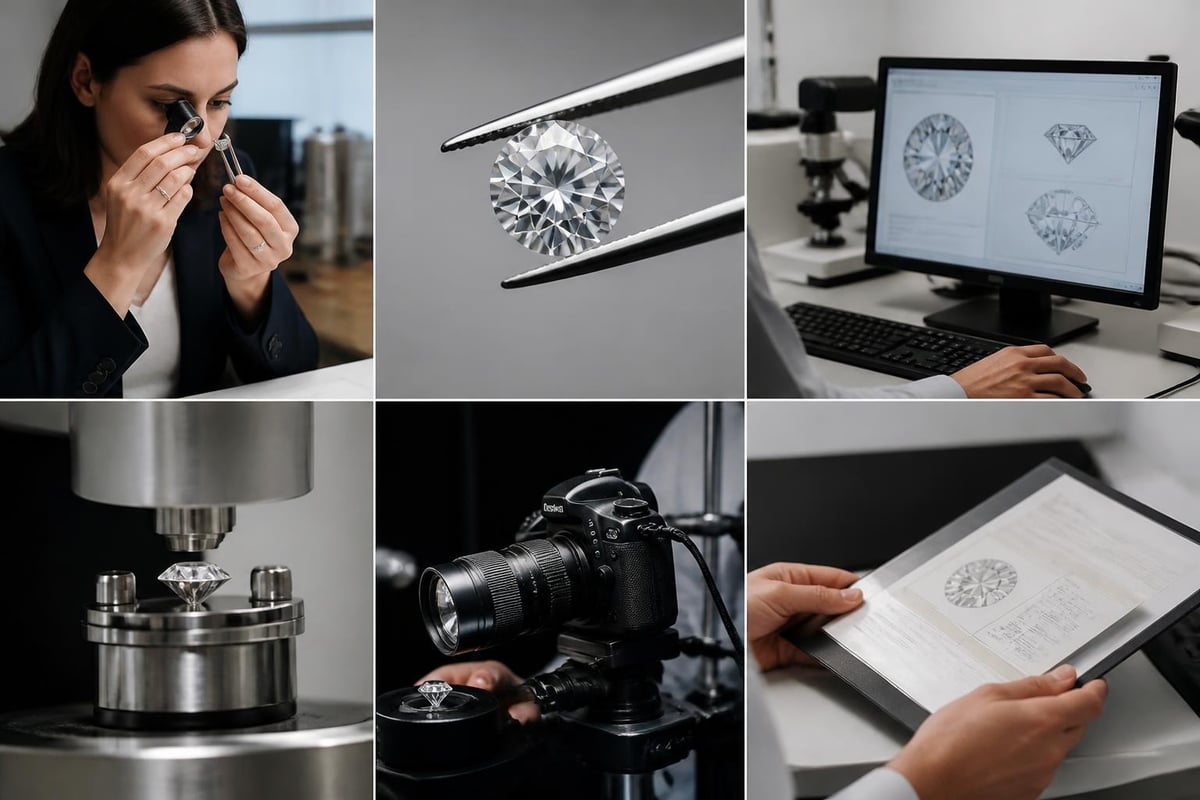
Certification transforms a diamond loose price from subjective estimation to documented valuation. Third-party grading reports from recognized laboratories provide the foundation for transparent marketplace transactions.
Leading Certification Authorities
GIA remains the industry gold standard, with reports that carry universal recognition and trust. AGS (American Gem Society) offers equally rigorous grading with enhanced cut quality assessment. IGI (International Gemological Institute) serves as a respected alternative, particularly for lab-grown diamond certification.
The presence of certification affects diamond loose price through multiple mechanisms. Certified stones command 5-15% premiums over comparable uncertified diamonds, while also enabling higher resale values. The importance of GIA certification extends beyond immediate purchase decisions to long-term value preservation.
Certification provides:
- Objective grading by trained gemologists
- Detailed plotting of clarity characteristics
- Verification of treatments or enhancements
- Unique report numbers for authentication
- Market confidence and liquidity
Shape Premiums and Market Preferences
Diamond shape influences both aesthetic appeal and diamond loose price through supply-demand dynamics and manufacturing efficiency. Round brilliant cuts dominate the market but command 25-35% premiums over fancy shapes of equivalent quality.
Round Brilliant Dominance
Round brilliants require significant rough diamond material loss during cutting, with approximately 50% of the original crystal becoming polishing powder. This manufacturing reality combines with overwhelming consumer preference to sustain price premiums.
Fancy shapes (princess, oval, cushion, emerald, radiant, pear, marquise, heart) offer distinctive aesthetics at more competitive pricing. The six major factors determining loose diamond prices include shape as a significant consideration alongside the traditional 4Cs.
| Shape Category | Price Relative to Round | Manufacturing Loss | Current Trend |
|---|---|---|---|
| Round Brilliant | Baseline (100%) | ~50% | Steady demand |
| Princess | 70-80% | ~40% | Classic choice |
| Oval | 75-85% | ~35% | Rising popularity |
| Cushion | 70-80% | ~35% | Vintage appeal |
| Emerald | 65-75% | ~30% | Sophisticated |
| Radiant | 70-80% | ~35% | Brilliant alternative |
Market Trends and Pricing Dynamics in 2026
Understanding current market conditions proves essential when evaluating diamond loose price. The industry has experienced significant evolution with the emergence of laboratory-grown alternatives and shifting consumer preferences.
Natural Diamond Market Positioning
Natural diamonds maintain premium positioning based on rarity, geological formation timelines, and traditional value associations. The December 2025 diamond market report indicates stable pricing across most categories with selective premiums for exceptional quality stones.
Investment-grade diamonds (D-F color, IF-VVS2 clarity, excellent cut, 1.00+ carats) demonstrate particular resilience. These stones appeal to collectors seeking tangible assets with historical value preservation characteristics.
Laboratory-Grown Diamond Impact
Laboratory-grown diamonds have transformed the market landscape, offering chemically and optically identical stones at 60-80% lower prices than natural equivalents. This development affects diamond loose price structures across the industry.
Buyers choosing lab-grown diamonds versus natural diamonds prioritize different value propositions. Natural stones emphasize rarity and traditional investment characteristics, while laboratory-grown alternatives maximize size and quality specifications within budget constraints.
The academic research on modeling wholesale diamond prices provides quantitative frameworks for understanding market mechanisms and price index development.
Advanced Pricing Considerations
Beyond fundamental characteristics, sophisticated factors influence diamond loose price for knowledgeable buyers. These nuances separate informed purchasing from basic transaction execution.
Fluorescence Effects
Fluorescence describes a diamond's reaction to ultraviolet light, ranging from none to very strong. This characteristic creates pricing anomalies that strategic buyers can leverage.
- Faint to medium fluorescence: Minimal price impact (0-5% discount)
- Strong to very strong fluorescence: 10-20% discounts possible
- Blue fluorescence in higher color grades: Can improve appearance
- Yellow fluorescence: Generally undesirable, larger discounts
Proportions and Light Performance
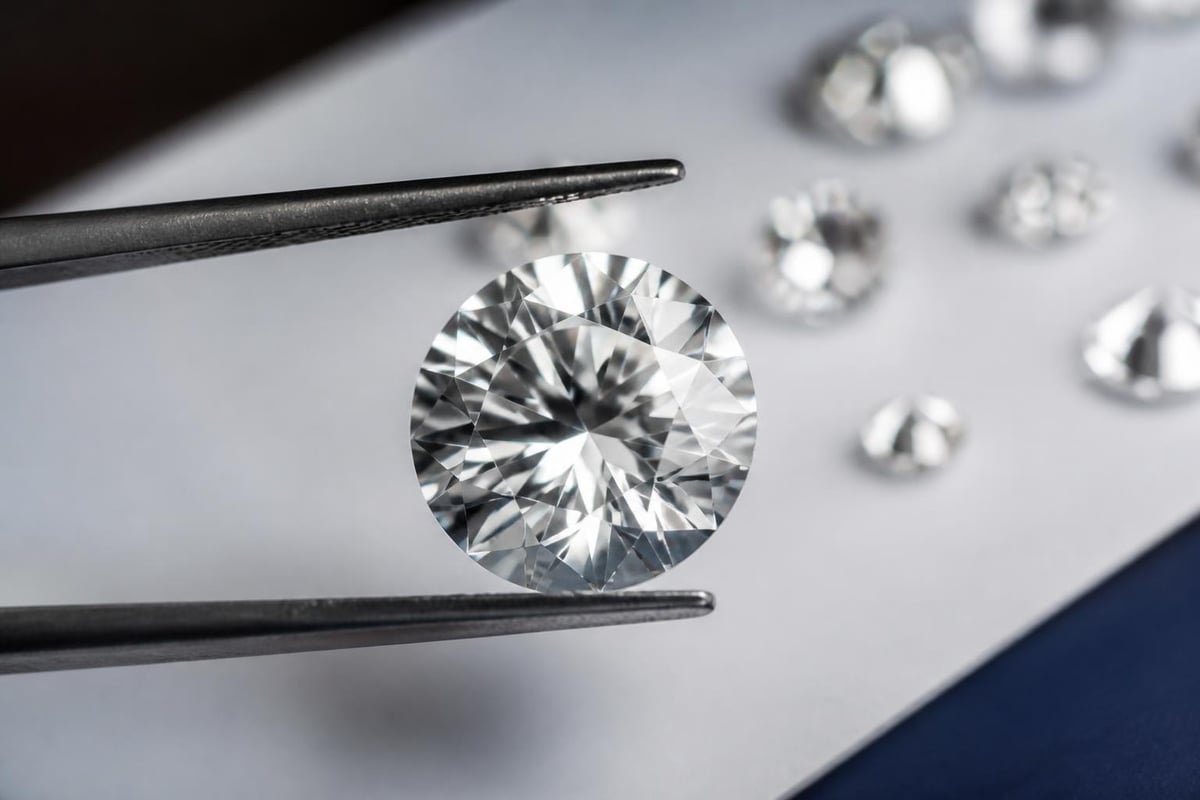
Detailed proportion analysis extends beyond basic cut grading to optimize light return. Depth percentage, table percentage, crown angles, and pavilion angles interact to create specific visual performances.
Stones with exceptional light performance characteristics command premiums even within the same cut grade. Advanced buyers utilize proportion diagrams and light performance imaging to identify superior stones at competitive pricing.
Strategic Purchasing Approaches
Maximizing value when evaluating diamond loose price requires systematic comparison, quality verification, and market timing awareness. Professional buyers employ structured methodologies to optimize purchasing decisions.
Comparison Shopping Frameworks
Effective comparison requires standardizing evaluation criteria across multiple vendors. Creating spreadsheets tracking carat weight, color, clarity, cut, certification, price, and price-per-carat enables objective analysis.
Essential comparison metrics:
- Price per carat for normalization
- Certification authority and report date
- Specific grade details (not just letter grades)
- Proportion measurements and symmetry
- Fluorescence intensity and color
- Vendor reputation and service terms
The understanding of diamond pricing factors encompasses these multiple dimensions that collectively determine value.
Timing and Market Cycles
Diamond markets experience seasonal fluctuations and multi-year cycles that create purchasing opportunities. Engagement season (November through February) typically sees premium pricing, while summer months may offer better values.
Economic conditions, currency fluctuations, and rough diamond supply variations create medium-term pricing movements. Informed buyers monitor these trends to optimize transaction timing.
Resale Value Considerations
The diamond loose price paid at purchase represents only one aspect of total value. Resale potential and liquidity characteristics deserve consideration, particularly for investment-grade acquisitions.
Resale Market Realities
Retail purchases typically experience 25-50% value reductions when entering resale markets. This reflects retail markup structures, certification costs, and intermediary margins. However, exceptional stones with premium characteristics demonstrate superior value retention.
The loose diamond resale value expectations vary significantly based on certification quality, current market conditions, diamond specifications, and selling channels selected.
Factors enhancing resale value:
- GIA or AGS certification (versus lesser-known labs)
- Desirable characteristics (round, colorless, high clarity)
- Recent certification dates (within 5 years)
- Original documentation and provenance
- Popular size ranges (0.75-1.50 carats)
Investment-focused buyers prioritize characteristics that maximize liquidity and value preservation over purely aesthetic preferences. This approach treats diamond acquisition as portfolio diversification rather than consumption.
Quality Verification Procedures
Professional verification protects against misrepresentation and ensures diamond loose price aligns with actual characteristics. Multiple verification layers create confidence in high-value transactions.
Independent Appraisal Benefits
Independent appraisals by certified gemologist-appraisers provide third-party valuation separate from selling interests. These services cost $100-300 but offer substantial protection on purchases exceeding $5,000.
Appraisers verify certification accuracy, identify treatments or enhancements, assess quality relative to price, and provide insurance valuation documentation. For significant acquisitions, this investment proves essential.
Advanced Testing Technologies
Modern gemological laboratories employ sophisticated instrumentation to verify diamond authenticity and detect treatments. These include spectroscopy, microscopy, X-ray imaging, and photoluminescence analysis.
Buyers of high-value stones should insist on current certification from recognized laboratories utilizing comprehensive testing protocols. The small additional cost ensures authenticity and supports appropriate diamond loose price determination.
Application to Fine Jewelry Selection
Understanding diamond loose price principles translates directly to informed fine jewelry purchasing. Whether selecting engagement rings, tennis necklaces, or diamond necklaces, the same valuation principles apply.
Setting and Design Considerations
The mounting or setting adds separate value components to finished jewelry. Platinum, 18k gold, and intricate craftsmanship contribute costs beyond the center stone and accent diamonds.
When evaluating complete pieces, separating diamond value from mounting value enables accurate assessment. Reputable jewelers provide detailed breakdowns showing individual component costs and total pricing.
Jewelry-specific factors:
- Metal type and purity (platinum, 18k, 14k)
- Setting complexity and labor requirements
- Brand reputation and design provenance
- Accent stone quantity and quality
- Craftsmanship and finishing details
Understanding these distinctions prevents overpaying for mediocre diamonds in premium settings or undervaluing exceptional stones in simpler mountings.
Mastering diamond loose price evaluation empowers confident purchasing decisions based on objective quality assessment rather than marketing narratives. The interplay of carat weight, cut quality, color grade, clarity characteristics, certification standards, and market dynamics creates a complex but navigable valuation landscape. When you're ready to acquire exceptional diamonds backed by expertise and authentication, La Maison Val D'or offers curated collections of investment-quality gemstones and fine jewelry. Their commitment to transparency, certification excellence, and timeless elegance ensures every acquisition represents genuine value and enduring beauty.