
When it comes to exceptional gemstone quality, few combinations rival the prestige and beauty of a d vvs1 diamond. This pairing represents the pinnacle of both color and clarity grading, creating stones that exhibit near-perfect transparency and brilliance. For collectors and connoisseurs seeking the finest diamonds available, understanding what sets these gems apart becomes essential to making informed investment decisions. These diamonds represent less than 1% of all diamonds mined globally, making them extraordinarily rare and highly coveted by serious jewelry enthusiasts.
Understanding D Color Grade in Diamonds
The D color grade sits at the absolute top of the diamond color scale, representing completely colorless stones. The Gemological Institute of America (GIA) established this grading system, with D through Z representing progressively more color presence. D-grade diamonds exhibit no trace of yellow, brown, or gray tinting whatsoever, appearing as pure, icy white stones.
Why D Color Matters
Rarity drives value in the diamond market, and D-color stones are exceptionally uncommon. The colorless nature allows maximum light return, creating unparalleled brilliance and fire. When combined with superior clarity, these diamonds achieve optical perfection that discerning collectors immediately recognize.
Color becomes increasingly difficult to detect as diamonds improve in grade, particularly once you reach the near-colorless range (G-J). However, D-color diamonds maintain their distinction through:
- Complete absence of any color tinting
- Maximum light reflection and refraction
- Superior performance in white metal settings
- Premium market positioning and resale value
The difference between D and E or F color grades appears minimal to the untrained eye. Yet, for those seeking ultimate quality, the D grade represents an uncompromising standard.
VVS1 Clarity: Near-Perfect Transparency
VVS1 clarity diamonds contain minute inclusions that remain extremely difficult to detect even under 10x magnification by trained gemologists. The VVS designation stands for "Very, Very Slightly Included," with VVS1 representing the higher tier within this category. These diamonds exhibit exceptional transparency that allows light to pass through virtually unimpeded.
The VVS1 Grading Standard
Professional gemologists examine diamonds under controlled conditions using 10x magnification as the industry standard. For VVS1 classification, any inclusions present must be:
- Extremely small in size
- Located in positions that minimize visibility
- Transparent or nearly transparent in nature
- Difficult for experienced graders to locate
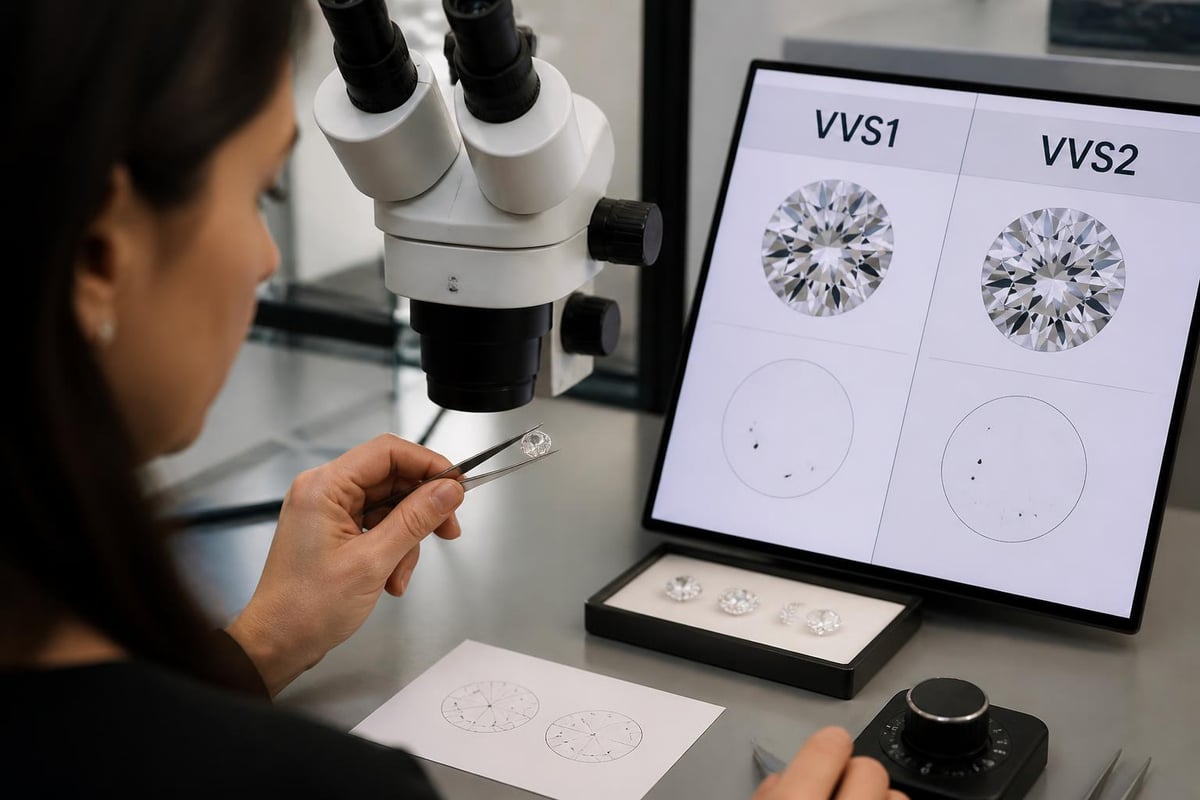
Most VVS1 diamonds contain pinpoint inclusions, which are essentially microscopic crystals trapped during formation. Other possible characteristics include very faint cloud formations or extremely fine needles. The key distinction lies in how challenging these features are to locate.
Combining D Color with VVS1 Clarity
A d vvs1 diamond represents an intersection of two elite grading categories, creating stones of remarkable quality. This combination ensures both exceptional transparency and complete colorlessness, resulting in diamonds that perform magnificently under any lighting condition. When set in fine jewelry pieces, these diamonds command attention through their superior optical properties.
Performance Characteristics
| Attribute | D VVS1 Diamond | Lower Grade Comparison |
|---|---|---|
| Light Return | Maximum (98-99%) | 92-96% |
| Color Interference | None | Slight to moderate |
| Inclusion Visibility | Virtually none | Possible to visible |
| Market Position | Top 1% | Variable |
The synergy between D color and VVS1 clarity creates diamonds that gemologists often describe as having "liquid transparency." Light enters the stone, refracts through the precisely cut facets, and exits as pure white brilliance without any color distortion or obstruction from inclusions.
Investment Perspective
From a financial standpoint, d vvs1 diamond combinations hold several advantages. Their rarity ensures sustained demand among collectors and investors. Market data from 2025-2026 shows these stones maintaining value more consistently than lower-grade alternatives during economic fluctuations.
However, the price premium requires careful consideration. A d vvs1 diamond typically costs 30-50% more than a G VS2 diamond of identical cut and carat weight. Understanding VVS diamond characteristics helps buyers determine whether this premium aligns with their priorities and budget.
Cut Quality: The Essential Fourth Factor
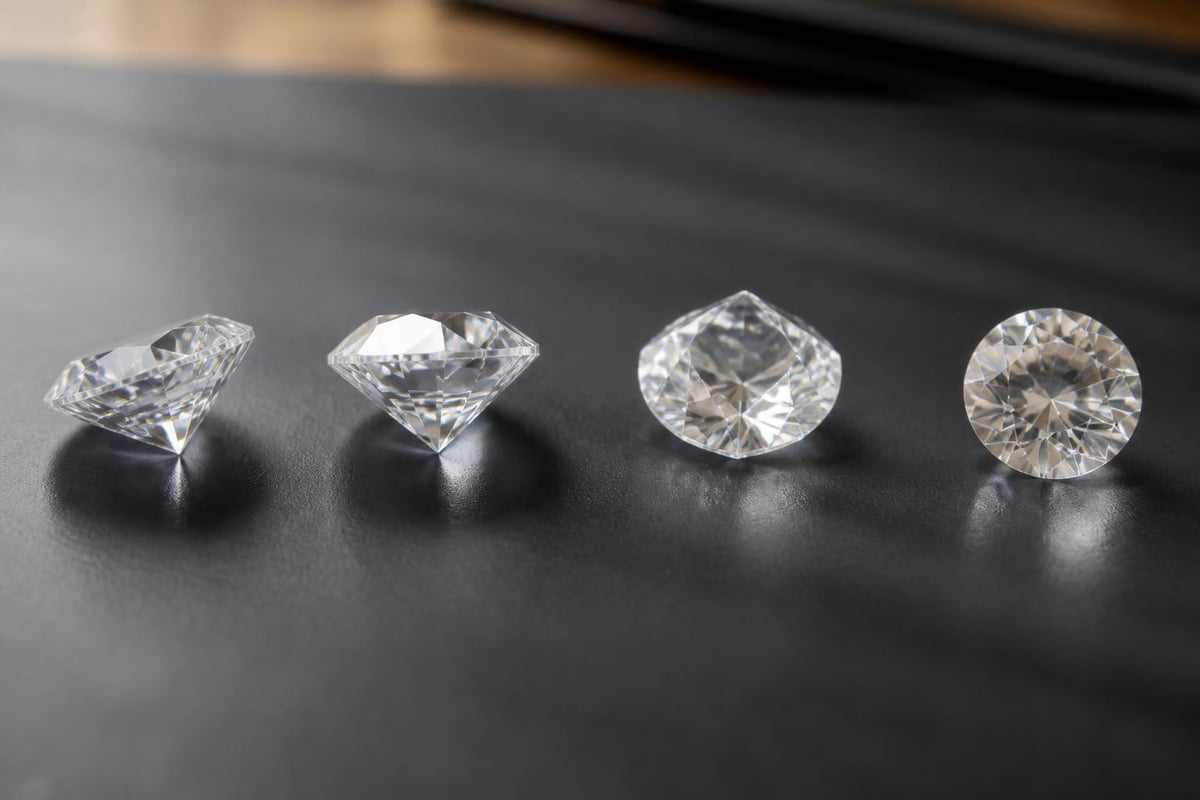
While color and clarity define material quality, cut determines how effectively a diamond uses light. Even a d vvs1 diamond will disappoint if poorly proportioned. Superior cut grades (Excellent or Ideal) become non-negotiable when investing in such high-quality material.
Cut impacts diamond performance through:
- Brightness (white light reflection)
- Fire (colored light dispersion)
- Scintillation (sparkle pattern)
- Overall visual appeal
The most sophisticated buyers prioritize cut above all other factors. A perfectly cut diamond of slightly lower color or clarity often appears more beautiful than a poorly cut d vvs1 diamond. Professional diamond evaluation resources emphasize this critical relationship between cut and overall quality.
Recommended Cut Specifications
For round brilliant diamonds, seek these parameters:
- Table: 54-58%
- Depth: 60-62.5%
- Crown Angle: 34-35 degrees
- Pavilion Angle: 40.6-41 degrees
- Polish and Symmetry: Excellent
Fancy shapes require different optimization, but the principle remains constant. Exceptional material deserves exceptional craftsmanship to reveal its full potential.
Certification and Documentation
Purchasing a d vvs1 diamond without proper certification invites significant risk. Reputable grading laboratories provide detailed analysis and documentation that protects your investment. The GIA (Gemological Institute of America) remains the most respected authority, though AGS (American Gem Society) also maintains rigorous standards.
What Certificates Should Include
A comprehensive diamond grading report documents:
- Carat weight (precise to 0.01ct)
- Color grade with methodology
- Clarity grade with inclusion plotting
- Cut grade and proportions
- Polish and symmetry assessments
- Fluorescence characteristics
- Unique inscription number
Never accept a diamond accompanied only by an in-house appraisal or unknown laboratory report. The investment in a d vvs1 diamond justifies the cost of independent, third-party verification. This documentation also facilitates insurance coverage and potential resale.
Some diamonds receive additional specialized reports, such as light performance analysis or origin determination. While not essential, these supplementary documents can enhance understanding and marketability.
Practical Considerations for Buyers
Despite their exceptional quality, d vvs1 diamond purchases require thoughtful evaluation beyond the grading report. Several practical factors influence long-term satisfaction and value realization.
Setting Selection
The mounting significantly affects how you experience the diamond. Platinum and white gold settings complement D-color diamonds perfectly, maintaining the colorless appearance. Yellow or rose gold may create slight color contrast that diminishes the premium paid for D-grade color.
Prong styles should secure the stone while maximizing light entry. Four or six-prong settings work well for most shapes, though tension settings and bezel options offer contemporary alternatives. Custom jewelry design services allow you to create mountings that showcase the diamond's specific attributes.
Size Versus Quality Trade-offs
| Scenario | Diamond A | Diamond B |
|---|---|---|
| Carat Weight | 1.00ct | 1.50ct |
| Color | D | H |
| Clarity | VVS1 | VS2 |
| Price Point | $12,000 | $12,000 |
| Visual Impact | Maximum quality, smaller | Larger, slight compromises |
This common dilemma challenges many buyers. The d vvs1 diamond delivers superior specifications but reduced size. The alternative offers more visual presence with modest quality reductions that most observers cannot detect.
Your decision should reflect personal values and intended use. Collectors and investors often prioritize quality. Those seeking maximum visual impact in social settings might accept minor grade reductions for increased carat weight.
Market Trends and Pricing Analysis
The d vvs1 diamond market experienced notable evolution throughout 2025 and into early 2026. Growing appreciation for certified quality drove demand increases, while supply constraints limited availability. This dynamic created upward pricing pressure, particularly for stones weighing one carat and above.
Current Price Ranges (2026)
Round brilliant d vvs1 diamonds with Excellent cut grades currently trade within these approximate ranges:
- 0.50ct: $4,500-$6,000
- 0.75ct: $7,500-$9,500
- 1.00ct: $11,000-$14,000
- 1.50ct: $24,000-$30,000
- 2.00ct: $45,000-$58,000
Fancy shapes typically cost 10-30% less than rounds of equivalent quality, with cushion and oval cuts gaining popularity. Detailed VVS1 diamond pricing information from established dealers provides additional market context.
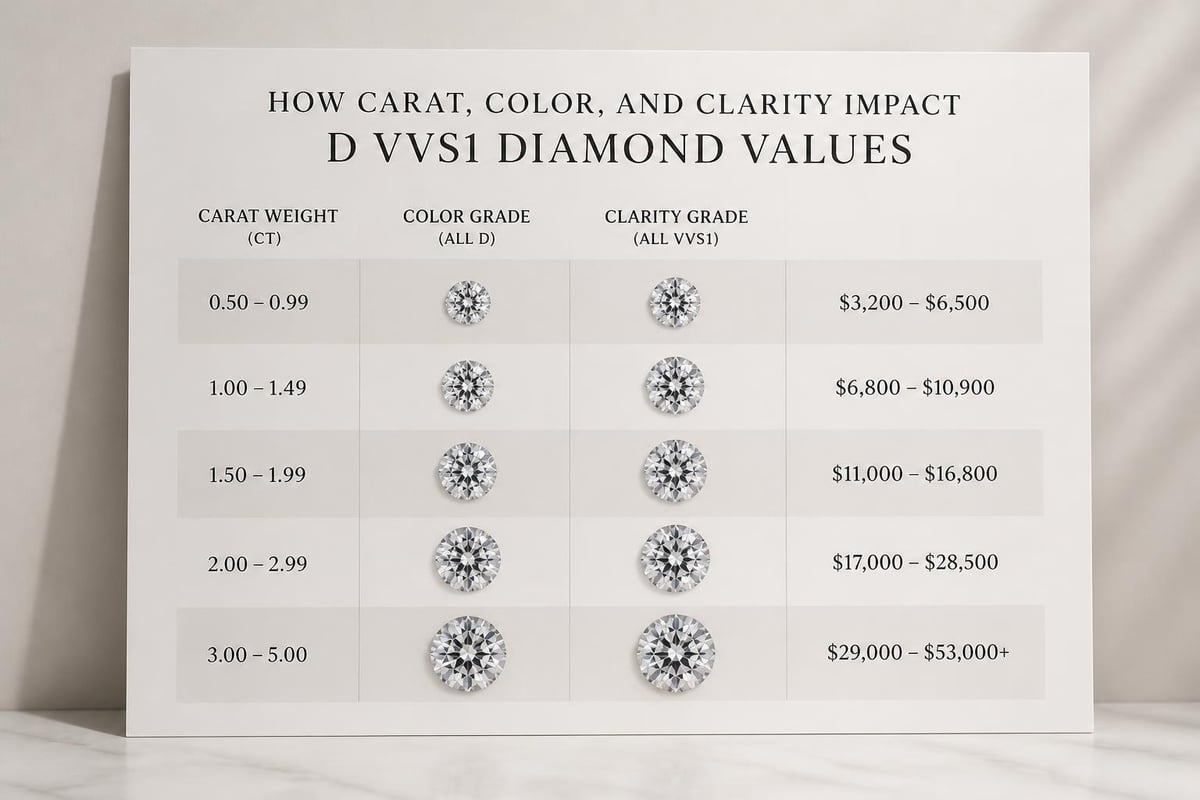
The premium for D over E color averages 15-20%, while the VVS1 over VVS2 differential runs 8-12%. These percentages vary with market conditions and specific diamond characteristics. Fluorescence, proportions, and inclusion placement all modify final pricing.
Comparing VVS1 to Other Clarity Grades
Understanding where VVS1 sits within the clarity spectrum helps contextualize its value proposition. Comprehensive VVS diamond guides detail these relationships, but practical comparison reveals the differences most clearly.
VVS1 versus VVS2: The distinction lies primarily in inclusion positioning and ease of detection under magnification. Both grades appear identical to the naked eye, and even experienced gemologists need time to classify them accurately. The price differential of 8-12% reflects rarity more than visible quality differences.
VVS1 versus VS1: VS1 diamonds contain inclusions slightly more visible under 10x magnification, though still challenging to locate. Eye-clean appearance remains universal in properly graded VS1 stones. Many experts consider VS1 the optimal value point, offering near-perfect transparency at meaningful savings.
VVS1 versus IF (Internally Flawless): IF diamonds show no inclusions under 10x magnification, only minor surface blemishes. The jump from VVS1 to IF represents substantial cost increase (often 25-40%) for improvement that remains imperceptible without magnification. This makes VVS1 particularly attractive for those seeking exceptional quality without pursuing theoretical perfection.
Eye-Clean Performance
The concept of "eye-clean" describes diamonds whose inclusions remain invisible to the unaided eye under normal viewing conditions. Virtually all VVS1 diamonds qualify as eye-clean, as do most VS1 and VS2 stones when properly graded. This reality prompts legitimate questions about whether the d vvs1 diamond premium delivers proportional benefits.
The answer depends on your perspective:
- Collectors value certified specifications regardless of visibility
- Investors prefer objective quality metrics for resale purposes
- Some buyers want absolute certainty about internal perfection
- Others prioritize maximizing visible attributes within budget
Neither approach is objectively correct. The decision reflects personal values and intended ownership duration.
Special Considerations for Engagement Rings
Engagement rings represent the most common use case for premium diamonds, and d vvs1 diamond selections merit specific discussion. These stones deliver symbolic significance beyond their physical properties, representing uncompromising commitment through superior quality.
Symbolic Value
The engagement ring market consistently demonstrates that emotional factors influence purchasing decisions significantly. A d vvs1 diamond communicates thoughtfulness, research, and dedication to providing the finest available option. This messaging resonates with many couples, particularly those who appreciate craftsmanship and quality.
However, alternative perspectives deserve consideration. Some couples prefer allocating resources toward larger carat weights or elaborate settings rather than pursuing top-tier color and clarity grades. Others invest premium funds in experiences or practical needs rather than gemstone specifications.
The engagement ring decision ultimately belongs to the individuals involved, informed by their unique values and circumstances. Exceptional diamond rings showcase various approaches to balancing quality, size, and budget.
Care and Maintenance
Despite their exceptional durability, d vvs1 diamonds benefit from proper care practices that preserve their beauty and protect your investment. These maintenance considerations apply to all fine diamonds but take on added importance with premium specimens.
Cleaning Recommendations
Regular cleaning maintains optimal light performance. Oils from skin contact, cosmetics, and environmental exposure create film that dulls brilliance. Professional cleaning every 6-12 months, supplemented by home care, keeps diamonds performing at their best.
Safe home cleaning methods include:
- Warm water with mild dish soap, gentle brushing
- Ultrasonic cleaners (for diamonds without fractures)
- Steam cleaning (avoiding sudden temperature changes)
- Professional jewelry cleaning solutions
Avoid harsh chemicals, including chlorine bleach and abrasive cleaners, which can damage metal settings even if the diamond itself remains unaffected.
Storage and Protection
Store diamond jewelry separately to prevent scratching other pieces. Diamonds rate 10 on the Mohs hardness scale, making them capable of damaging softer gemstones and precious metals. Individual fabric pouches or divided jewelry boxes provide adequate protection.
Remove diamond jewelry during activities involving impact risk or chemical exposure, such as heavy lifting, cleaning with harsh products, or swimming in chlorinated water. While diamonds resist damage better than most materials, settings can suffer from stress or chemical attack.
Making Your Purchase Decision
Selecting a d vvs1 diamond requires balancing multiple factors within your budget constraints. This decision framework helps organize the evaluation process and ensure alignment between specifications and personal priorities.
Step-by-Step Evaluation Process
- Establish total budget including setting
- Determine minimum acceptable carat weight
- Select preferred diamond shape
- Review certified options meeting criteria
- Assess cut quality and proportions
- Verify certification from reputable laboratory
- Compare pricing across multiple sources
- Examine diamonds in person when possible
- Finalize setting selection
- Complete purchase with proper documentation
This methodical approach prevents impulsive decisions while maintaining focus on what matters most to you. Working with knowledgeable jewelers who prioritize education over sales pressure enhances the experience significantly.
Questions to ask during the selection process:
- Why is this specific diamond priced at this level?
- How does cut quality compare to other available options?
- What flexibility exists on pricing or setting selection?
- What guarantees or return policies apply?
- How do you recommend insuring this purchase?
Reputable dealers welcome these questions and provide transparent, detailed responses. Evasive or unclear answers signal potential concerns worth investigating further.
A d vvs1 diamond represents the intersection of exceptional color and near-perfect clarity, creating stones that satisfy the most discerning collectors and investors. Understanding the specifications, market dynamics, and practical considerations enables confident decision-making aligned with your specific priorities and budget. Whether you seek a stunning engagement ring centerpiece or a valuable addition to your fine jewelry collection, La Maison Val D'or offers curated selections of premium diamonds and expert guidance to help you find the perfect stone that balances quality, beauty, and timeless elegance.
Article written using RankPill.