When discerning collectors and connoisseurs seek the absolute pinnacle of diamond excellence, they inevitably encounter the term "diamonds d" in their research. This designation represents the highest achievement in diamond color grading, a mark of exceptional purity that has captivated jewelry enthusiasts for generations. Understanding what makes D color diamonds so extraordinary requires exploring the intricate science of gemological grading, the subtle nuances that distinguish superior stones, and the practical considerations that guide informed purchasing decisions. For those who demand nothing less than perfection in their jewelry collection, the journey into the world of diamonds d reveals why these stones command such prestige and admiration throughout the luxury market.
The Science Behind Diamonds D Color Grading
The Gemological Institute of America established the diamond color grading scale beginning with the letter D rather than A, a decision rooted in practical necessity. Before standardization, various grading systems used letters like A, B, and C with inconsistent meanings across different jewelers and regions. To eliminate confusion and create a universally understood system, the GIA color grading system starts at D, establishing an unambiguous benchmark for colorless diamonds.
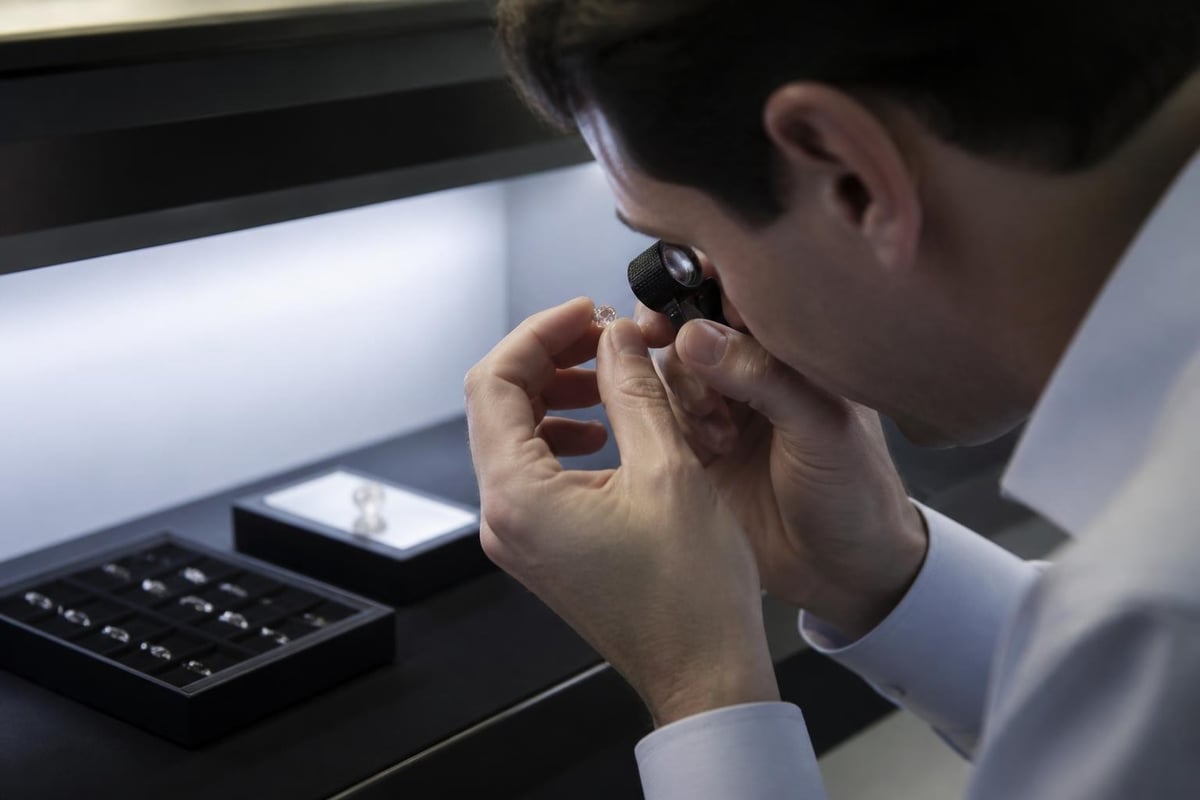
Diamonds d represent the absolute absence of color when examined under controlled lighting conditions by trained gemologists. These stones exhibit no trace of yellow, brown, or any other tint that might diminish their pure, icy appearance. The grading process involves comparing each diamond against master stones under standardized daylight-equivalent lighting, ensuring consistency across evaluations.
The Technical Specifications of D Color Diamonds
The precision required to achieve a D color grade demands extraordinary natural formation conditions. These diamonds crystallized deep within the Earth under specific circumstances that prevented the incorporation of trace elements responsible for coloration.
Key characteristics of diamonds d include:
- Complete absence of nitrogen, the primary element causing yellow tints
- Pure carbon crystal structure without impurities
- Exceptional light performance due to unimpeded light transmission
- Rarity representing less than 1% of all natural diamonds mined
- Premium pricing reflecting their scarcity and desirability
The molecular purity of diamonds d translates directly into superior optical performance. Without color interference, these stones maximize brilliance, fire, and scintillation, creating the mesmerizing light display that defines exceptional diamonds.
Comparing Diamonds D to Other Color Grades
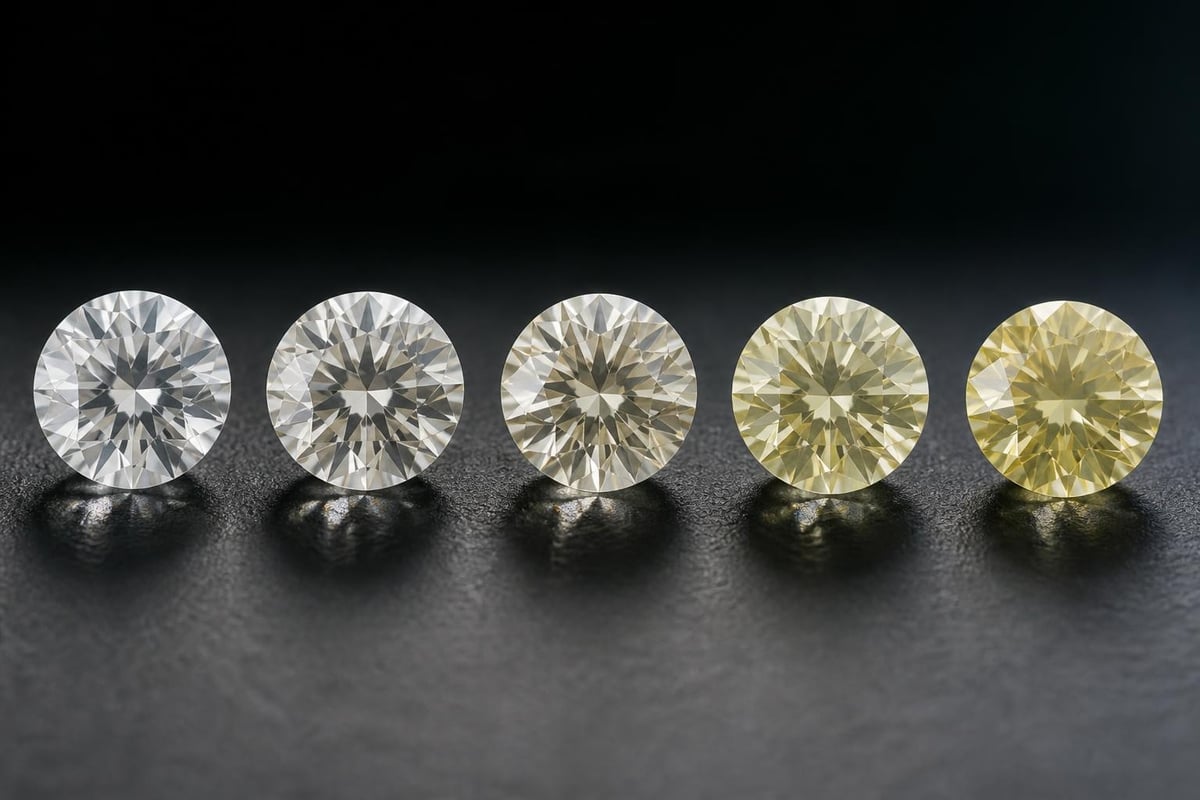
Understanding the value proposition of diamonds d requires context within the broader color grading spectrum. The GIA scale progresses from D (colorless) through Z (light yellow or brown), with subtle gradations between each grade that significantly impact both appearance and value.
| Color Grade | Classification | Appearance | Price Premium vs. G |
|---|---|---|---|
| D | Colorless | Absolutely no color | 15-20% higher |
| E | Colorless | Minute traces, invisible to untrained eye | 10-15% higher |
| F | Colorless | Slight color detected only by experts | 5-10% higher |
| G | Near Colorless | Slight warmth when compared to D-F | Baseline |
| H | Near Colorless | Color noticeable when compared side-by-side | 10-15% lower |
Experts examining D color diamonds note that the differences between D and E grades are virtually imperceptible when stones are viewed individually. However, when set in platinum or white gold settings, the absolute colorlessness of diamonds d creates an unmistakable impression of purity and quality.
Visual Perception and Setting Considerations
The human eye's ability to detect color differences in diamonds depends on multiple factors including stone size, cut quality, and mounting style. Larger diamonds d reveal their colorless nature more dramatically than smaller stones, where the difference between D and F grades becomes nearly impossible to distinguish without direct comparison.
Metal choice significantly influences how diamond color appears:
- Platinum and white gold settings showcase diamonds d perfectly, creating harmonious contrast
- Yellow gold mountings may mask the colorless advantage of D grade stones
- Rose gold settings can make even diamonds d appear slightly warm
- Halo designs with smaller accent diamonds benefit tremendously from D color centers
For engagement rings and significant jewelry pieces from La Maison Val D'or, selecting diamonds d ensures the center stone maintains its colorless appearance regardless of lighting conditions or viewing angles.
Investment Value and Market Positioning
The financial considerations surrounding diamonds d extend beyond initial purchase price. These exceptional stones represent both aesthetic perfection and strategic investment potential within the luxury jewelry market.
Price Premiums and Value Retention
Diamonds d consistently command premium pricing compared to lower color grades. Current market data indicates D color stones trade at approximately 15-20% above G color equivalents of identical cut, clarity, and carat weight. This premium reflects genuine scarcity rather than arbitrary marketing.
Factors influencing diamonds d pricing include:
- Global supply constraints as mines deplete highest-quality reserves
- Increasing demand from emerging luxury markets
- Growing appreciation for certified, documented excellence
- Limited availability in larger carat weights
- Enhanced resale potential due to universal recognition
When considering D color diamonds as part of a jewelry collection, purchasers should evaluate the premium against their specific priorities. For heirloom pieces intended for multi-generational ownership, the incremental cost often proves justifiable given superior long-term value retention.
Certification and Authentication Standards
Proper documentation separates genuine diamonds d from misrepresented or fraudulently graded stones. Reputable gemological laboratories employ rigorous protocols to ensure grading accuracy and consistency.
Laboratory Grading Processes
The most respected certification bodies utilize multi-gemologist verification systems. Each diamond undergoes independent evaluation by several experts, with final grades requiring consensus. This methodology minimizes subjectivity and ensures reliable results.
| Laboratory | Grading Strictness | Market Recognition | Report Details |
|---|---|---|---|
| GIA | Most Strict | Highest | Comprehensive plotting |
| AGS | Very Strict | High | Light performance analysis |
| IGI | Strict | Moderate-High | International acceptance |
| EGL | Variable | Lower | Regional variations |
For significant purchases involving diamonds d, insisting on GIA or AGS certification provides confidence in grade accuracy. Understanding diamond quality factors helps buyers recognize when documentation matches actual stone characteristics.
Identifying Potential Grading Discrepancies
Even with certification, informed buyers should understand potential variations. Factors like fluorescence, which isn't reflected in color grades, can affect appearance under certain lighting conditions. Strong blue fluorescence may cause diamonds d to appear slightly hazy in sunlight, though this effect varies considerably between individual stones.
Professional appraisers recommend examining diamonds d under multiple lighting conditions before finalizing purchases. Natural daylight, LED lighting, and incandescent bulbs each reveal different aspects of stone performance.
Optimizing Diamonds D Selection for Different Jewelry Applications
The ideal application for diamonds d depends on design intent, budget considerations, and personal priorities. Strategic selection maximizes both aesthetic impact and value optimization.
Engagement Ring Considerations
For engagement rings, diamonds d deliver maximum impact in specific scenarios:
- Platinum or white gold settings where metal won't add warmth
- Solitaire designs emphasizing the center stone
- Stones exceeding 1.5 carats where color becomes more visible
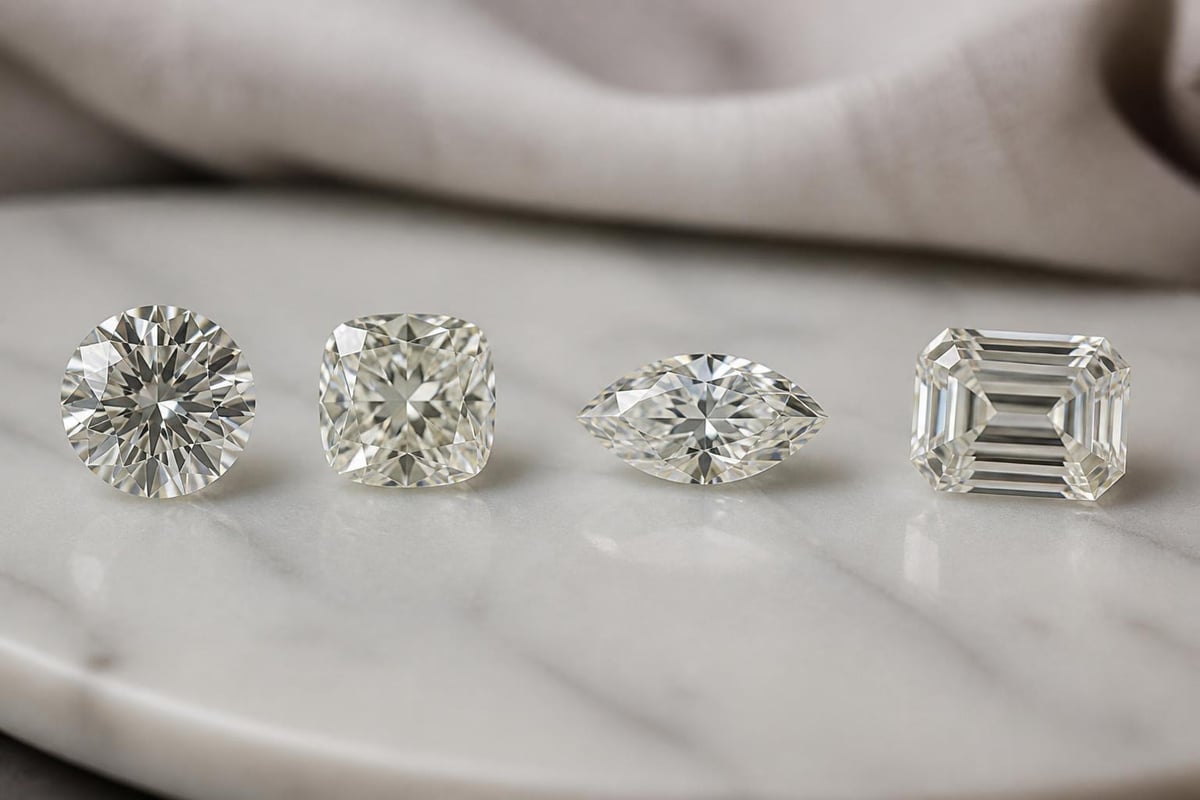
- Cushion and emerald cuts that reveal color more readily than brilliant cuts
- Three-stone settings pairing D color center with near-colorless side stones
Brilliant round cuts mask color better than step cuts, making the D grade investment more noticeable in emerald, Asscher, and baguette configurations. Comparing cut styles and color grades reveals how shape selection influences the visual impact of diamonds d.
Estate and Heirloom Jewelry
Diamonds d excel in statement pieces intended for generational transfer. The combination of documented excellence and timeless appeal ensures these stones maintain relevance across changing fashion trends. Necklaces, bracelets, and earrings featuring D color diamonds from curated collections communicate refined taste and appreciation for genuine quality.
Laboratory-Grown Diamonds D: Alternative Considerations
Technological advances now enable laboratory creation of diamonds d matching natural stones in chemical composition and physical properties. These alternatives present intriguing options for budget-conscious buyers seeking D color excellence.
Natural vs. Laboratory-Grown Comparison
Laboratory-grown diamonds d offer identical visual appearance to natural stones at significantly reduced prices, typically 40-60% less than natural equivalents. Both types consist of pure carbon crystallized in identical cubic structures, displaying matching optical properties.
Natural diamonds d advantages:
- Billions of years formation history
- Traditional resale market recognition
- Emotional significance of geological rarity
- Established value retention patterns
Laboratory-grown diamonds d advantages:
- Environmentally controlled production
- Predictable availability in desired specifications
- Accessible pricing for larger stones
- Identical certified quality at lower investment
For buyers prioritizing documented perfection over geological origin, laboratory-grown diamonds d from specialized collections deliver D color excellence while allocating budget toward larger carat weights or superior cut quality.
Care and Maintenance of Diamonds D
Preserving the pristine appearance of diamonds d requires appropriate care protocols. While diamonds rank as the hardest natural material, proper maintenance ensures these exceptional stones continue displaying their signature colorless brilliance.
Cleaning Procedures for Maximum Brilliance
Regular cleaning prevents oil, dirt, and residue accumulation that diminishes light performance. For diamonds d set in jewelry:
- Weekly cleaning: Warm water with mild dish soap, soft brush
- Monthly deep cleaning: Ultrasonic cleaner or professional steam cleaning
- Annual inspection: Professional examination for loose settings or wear
- Storage: Individual soft pouches preventing contact with other jewelry
Avoid harsh chemicals including chlorine bleach, which can damage metal settings even though diamonds d themselves remain unaffected. Professional jewelers recommend removing diamond jewelry during household cleaning, swimming, or activities involving impact risks.
Making Informed Purchase Decisions
Selecting diamonds d represents a significant investment requiring thorough research and careful evaluation. Informed buyers balance technical specifications against practical considerations and personal priorities.
Essential Evaluation Criteria
Beyond color grade verification, comprehensive diamond assessment examines multiple quality factors working in concert. The traditional "Four Cs" provide a framework, but sophisticated buyers consider additional nuances.
Critical evaluation points include:
- Cut quality: Often more impactful on appearance than color grade
- Clarity grade: Balance against color investment for optimal value
- Certification authenticity: Verify laboratory reputation and report details
- Fluorescence effects: Understand potential impact on appearance
- Proportions and symmetry: Maximize light performance
- Setting compatibility: Ensure metal choice complements D color advantage
Working with experienced jewelers who understand the unique characteristics of diamonds d helps buyers navigate complex decisions. Reputable dealers provide detailed documentation, realistic photography under various lighting conditions, and return policies allowing at-home evaluation.
Budget Optimization Strategies
Maximizing value when purchasing diamonds d involves strategic compromises in less visible quality factors. Since color grade remains consistent across viewing angles and lighting conditions, investing in D grade color provides lasting satisfaction.
Consider these optimization approaches:
- Prioritize excellent cut over maximum carat weight
- Accept slightly lower clarity (VS2 instead of VVS1) in brilliant cuts
- Choose near-colorless (E-F) for side stones while investing in D color center
- Select settings that protect and showcase the diamond's colorless nature
- Purchase certified stones with slightly lower clarity but perfect color
Cultural and Historical Significance
Throughout jewelry history, the finest colorless diamonds have symbolized purity, eternal commitment, and exceptional achievement. Diamonds d represent the modern pinnacle of this tradition, combining scientific verification with aesthetic perfection.
Major auction results consistently demonstrate premium valuations for historically significant diamonds d. Record-breaking sales reinforce market recognition of genuine rarity and quality. Museums worldwide feature exceptional D color diamonds in permanent collections, acknowledging their cultural importance beyond monetary value.
For contemporary collectors, acquiring diamonds d connects personal collections to this heritage of excellence. Whether selected for engagement rings, anniversary gifts, or investment-grade jewelry, these stones embody timeless values transcending temporary fashion trends.
Understanding diamonds d empowers discerning buyers to make informed decisions aligned with their quality standards and aesthetic preferences. The combination of certified colorlessness, exceptional rarity, and timeless beauty makes D color diamonds the ultimate expression of excellence in fine jewelry. When you're ready to explore exquisite pieces featuring the world's finest gemstones, La Maison Val D'or offers curated collections that celebrate quality, elegance, and enduring value.