
Natural Yellow Diamond: A Timeless Investment Guide
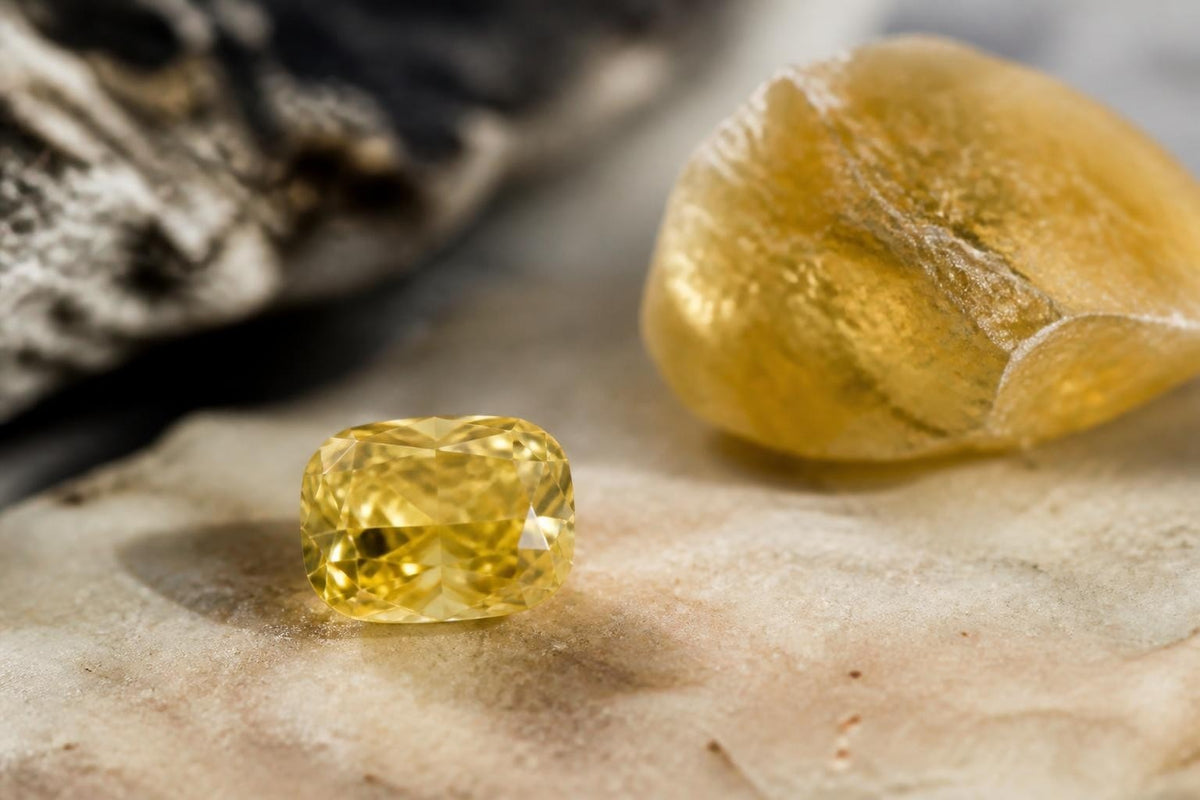
The allure of a natural yellow diamond transcends traditional notions of luxury jewelry. These remarkable gemstones, ranging from delicate champagne tones to vibrant canary yellows, represent one of nature's most captivating creations. Unlike their colorless counterparts, yellow diamonds derive their distinctive coloration from nitrogen atoms embedded within their crystal structure during formation deep within the earth's mantle. For discerning collectors and jewelry enthusiasts seeking pieces that combine rarity with timeless elegance, understanding the unique characteristics and investment potential of these colored diamonds proves essential in making informed acquisition decisions.
The Science Behind Natural Yellow Diamond Formation
The formation process of a natural yellow diamond begins approximately 100 to 200 kilometers beneath the earth's surface, where extreme pressure and temperatures exceeding 1,000 degrees Celsius create the perfect conditions for diamond crystallization. What distinguishes yellow diamonds from their colorless relatives is the presence of nitrogen atoms that become trapped within the carbon lattice structure during this formation process.
When nitrogen atoms replace carbon atoms in the diamond's crystal structure, they absorb blue light from the visible spectrum, causing the stone to reflect yellow wavelengths. The intensity of this yellow coloration directly correlates to the concentration and distribution of nitrogen atoms throughout the gemstone. The science behind this natural formation reveals that even trace amounts of nitrogen, sometimes as little as one nitrogen atom per million carbon atoms, can produce noticeable color.
Key formation factors include:
- Depth and temperature conditions during crystallization
- Nitrogen concentration and distribution patterns
- Duration of exposure to geological conditions
- Pressure variations in the earth's mantle
- Presence of other trace elements
The geological journey of these diamonds from mantle to surface typically occurs through volcanic eruptions that transport them via kimberlite pipes. This violent ascent preserves the nitrogen-induced coloration that makes each stone unique.
Color Grading and Intensity Classifications
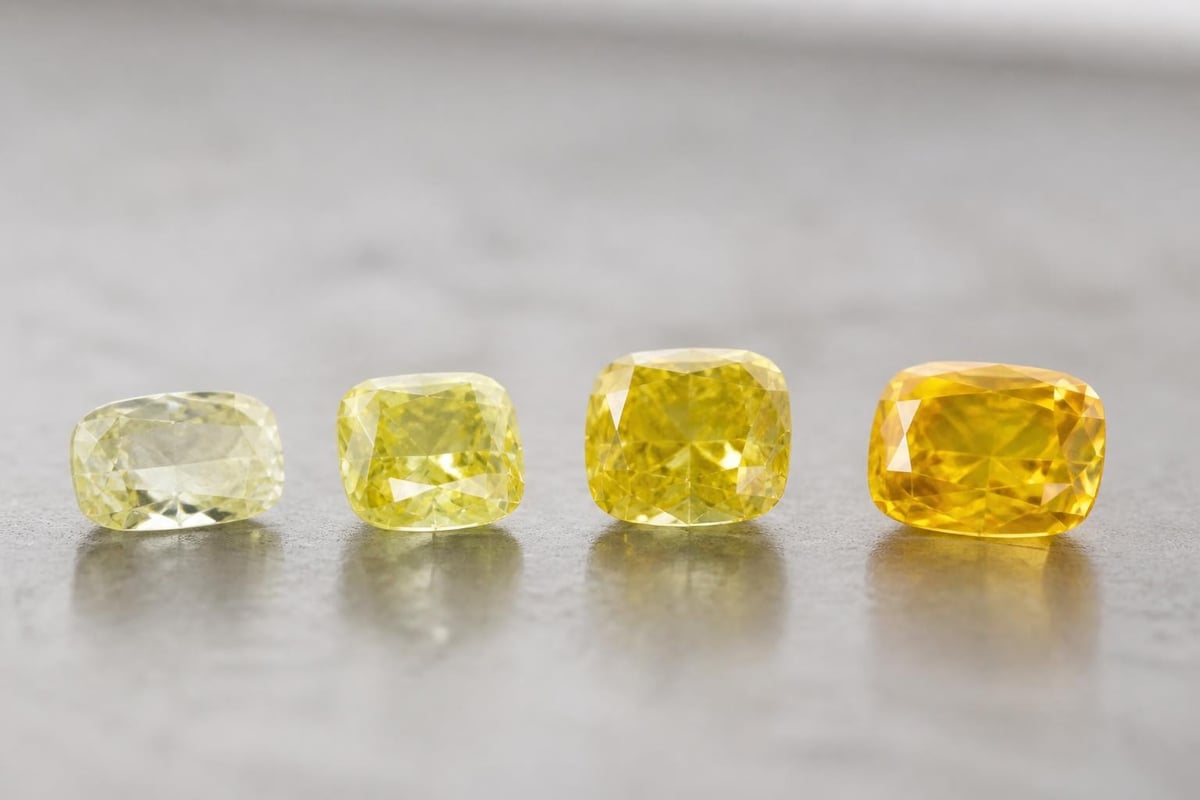
The Gemological Institute of America (GIA) employs a sophisticated grading system specifically designed to classify the color intensity of yellow diamonds. This system differs significantly from the traditional D-to-Z scale used for colorless diamonds. For fancy colored diamonds, the presence of color represents value rather than a detraction from quality.
Understanding the GIA Color Scale
Yellow diamonds receive grades based on three primary components: hue, tone, and saturation. The GIA fancy color grading scale progresses through distinct categories that dramatically impact both appearance and value.
| Grade Category | Color Intensity | Market Position |
|---|---|---|
| Faint Yellow | Minimal color presence | Entry-level pricing |
| Very Light Yellow | Subtle yellow tint | Moderate pricing |
| Light Yellow | Noticeable yellow | Mid-range market |
| Fancy Light | Clear yellow color | Premium category |
| Fancy | Strong yellow presence | High-value segment |
| Fancy Intense | Vivid yellow saturation | Investment grade |
| Fancy Vivid | Maximum color saturation | Exceptional rarity |
| Fancy Deep | Rich, dark yellow | Collector's choice |
The progression from Fancy Light to Fancy Vivid can represent exponential increases in value, with Fancy Vivid yellow diamonds commanding premium prices in the luxury market. Color modifiers such as "greenish," "brownish," or pure yellow further influence grading and valuation.
Secondary Color Considerations
Natural yellow diamonds frequently exhibit secondary hues that affect their overall appearance and classification. A pure yellow stone without modifying colors achieves the highest valuations, while brownish or greenish modifiers may reduce market value. However, certain combinations, particularly those with orange modifiers creating "golden" appearances, remain highly desirable among collectors.
Rarity and Market Value Factors
The rarity of natural yellow diamonds positions them as extraordinary investment opportunities within the colored diamond market. While yellow represents the most commonly occurring fancy color in diamonds, truly saturated specimens with Fancy Intense or Fancy Vivid grades remain exceedingly rare, comprising less than 0.1% of all diamonds mined globally.
Market valuation depends on multiple interrelated factors beyond color intensity:
- Carat weight progression - prices increase exponentially rather than linearly
- Clarity characteristics - fewer inclusions command significant premiums
- Cut quality - precision cutting maximizes color dispersion
- Shape selection - certain shapes enhance color appearance
- Origin documentation - provenance adds historical value
- Certification credentials - reputable laboratory reports ensure authenticity
The discovery of exceptional specimens, such as the 158.20-carat yellow diamond found at Rio Tinto's Diavik Mine, demonstrates the extraordinary rarity of large, high-quality natural yellow diamonds. Such discoveries occur perhaps once in a generation, reinforcing the investment thesis for collectors.
Optimal Settings and Design Considerations
Selecting the appropriate setting for a natural yellow diamond requires careful consideration of how metal choices and design elements interact with the stone's inherent color. Unlike colorless diamonds where platinum or white gold settings enhance brilliance, yellow diamonds benefit from complementary metal selections.
Recommended metal choices include:
- Yellow gold (18K or higher) - enhances warmth and color saturation
- Rose gold - creates romantic, vintage-inspired aesthetics
- Two-tone designs - provides contemporary contrast
- Platinum accents - offers structural integrity while highlighting color
The setting style significantly influences how light interacts with the yellow diamond. Halo settings featuring colorless diamonds create dramatic contrast that intensifies the center stone's color perception. Solitaire designs in elegant necklace settings allow the natural yellow diamond to command attention without competition from surrounding elements.
Cut Shapes That Maximize Color
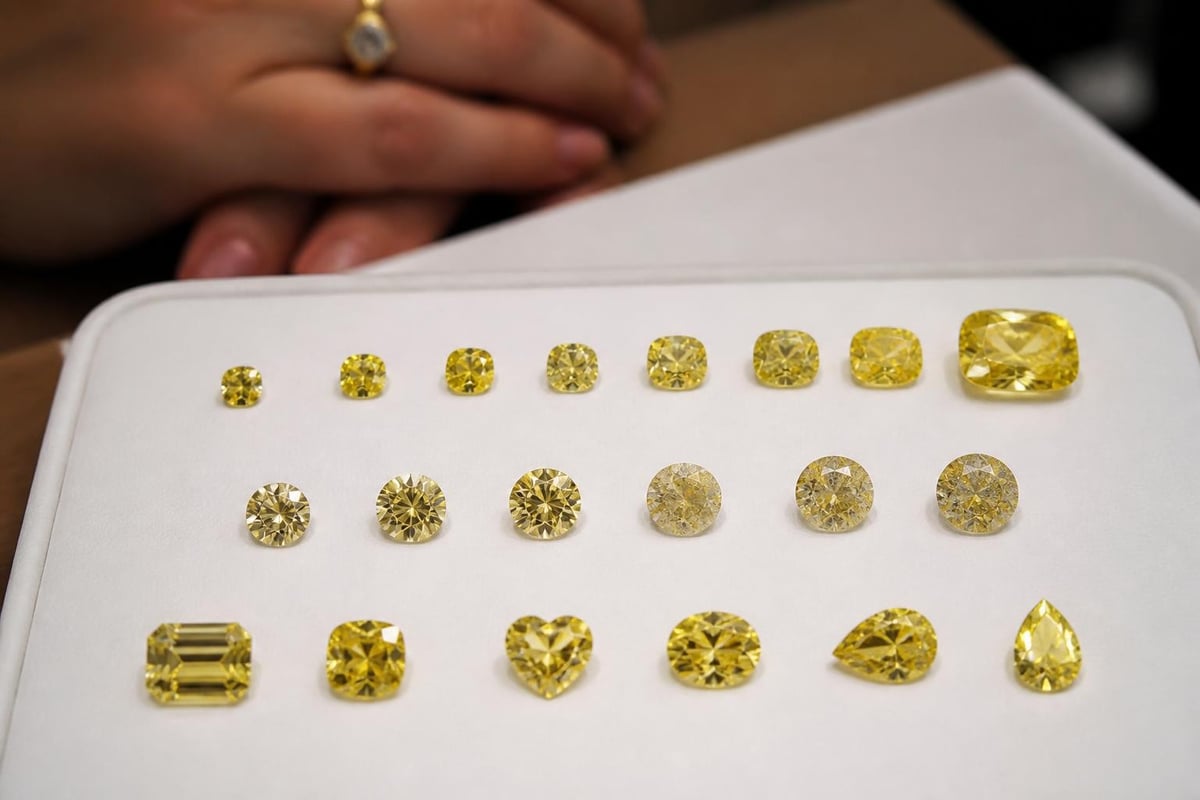
Different cut shapes influence color distribution and intensity perception within natural yellow diamonds. Certain shapes naturally concentrate color in specific areas, enhancing visual impact.
| Cut Shape | Color Effect | Best Applications |
|---|---|---|
| Radiant | Intense color concentration | Statement rings, pendants |
| Cushion | Vintage appeal, even distribution | Classic designs, heirlooms |
| Oval | Elongated appearance, balanced color | Versatile across jewelry types |
| Pear | Dramatic color pooling at point | Earrings, pendants |
| Round | Brilliant sparkle, lighter appearance | Traditional settings |
| Emerald | Step-cut clarity display | Modern, minimalist designs |
When designing fine jewelry pieces, artisans must balance the diamond's natural characteristics with the intended aesthetic outcome. Color concentration in certain shapes can transform a Fancy Light stone to appear closer to Fancy Intense when expertly cut.
Authentication and Certification Standards
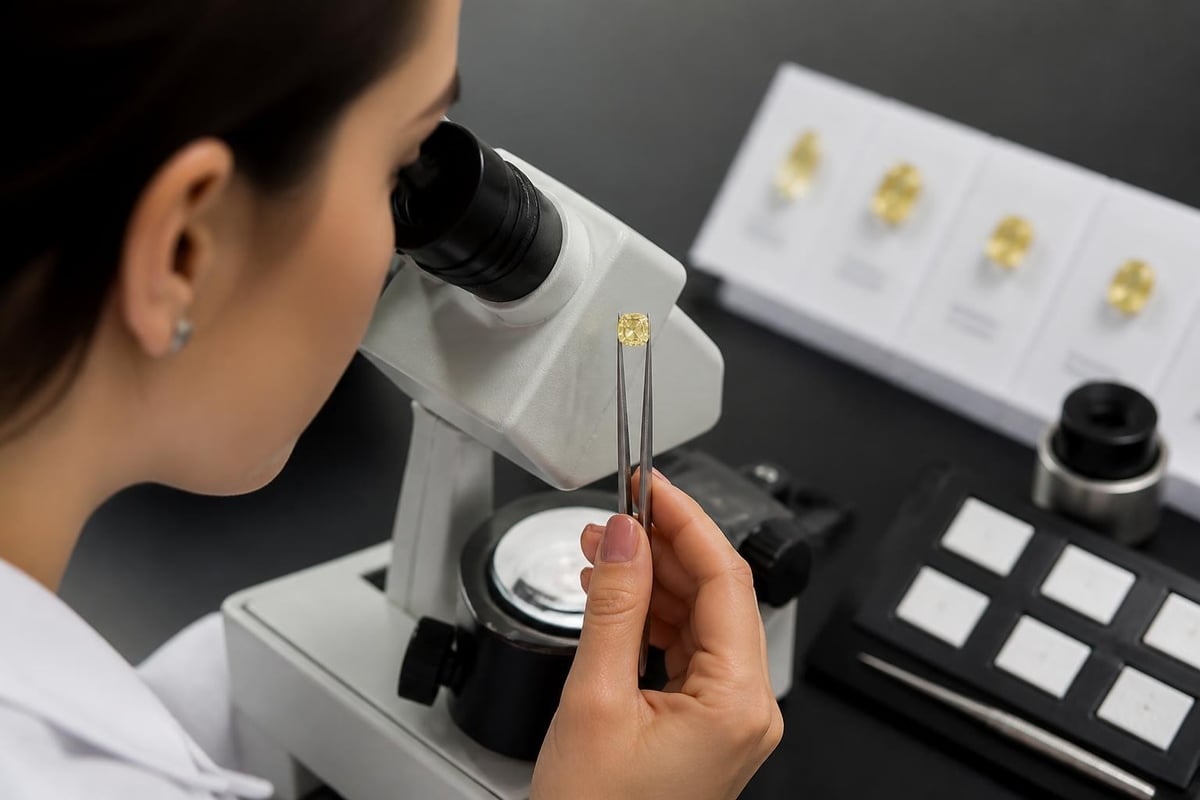
The proliferation of synthetic yellow diamonds and treated stones makes professional certification essential for any serious acquisition. Reputable gemological laboratories provide comprehensive analysis that documents a natural yellow diamond's authenticity, characteristics, and any treatments.
Primary certification authorities include the Gemological Institute of America (GIA), the International Gemological Institute (IGI), and the American Gem Society (AGS). Each laboratory employs sophisticated testing methodologies to distinguish natural diamonds from laboratory-grown alternatives and identify any enhancement treatments.
Critical Elements of Certification Reports
A comprehensive certification report for a natural yellow diamond should include:
- Precise color grade with modifiers
- Clarity grade and inclusion plotting
- Carat weight measurement to hundredths
- Cut grade and proportions analysis
- Fluorescence characteristics under UV light
- Origin determination when possible
- Treatment disclosure or natural status confirmation
- Unique report number for verification
The distinction between natural and synthetic stones has become increasingly nuanced as laboratory technology advances. Understanding certification standards empowers collectors to make confident purchasing decisions based on verified gemological data rather than visual assessment alone.
Modern spectroscopic analysis can detect nitrogen aggregation patterns that reveal whether a yellow diamond formed naturally over billions of years or was created in weeks through high-pressure, high-temperature processes. Natural stones display characteristic nitrogen clustering that develops only through extended geological time periods.
Historical Significance and Notable Examples
The cultural and historical significance of natural yellow diamonds extends back centuries, with their timeless allure captivating royalty, collectors, and connoisseurs across generations. These gemstones have adorned monarchs, inspired legends, and achieved record-breaking auction prices that underscore their enduring value.
One of the most celebrated natural yellow diamonds, the Tiffany Yellow Diamond, weighs an extraordinary 128.54 carats and displays a Fancy Vivid yellow color grade. Discovered in South Africa's Kimberley mines in 1878, this legendary gemstone has been worn by only four individuals throughout its documented history, including Audrey Hepburn for publicity photographs promoting "Breakfast at Tiffany's."
Recent Market Milestones
The auction market for exceptional natural yellow diamonds demonstrates consistent appreciation over time. Recent sales include Fancy Vivid yellow diamonds exceeding $500,000 per carat at major auction houses, reflecting growing collector demand for the finest examples.
The '552' yellow diamond, discovered in Canada's Northwest Territories, represents the largest yellow diamond found in North America at 552 carats rough weight. Such discoveries highlight the global distribution of these rare gemstones and the ongoing potential for exceptional finds.
Investment Considerations for Collectors
Natural yellow diamonds represent a unique intersection of aesthetic beauty and investment potential within the luxury asset category. Historical price data demonstrates consistent appreciation for high-quality specimens, particularly those grading Fancy Intense or above with excellent clarity characteristics.
Investment-grade selection criteria:
- Color saturation of Fancy Intense or higher
- Clarity grade of VS2 or better
- Certified natural origin without treatments
- Carat weight exceeding 1.00 for optimal liquidity
- Contemporary or classic cut maximizing brilliance
- Comprehensive certification from recognized laboratories
Portfolio diversification strategies increasingly incorporate colored diamonds as tangible assets with low correlation to traditional financial markets. The finite supply of natural yellow diamonds, combined with declining production from major mining operations, suggests continued upward price pressure for premium specimens.
Collectors building positions in colored diamonds should consider how individual stones integrate within broader jewelry collections. Pieces designed for wearability provide aesthetic enjoyment alongside investment appreciation, whereas loose stones offer maximum flexibility for future setting decisions.
Care and Preservation Guidelines
Proper maintenance ensures that a natural yellow diamond retains its brilliance and value throughout generations. While diamonds rank as the hardest natural substance at 10 on the Mohs scale, appropriate care protocols prevent damage and preserve the stone's optimal appearance.
Cleaning and Maintenance Protocol
Professional cleaning every six months maintains optimal light performance and allows jewelers to inspect settings for security issues. Between professional services, gentle home cleaning using warm water, mild dish soap, and a soft brush removes accumulated oils and debris.
Recommended care practices:
- Remove jewelry during physical activities or manual work
- Store pieces separately to prevent contact scratching
- Avoid exposure to harsh chemicals including chlorine
- Schedule annual professional inspections
- Maintain insurance documentation and updated appraisals
- Document provenance and certification records
Unlike some colored gemstones, natural yellow diamonds exhibit exceptional durability and resist fading or color alteration under normal wearing conditions. The nitrogen-induced coloration remains stable across temperature variations and light exposure, making these stones ideal for heirloom pieces intended for transgenerational transfer.
Understanding Treatment and Enhancement Disclosures
Transparency regarding treatments and enhancements represents a fundamental aspect of ethical natural yellow diamond commerce. Various processes can alter a diamond's color, and full disclosure of any such treatments is both legally required and professionally essential.
Common enhancement methods include high-pressure, high-temperature (HPHT) treatment, which can intensify yellow coloration in certain diamonds, and irradiation followed by annealing, which may produce yellow hues in previously colorless or near-colorless stones. While treated diamonds offer more accessible price points, natural untreated specimens command significant premiums and demonstrate superior investment characteristics.
The distinction between naturally colored and enhanced stones becomes clear through advanced gemological testing. Professional laboratories employ sophisticated analysis including spectroscopy and photoluminescence to identify treatment signatures. Collectors prioritizing authenticity should insist on certification explicitly stating "natural color" or "no indications of treatment" within laboratory reports.
| Treatment Type | Detection Method | Market Impact |
|---|---|---|
| HPHT Color Enhancement | Spectroscopic analysis | 40-60% value reduction |
| Irradiation Treatment | Photoluminescence testing | 50-70% value reduction |
| Surface Coating | Visual inspection, testing | Temporary, minimal value |
| Laser Drilling | Magnification examination | Moderate value impact |
| Fracture Filling | Specialized lighting | Significant value reduction |
Natural yellow diamonds represent the pinnacle of colored gemstone collecting, combining geological rarity with investment potential and timeless aesthetic appeal. Understanding formation processes, grading standards, and authentication requirements empowers collectors to make informed decisions when acquiring these extraordinary treasures. Whether you're seeking a statement piece for your personal collection or exploring investment-grade gemstones, La Maison Val D'or offers curated access to exceptional natural yellow diamonds and fine jewelry pieces that embody quality, elegance, and enduring value.