
Natural Diamonds vs Lab Diamonds for Engagement Rings
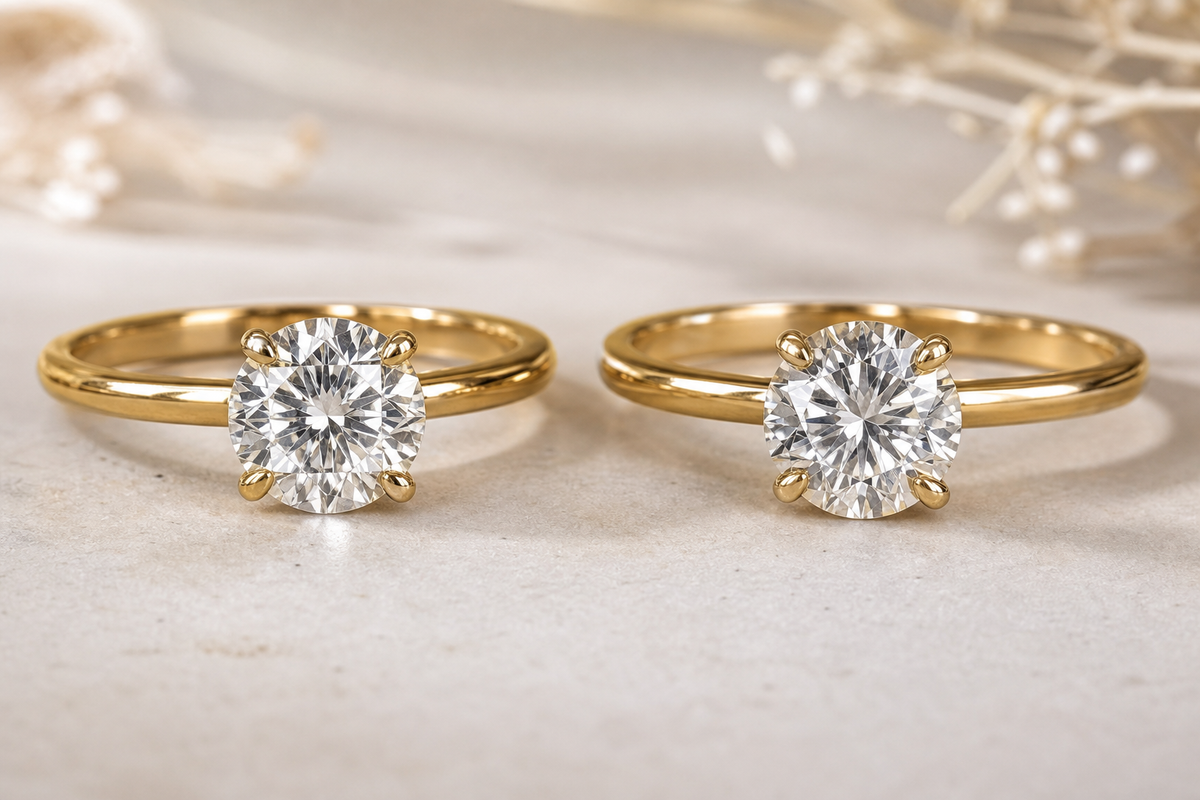
Natural and lab diamonds are both real diamonds suitable for engagement rings. The main difference is origin: natural diamonds form in the earth over long periods, while lab diamonds are grown in controlled conditions. For most buyers, the decision comes down to budget, rarity, certification, and long-term priorities such as resale expectations and stone size.
Natural and lab diamonds are both real diamonds
Natural and lab diamonds share the same core diamond composition and are used in fine jewelry and bridal settings. Store product data for La Maison Val D'or describes lab-grown diamonds as having the same chemical or core diamond composition as mined diamonds, while natural diamond products are identified separately by natural origin and documented grading details .
That means both options can work well in an engagement ring if the stone is properly cut, securely set, and accompanied by clear grading information. For example, the store carries a 5ct emerald cut lab grown diamond engagement ring and several natural diamond engagement rings with documented carat weight, color, and clarity details .
What actually differs between natural and lab diamonds

The biggest difference is origin. Natural diamonds are mined, while lab diamonds are created using processes such as CVD or HPHT, which are specifically named in multiple La Maison Val D'or product listings for loose and set lab-grown stones .
That difference in origin affects how buyers compare rarity, pricing, and market perception. Natural diamonds are finite and often chosen for rarity or traditional preference, while lab diamonds are typically chosen for size and specification flexibility at a lower cost per comparable stone.
Price and size are often the deciding factors

For engagement ring shopping, lab diamonds usually make it easier to choose a larger center stone or higher color and clarity within the same budget. La Maison Val D'or product descriptions repeatedly position lab-grown center stones as a practical option for buyers seeking large, certified stones with documented specifications for custom or bridal use .
Natural diamonds generally cost more for comparable visible specifications because natural origin and rarity are part of what buyers are paying for. If your priority is maximizing size for budget, lab diamonds usually provide more options. If your priority is natural origin and rarity, a natural diamond may be the better fit even at a smaller carat weight.
Certification matters more than origin alone
Whether you choose natural or lab, grading documentation is essential. On the store, lab-grown stones are frequently listed with IGI certification, and some loose lab diamonds are listed with GIA or IGI options, while natural stones and rings are described with third-party appraisals or certificates depending on the item .
For engagement rings, certification helps you compare cut, color, clarity, and carat weight on a more consistent basis. It also helps clarify whether you are buying a loose stone, a finished ring, or a ring with a certified center diamond. If you are comparing set styles, a natural option like this oval natural diamond engagement ring in 18K gold and a lab option like this 3.0ct pear cut lab grown diamond ring show how both categories can offer engagement-ready designs with clear stone details .
How natural and lab diamonds compare for everyday wear
Both natural and lab diamonds are used in rings intended for regular wear. Store listings describe both types in solid gold engagement settings and bridal pieces, indicating that either can serve as an everyday engagement ring when the setting and build quality are appropriate .
In practical terms, durability for daily use depends not just on diamond origin, but also on ring design, prongs, metal choice, and how the ring is worn. A secure 14K or 18K gold setting and verified stone details matter more to long-term wear than whether the diamond is natural or lab grown.
Which option makes more sense for your priorities
Choose a natural diamond if natural origin, rarity, and traditional market preference matter most to you. Choose a lab diamond if you want a larger or higher-graded stone for the same budget, or if certification and visible performance are more important than mined origin.
A simple way to decide is to rank your top priorities first:
- Choose natural diamond if you value rarity, mined origin, and traditional preference.
- Choose lab diamond if you value size, price efficiency, and access to higher specifications.
- Choose either if your focus is an engagement ring with verified grading, solid construction, and a design you will wear comfortably every day.
If you are still comparing styles, La Maison Val D'or offers both natural diamond and lab-grown diamond engagement ring options, including natural diamond rings in 18K white gold and larger certified lab-grown center-stone rings for bridal use .
FAQ
Are lab diamonds real diamonds?
Yes. Lab diamonds are real diamonds with the same core diamond composition as mined diamonds, as reflected in La Maison Val D'or product descriptions for certified lab-grown stones .
Do natural diamonds cost more than lab diamonds?
Usually, yes. Natural diamonds generally cost more than comparable lab diamonds because natural origin and rarity affect pricing, while lab diamonds are often positioned as a more accessible way to buy larger or higher-spec stones.
Can lab diamonds be used for engagement rings?
Yes. La Maison Val D'or lists multiple lab-grown diamond rings and loose stones specifically for engagement rings, bridal jewelry, and custom ring projects .
Should I buy a certified diamond for an engagement ring?
Yes. Certification or third-party grading helps verify carat weight, color, clarity, and other stone details, which makes comparison easier for both natural and lab diamonds .