
The jewelry industry stands at a fascinating crossroads where technological innovation meets timeless elegance. Lab grown diamonds have emerged as a transformative force, offering discerning collectors and jewelry enthusiasts an alternative that combines exceptional quality with modern values. These scientifically created gemstones possess identical physical, chemical, and optical properties to their mined counterparts, yet they represent a fundamentally different approach to acquiring luxury pieces. For connoisseurs of fine jewelry, understanding the nuances of lab grown diamonds has become essential for making informed purchasing decisions in 2026.
Understanding Lab Grown Diamond Technology
Lab grown diamonds are genuine diamonds created in controlled laboratory environments using advanced technological processes. These stones share the same carbon crystal structure, hardness rating of 10 on the Mohs scale, and brilliant optical characteristics as naturally occurring diamonds formed deep within the Earth over billions of years.
The Two Primary Production Methods
Scientists employ two distinct approaches to create lab grown gemstones, each with specific advantages and applications.
Chemical Vapor Deposition (CVD) involves placing a diamond seed in a sealed chamber filled with carbon-rich gases. When heated to extreme temperatures, the gases ionize and carbon atoms deposit onto the seed, building the diamond layer by layer. This method allows for precise control over the diamond's characteristics and produces exceptionally pure stones.
High Pressure High Temperature (HPHT) replicates the natural conditions found deep within the Earth's mantle. A small diamond seed is subjected to pressures exceeding 1.5 million pounds per square inch and temperatures approaching 2,700 degrees Fahrenheit. Under these extreme conditions, carbon melts and forms a diamond around the seed crystal.
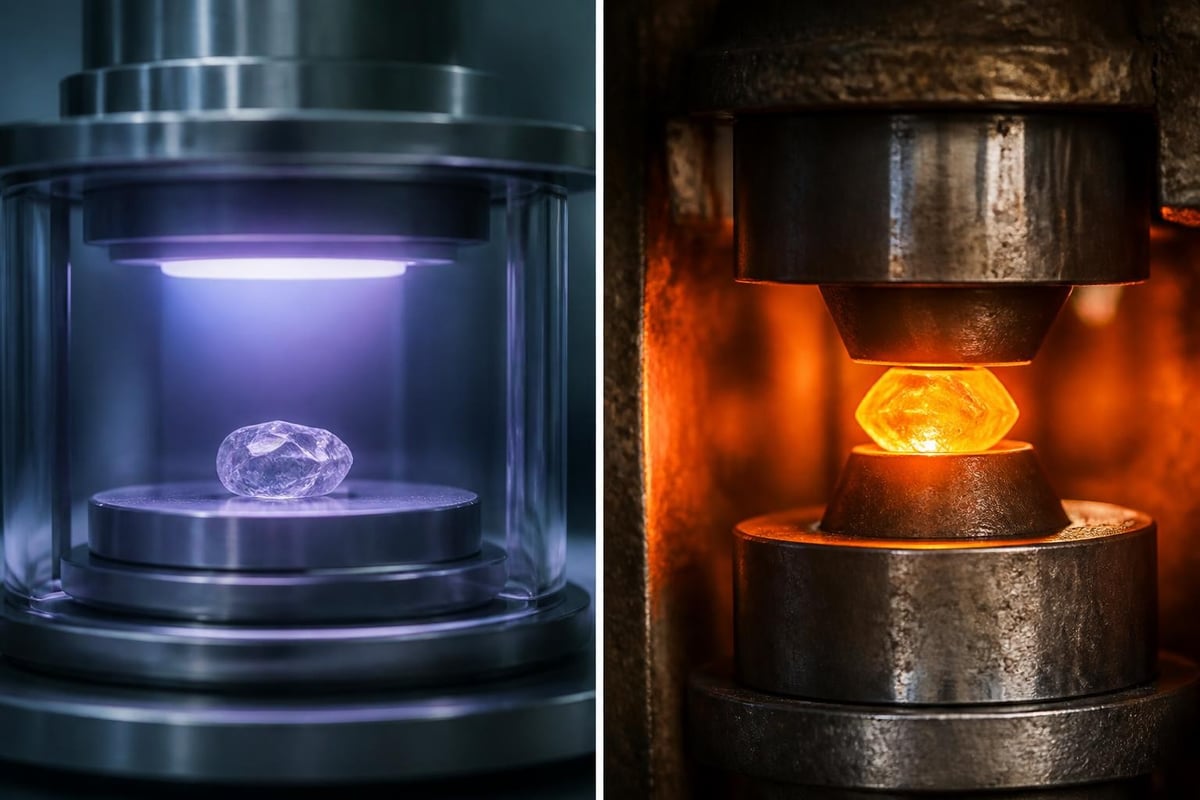
| Production Method | Temperature Range | Pressure Levels | Growth Time | Primary Applications |
|---|---|---|---|---|
| CVD | 1,400-1,800°F | Low pressure | 2-4 weeks | High-clarity stones, colored diamonds |
| HPHT | 2,500-2,800°F | 1.5+ million PSI | Days to weeks | Industrial applications, white diamonds |
The scalable production capabilities of modern lab grown diamond facilities have improved dramatically, enabling consistent quality across larger production volumes. This technological advancement has made premium gemstones more accessible while maintaining the strict quality standards expected in ultra-fine jewelry.
Quality Standards and Certification
Lab grown diamonds undergo the same rigorous grading processes as mined stones. The Gemological Institute of America (GIA), International Gemological Institute (IGI), and other respected certification bodies evaluate these gems using identical criteria.
The Four Cs Applied to Lab Grown Stones
Cut determines how effectively a diamond reflects light, directly influencing its brilliance and fire. Master cutters apply the same precision techniques to lab grown diamonds, creating ideal proportions that maximize optical performance. Whether for necklaces or statement rings, cut quality remains paramount.
Color grading follows the D-to-Z scale, with completely colorless stones receiving D grades. Lab grown diamonds can achieve exceptionally high color grades more consistently than mined stones because the controlled environment eliminates many impurities that cause discoloration.
Clarity measures internal inclusions and external blemishes. The precision of laboratory creation often results in fewer inclusions, producing VS1, VS2, or even flawless grades with greater frequency.
Carat weight indicates size, with lab grown diamonds offering identical density and visual appearance to mined stones of equivalent weight.
According to industry statistics, consumer expectations for certification have increased significantly, with 73% of buyers requiring third-party grading reports. This demand reflects the sophisticated understanding today's jewelry collectors bring to their purchasing decisions.
Environmental and Ethical Considerations
The environmental profile of lab grown diamonds presents compelling advantages for conscious consumers who refuse to compromise on quality.
Resource Consumption Comparison
Traditional diamond mining requires moving enormous quantities of earth, often displacing ecosystems and consuming substantial water resources. A single carat of mined diamond typically involves excavating approximately 250 tons of earth, creating lasting environmental disruption.
Lab grown facilities operate with significantly reduced land footprint and can utilize renewable energy sources. The environmental impact analysis reveals that modern production methods have decreased carbon emissions substantially compared to traditional mining operations.
- Water usage: Lab facilities use 40-80% less water than mining operations
- Land disturbance: Minimal surface disruption versus large-scale excavation
- Energy sources: Increasing adoption of renewable power in production facilities
- Carbon footprint: Varies by facility but generally lower than mining equivalents
Transparency and Traceability
Lab grown diamonds offer complete supply chain transparency from creation to final setting. Each stone's origin can be documented precisely, eliminating concerns about conflict diamonds or unethical labor practices that have historically challenged the mining industry.
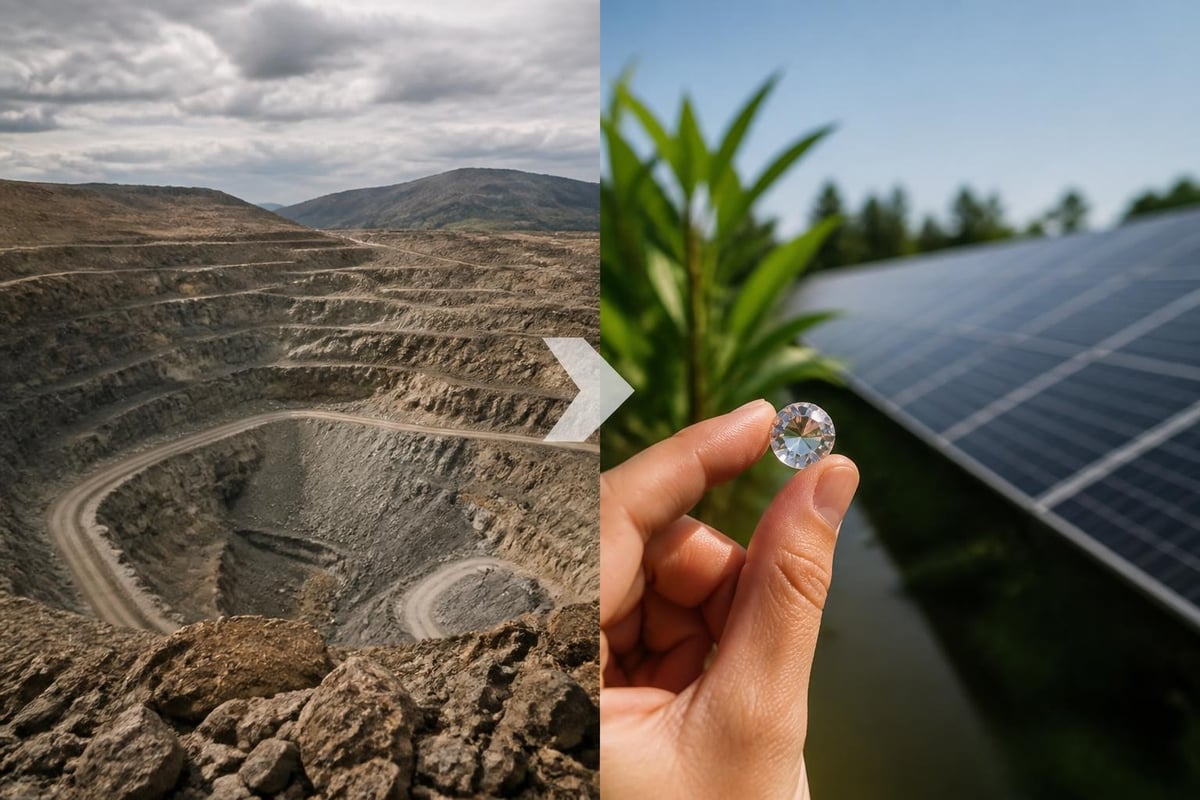
Major jewelry retailers have recognized these benefits, with companies like Pandora transitioning entirely to lab grown diamonds in their collections, demonstrating the mainstream acceptance of these gems.
Market Dynamics and Pricing Structure
The economics of lab grown diamonds have evolved dramatically over the past decade, creating new opportunities for collectors seeking exceptional value without sacrificing quality.
Price Advantages
Lab grown diamonds typically cost 40-70% less than comparable mined stones with identical specifications. This price differential reflects production efficiencies rather than quality differences, allowing consumers to acquire larger or higher-grade stones within their budget.
For those investing in jewelry sets or comprehensive collections, lab grown options enable coordinated pieces featuring matching gemstones at accessible price points. The savings can be redirected toward superior craftsmanship, precious metal selection, or unique design elements.
Investment Perspectives
While mined diamonds have traditionally been viewed as investment assets, lab grown stones represent a different value proposition. Their primary worth lies in personal enjoyment, aesthetic beauty, and the intrinsic value of fine craftsmanship rather than potential appreciation.
| Factor | Lab Grown Diamonds | Mined Diamonds |
|---|---|---|
| Initial Cost | 40-70% lower | Higher premium |
| Resale Value | Lower secondary market | Established resale market |
| Quality Consistency | Highly consistent | Variable by source |
| Size Availability | Larger stones accessible | Premium increases with size |
| Customization Options | Greater flexibility | Traditional options |
This pricing structure makes lab grown diamonds particularly attractive for milestone purchases where immediate value and personal significance outweigh long-term investment considerations.
Applications in Fine Jewelry Design
Lab grown diamonds provide designers with expanded creative possibilities, enabling ambitious pieces that might be prohibitively expensive with mined stones.
Design Flexibility
The consistent availability of specific grades and sizes allows jewelers to execute precise design visions. When creating intricate bracelets requiring multiple matched stones, lab grown diamonds ensure perfect uniformity in color and clarity.
Innovative Settings benefit from the ability to source specific diamond shapes and sizes on demand. Designers can incorporate:
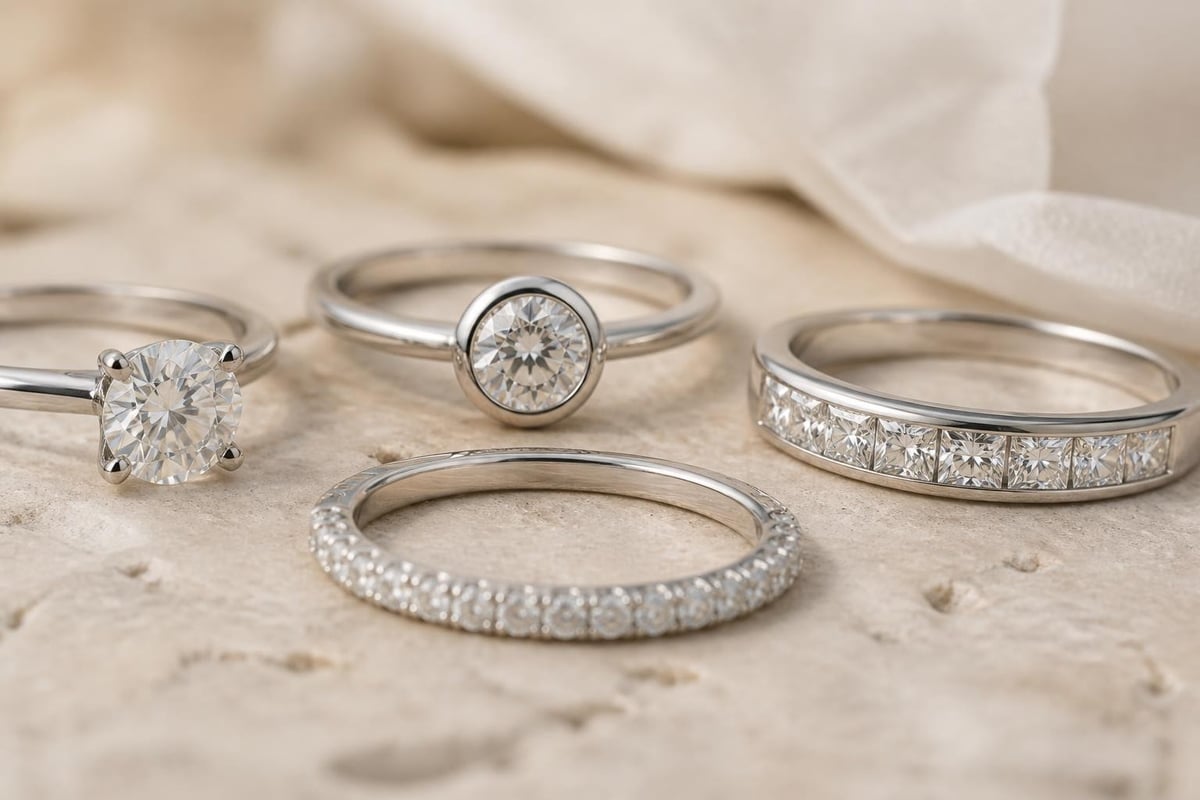
- Graduated pavé work with precisely calibrated stones
- Complex geometric patterns requiring exact dimensional matching
- Mixed-shape designs combining various cuts harmoniously
- Halo settings with perfectly matched accent diamonds
- Channel-set pieces with seamless stone alignment
Colored Diamond Opportunities
Lab grown technology excels at producing fancy colored diamonds in consistent, vibrant hues. The controlled environment allows for precise introduction of trace elements that create specific colors, from vivid yellows to rare blues and pinks.
These colored varieties open new design possibilities for rings and statement pieces that showcase personality and individual style. The accessibility of colored lab grown diamonds has democratized options once reserved for the most exclusive collections.
Technical Characteristics and Performance
The optical and physical properties of lab grown diamonds merit detailed examination for those seeking to understand exactly what they're acquiring.
Crystalline Structure
Lab grown diamonds possess the identical cubic crystal structure of natural diamonds, with carbon atoms arranged in the same tetrahedral lattice. This atomic organization determines all the properties that make diamonds exceptional: extreme hardness, thermal conductivity, and optical brilliance.
Research into delayed luminescence properties has revealed that laboratory-grown diamonds exhibit distinctive characteristics under specialized analysis, though these differences are imperceptible in standard viewing conditions and have no impact on beauty or durability.
Optical Performance
Light return, dispersion, and scintillation depend entirely on cut quality rather than origin. A well-cut lab grown diamond demonstrates the same fire and brilliance as an equivalently cut mined stone. The refractive index of 2.42 remains constant regardless of formation method.
Key Performance Metrics:
- Refractive index: 2.42 (identical to mined diamonds)
- Dispersion: 0.044 (produces characteristic fire)
- Hardness: 10 on Mohs scale (exceptional durability)
- Thermal conductivity: Highest among gemstones
- Chemical resistance: Inert to acids and alkalis
These properties ensure lab grown diamonds perform identically to mined stones in all practical applications, from everyday wear to heirloom pieces intended for generational transmission.
Integration with Precious Metals and Settings
The compatibility of lab grown diamonds with various metal alloys and setting techniques matches that of traditional stones, providing complete design freedom.
Metal Pairing Considerations
Platinum settings complement the exceptional clarity possible with lab grown diamonds, creating pieces with museum-quality aesthetics. The neutral white metal allows the diamond's optical properties to dominate without color interference.
18K and 14K Gold options in white, yellow, and rose variations each create distinct visual effects. Yellow gold provides warm contrast that can enhance certain diamond colors, while white gold offers a contemporary aesthetic similar to platinum at a more accessible price point.
The ability to allocate more budget toward superior metal quality and artisanal craftsmanship represents a strategic advantage of choosing lab grown stones. Investing in loose precious stones allows for custom settings that perfectly complement the selected diamonds.
Setting Security and Longevity
Regardless of diamond origin, proper setting techniques ensure long-term security and wearability. Prong settings, bezel mountings, and channel configurations all function identically with lab grown stones. The physical properties that determine setting requirements remain constant across all genuine diamonds.
Consumer Perceptions and Market Trends
The acceptance of lab grown diamonds has accelerated remarkably, reflecting shifting consumer priorities and increased education about gemstone science.
Demographic Patterns
Younger consumers demonstrate particularly strong interest in lab grown options, with sustainability concerns and value optimization driving preference. However, appreciation spans all demographics as awareness of quality equivalence increases.
The comprehensive industry research examining environmental benefits has influenced purchasing decisions across age groups, particularly among consumers who prioritize measurable impact alongside aesthetic considerations.
Gifting and Milestone Celebrations
Lab grown diamonds have gained acceptance for engagement rings, anniversary gifts, and other significant life celebrations. The ability to present a larger or higher-quality stone within budget constraints appeals to practical romantics who understand that emotional significance derives from the relationship rather than the diamond's formation method.
For those designing custom pieces or selecting from curated collections, lab grown options expand possibilities without compromising on the quality or beauty expected in milestone jewelry.
Authentication and Identification Methods
Distinguishing lab grown diamonds from mined stones requires specialized equipment, as visual inspection alone cannot reveal origin differences.
Professional Testing Techniques
Gemological laboratories employ several methods to identify lab grown diamonds:
- Spectroscopy analysis detects specific absorption patterns unique to growth methods
- Phosphorescence testing reveals characteristic glow patterns under UV exposure
- Microscopic inclusion examination identifies growth-related features
- Electrical conductivity measurements distinguish certain production methods
- Advanced imaging reveals growth striations visible only under magnification
Disclosure Requirements
Reputable jewelers provide clear disclosure of diamond origin, with certifications explicitly stating whether stones are laboratory-created. This transparency ensures informed decision-making and prevents misrepresentation.
Care and Maintenance Protocols
Lab grown diamonds require identical care procedures as mined stones, benefiting from the same cleaning methods and maintenance practices.
Routine Cleaning
At-home maintenance involves:
- Warm water and mild soap solution for regular cleaning
- Soft brush to remove accumulated oils and debris
- Thorough rinsing to eliminate soap residue
- Gentle drying with lint-free cloth
- Avoiding harsh chemicals that might affect metal settings
Professional servicing should occur annually, including:
- Ultrasonic cleaning to remove embedded particles
- Prong inspection and tightening as needed
- General condition assessment
- Re-polishing if surface abrasions occur
Storage Best Practices
Diamonds can scratch other gemstones and even each other, making proper storage essential. Individual compartments or soft pouches prevent contact damage. This precaution applies equally to all diamond jewelry, regardless of stone origin.
Future Developments and Industry Evolution
The lab grown diamond sector continues advancing rapidly, with technological improvements and market expansion shaping its trajectory.
Production Innovations
Researchers are developing more energy-efficient creation methods and exploring techniques for producing larger rough crystals. These advances will further improve the sustainability profile while potentially expanding available sizes and reducing production times.
Market Integration
As consumer education improves and acceptance broadens, lab grown diamonds are becoming standard options across all jewelry categories. The distinction between "lab grown" and "mined" may eventually become simply a matter of personal preference rather than a value judgment.
The jewelry industry's evolution reflects broader trends toward transparency, sustainability, and informed consumption. Discerning collectors increasingly evaluate purchases based on comprehensive criteria including craftsmanship quality, design innovation, and alignment with personal values.
Lab grown diamonds represent a significant advancement in fine jewelry, offering genuine quality, ethical transparency, and exceptional value. These scientifically created gemstones provide an opportunity to own exquisite pieces that reflect both timeless beauty and contemporary values. Whether you're seeking a statement piece or building a comprehensive collection, exploring the possibilities of lab grown diamonds opens new avenues for expressing personal style. La Maison Val D'or curates exceptional jewelry featuring both traditional and innovative gemstone options, helping you discover pieces that resonate with your aesthetic vision and values while maintaining the uncompromising quality standards expected from ultra-fine jewelry.