
Natural blue diamonds represent one of nature's most extraordinary achievements, combining geological rarity with breathtaking beauty. These exceptional gemstones have captivated collectors, investors, and jewelry enthusiasts for centuries, commanding premium prices that often exceed their colorless counterparts. Understanding what distinguishes a natural blue diamond from other colored diamonds requires examining their unique formation process, the scientific principles behind their coloration, and the factors that determine their exceptional value in today's marketplace.
The Science Behind Natural Blue Diamond Coloration
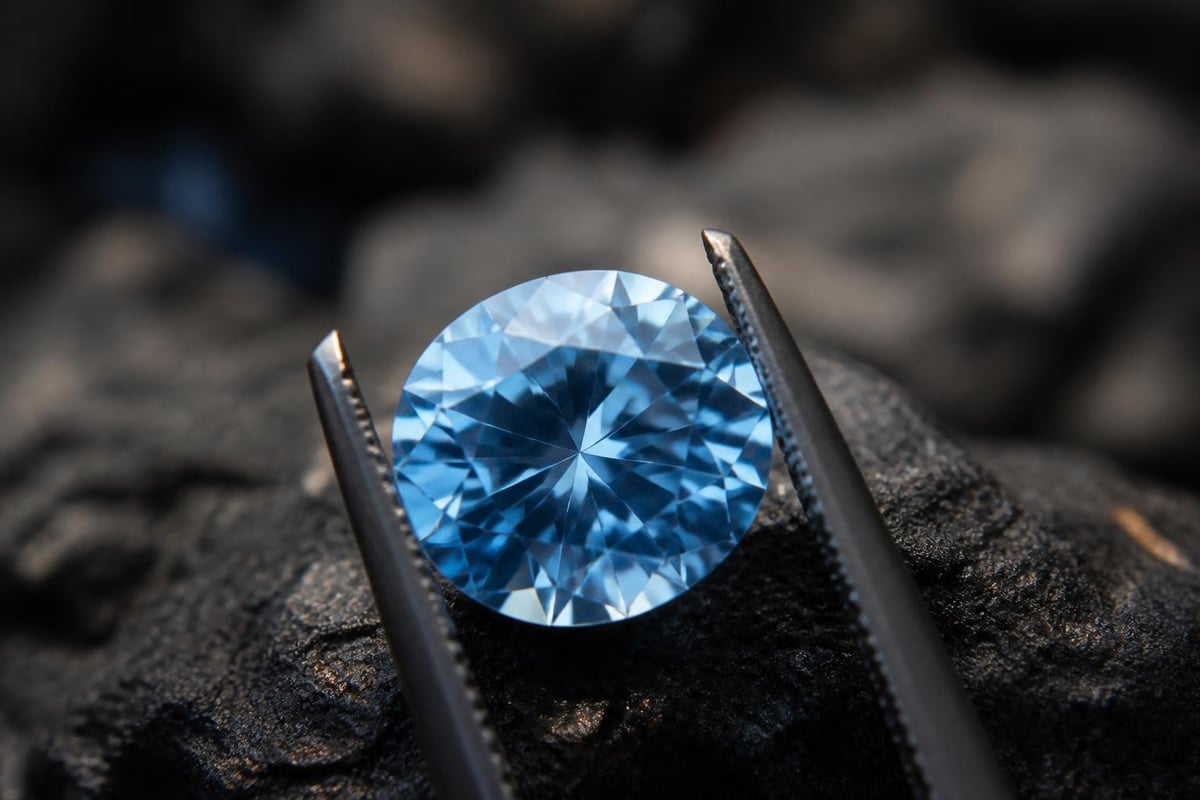
The remarkable blue hue in a natural blue diamond originates from a fascinating geological process that occurred billions of years ago. Unlike other colored diamonds that derive their tints from nitrogen or radiation damage, blue diamonds owe their distinctive color to boron atoms incorporated into their crystal lattice during formation. This boron inclusion is extraordinarily rare, occurring only under specific conditions deep within the Earth's mantle.
How Boron Creates the Blue Spectrum
When boron atoms replace carbon atoms in the diamond's crystalline structure, they create unique electronic properties that absorb red, yellow, and green wavelengths of light. The remaining blue wavelengths reflect back to the observer, producing the characteristic azure appearance. The concentration of boron directly influences the intensity of the blue color, with higher concentrations resulting in deeper, more saturated hues.
Research has revealed that blue diamonds have a remarkable connection to ancient oceans, as the boron likely originated from marine sediments that were subducted deep into the Earth's mantle. This scientific discovery adds another layer of intrigue to these already fascinating gemstones.
Rarity and Geographic Origins
Natural blue diamonds rank among the rarest gemstones on Earth, with production numbers that pale in comparison to even other fancy colored diamonds. The Cullinan mine in South Africa has historically been the primary source of these exceptional stones, though production remains extremely limited. Australia's Argyle mine, before its closure in 2020, occasionally produced blue diamonds with unique characteristics, though these represented an infinitesimal fraction of total output.
Key sources of natural blue diamonds include:
- Cullinan Mine, South Africa (primary source)
- Golconda region, India (historical source of famous specimens)
- Argyle Mine, Australia (rare violet-blue diamonds)
- Minor production from select mines in Brazil and Central Africa
The scarcity of natural blue diamonds becomes evident when examining production statistics. For every 10,000 colorless diamonds mined, only one fancy colored diamond emerges, and blue diamonds represent merely a fraction of that already minuscule percentage. This extreme rarity directly impacts their value and desirability among collectors and connoisseurs.
Grading and Classification Systems
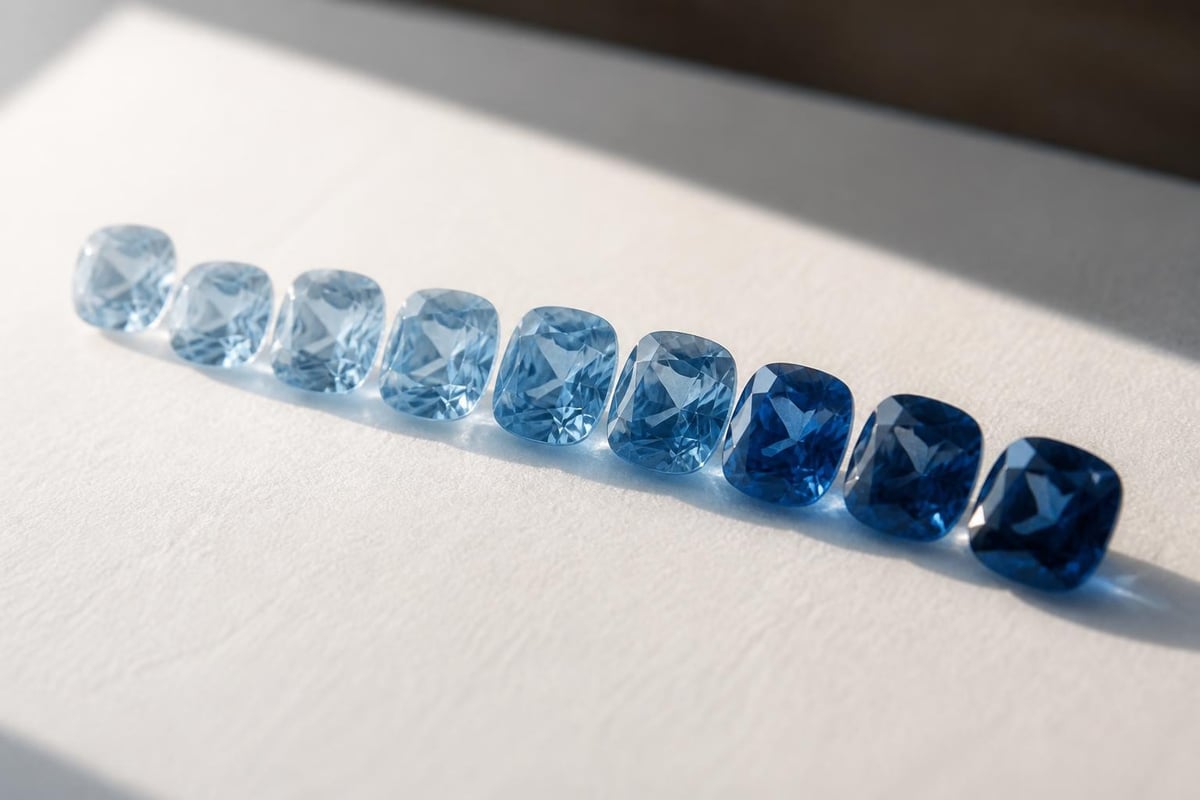
The Gemological Institute of America (GIA) employs a sophisticated grading system specifically designed for fancy colored diamonds, including natural blue diamonds. Unlike colorless diamonds where absence of color increases value, the intensity and purity of blue coloration determines a blue diamond's worth. The GIA color grading scale for blue diamonds includes several distinct categories.
Understanding Blue Diamond Color Grades
| Color Grade | Description | Market Impact |
|---|---|---|
| Faint Blue | Barely perceptible blue tint | Lower premium over colorless |
| Very Light Blue | Subtle but noticeable blue | Moderate collectibility |
| Light Blue | Clear blue appearance | Strong collector interest |
| Fancy Blue | Distinct, attractive blue | Significant value premium |
| Fancy Intense Blue | Rich, saturated blue | Exceptional rarity and value |
| Fancy Vivid Blue | Most saturated, pure blue | Museum-quality, highest prices |
| Fancy Deep Blue | Dark, profound blue | Rare and highly valuable |
Beyond color intensity, the purity of the blue hue significantly affects valuation. A natural blue diamond with secondary tones of gray or green typically commands lower prices than one exhibiting pure blue coloration. The most valuable specimens display an even distribution of color throughout the stone without visible zoning or color concentrations.
Famous Natural Blue Diamonds Throughout History
Several legendary natural blue diamonds have achieved worldwide recognition, their stories intertwining with royalty, mystery, and astronomical valuations. The Hope Diamond, perhaps the most famous natural blue diamond in existence, weighs 45.52 carats and currently resides in the Smithsonian Institution. Its deep grayish-blue color and storied history have made it an icon of gemological excellence.
The Blue Moon of Josephine, a 12.03-carat fancy vivid blue diamond, sold for approximately $48.4 million in 2015, establishing a world record price per carat. This exceptional stone exemplifies the intense market demand for high-quality natural blue diamonds. The Oppenheimer Blue, weighing 14.62 carats, achieved $57.5 million at auction in 2016, further demonstrating the extraordinary values these rare gemstones command.
Notable characteristics of famous blue diamonds:
- Exceptional size (most natural blue diamonds weigh less than one carat)
- Vivid or intense color saturation
- Documented provenance and history
- Minimal secondary color modifiers
- Superior clarity grades
These historic specimens serve as benchmarks for quality and value, guiding collectors and investors when evaluating natural blue diamonds available in today's market. La Maison Val D'or's collection of loose precious stones offers clients access to carefully curated gemstones that embody similar standards of excellence.
Investment Potential and Market Trends
The investment case for natural blue diamonds has strengthened considerably over the past two decades, with prices appreciating significantly across all quality grades. Several factors contribute to their robust investment profile, including finite supply, increasing global wealth, and growing recognition of colored diamonds as alternative assets. Understanding what makes blue diamonds real and verifying authenticity becomes crucial for investors entering this specialized market.
Price Performance and Market Dynamics
- Historical appreciation: Natural blue diamonds have demonstrated consistent price growth, outpacing many traditional investment vehicles
- Supply constraints: Mine depletion and limited new discoveries ensure ongoing scarcity
- Collector demand: Ultra-high-net-worth individuals increasingly allocate capital to rare gemstones
- Portability and privacy: Physical diamonds offer discrete wealth storage options
- Generational wealth transfer: Fine gemstones serve as compact, valuable heirlooms
The closure of the Argyle mine in 2020 removed a source of rare colored diamonds from global supply, creating additional upward pressure on natural blue diamond prices. While Argyle primarily produced pink diamonds, its occasional blue diamond output contributed to overall supply. This reduction in available sources makes existing natural blue diamonds increasingly precious.
Purchasing Considerations for Collectors and Investors
Acquiring a natural blue diamond requires careful evaluation, expert guidance, and thorough documentation. Potential buyers should prioritize stones accompanied by grading reports from reputable gemological laboratories, particularly the GIA, which maintains the industry's most rigorous standards. The certification should confirm the diamond's natural origin, as treated and synthetic blue diamonds exist in the marketplace.
Essential purchasing checklist:
- GIA or equivalent certification confirming natural origin
- Detailed examination of color grade and distribution
- Clarity assessment (VS2 or better preferred for investment)
- Cut quality evaluation for brilliance and light performance
- Price comparison across multiple comparable specimens
- Verification of seller credentials and reputation
When considering a natural blue diamond for an engagement ring or other fine jewelry application, buyers should think beyond the stone itself to the setting design. Selecting the right ring setting can enhance the diamond's appearance while providing secure mounting that protects this valuable investment.
Treatment Detection and Authenticity Verification
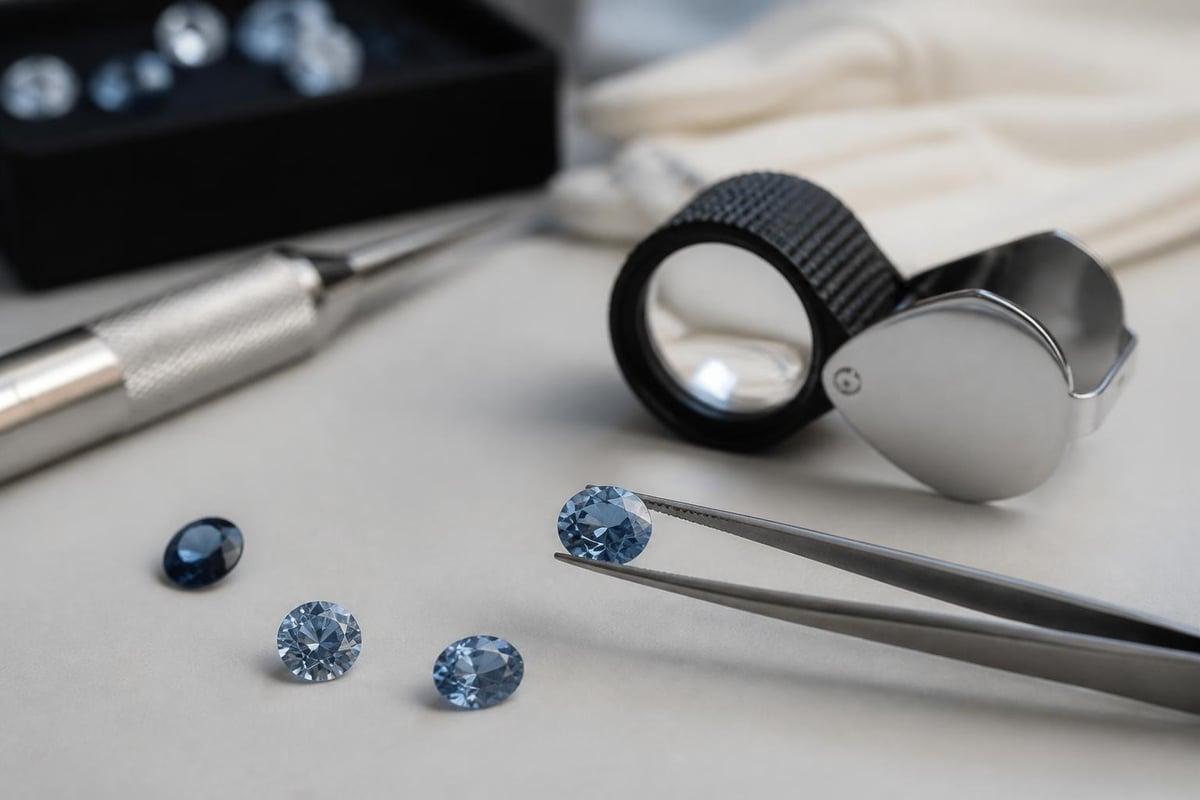
The market includes treated diamonds and laboratory-grown alternatives that can mimic the appearance of natural blue diamonds. High-pressure, high-temperature (HPHT) treatment can induce blue coloration in certain diamond types, while irradiation followed by annealing can create blue hues in others. Distinguishing natural from treated blue diamonds requires sophisticated gemological testing equipment and expertise.
| Treatment Method | Detection Indicators | Market Impact |
|---|---|---|
| HPHT Processing | Specific UV fluorescence patterns | Significantly lower value |
| Irradiation | Characteristic absorption spectra | Reduced pricing versus natural |
| Coating/Surface Treatment | Concentrated surface color | Minimal value |
| Laboratory-Grown | Growth patterns, trace elements | Separate market category |
Advanced spectroscopic analysis can identify the atomic-level signatures that distinguish natural blue diamonds from their treated or synthetic counterparts. These tests examine how the stone absorbs and transmits light at various wavelengths, revealing telltale patterns associated with different formation processes. Reputable laboratories include this analysis as part of their comprehensive grading services.
Color Intensity and Its Effect on Value
The relationship between color intensity and value in natural blue diamonds follows a steep exponential curve. A fancy vivid blue diamond commands multiples of the price per carat compared to a fancy light blue stone of identical size and clarity. This dramatic value differential reflects both the scarcity of intensely colored specimens and the aesthetic preferences of collectors and connoisseurs.
Quantifying Color Impact on Pricing
Moving up each level on the GIA color intensity scale can double or even triple the per-carat value. A one-carat fancy blue diamond might achieve $50,000 to $100,000, while a comparable fancy intense blue could reach $150,000 to $250,000. Fancy vivid blue diamonds regularly exceed $300,000 per carat, with exceptional examples surpassing $1 million per carat at auction.
Secondary hues modify these valuations considerably. A natural blue diamond with a slight gray modifier typically sells for 20-40% less than a pure blue stone of equivalent intensity. Green secondary tones generally reduce value more significantly, while violet undertones, particularly in smaller percentages, may have minimal impact or even enhance desirability for certain collectors.
Size Considerations and Availability
Natural blue diamonds exceeding one carat in weight qualify as exceptionally rare, with availability decreasing dramatically as carat weight increases. The majority of natural blue diamonds discovered weigh less than 0.50 carats, making them suitable primarily for accent stones or delicate jewelry designs. Finding a natural blue diamond over three carats with strong color saturation represents a significant gemological event.
This size rarity creates interesting market dynamics. While larger diamonds of most types command premiums that increase geometrically with carat weight, the scarcity of sizable natural blue diamonds creates discontinuous pricing. A two-carat fancy intense blue diamond might sell for five to seven times the total price of a one-carat stone rather than the typical two to three times multiplier seen in colorless diamonds.
Size availability breakdown:
- Under 0.50ct: Relatively available in faint to light grades
- 0.50-1.00ct: Available but limited, especially in fancy grades
- 1.00-2.00ct: Rare in all color grades
- 2.00-3.00ct: Very rare, primarily fancy or fancy intense
- Over 3.00ct: Extraordinarily rare, museum or auction quality
Designing Jewelry Settings for Natural Blue Diamonds
The mounting and setting design for a natural blue diamond significantly influences its visual impact and security. Platinum and white gold settings traditionally complement blue diamonds, creating a neutral backdrop that allows the blue color to dominate. However, yellow gold can create an interesting contrast effect, particularly with lighter blue tones, adding warmth to the overall design aesthetic.
Jewelry designers often recommend halo settings that surround the natural blue diamond with colorless accent diamonds. This approach creates visual separation between the colored center stone and the metal, while simultaneously increasing the overall presence and light performance of the piece. Contemporary necklace designs increasingly feature natural blue diamonds as sophisticated focal points.
The cut style selected for a natural blue diamond balances color optimization with light performance. Cutters frequently choose shapes and facet arrangements that maximize color retention rather than prioritizing brilliance alone. Emerald cuts, cushion cuts, and radiant cuts commonly appear in natural blue diamonds because their facet structures can intensify and evenly distribute color throughout the stone.
Care and Maintenance Requirements
Despite their exceptional hardness, natural blue diamonds require thoughtful care to maintain their beauty and value. Regular professional cleaning ensures optimal light performance, while careful storage prevents physical damage from contact with other jewelry pieces. Professional inspection every 12-18 months verifies that prongs and settings remain secure, protecting the valuable gemstone from loss.
- Daily wear precautions: Remove during activities involving impact or chemicals
- Cleaning protocol: Warm water with mild soap, soft brush for gentle cleaning
- Professional servicing: Annual inspection and cleaning by qualified jewelers
- Storage practices: Separate compartments or soft pouches to prevent scratching
- Insurance documentation: Maintain current appraisals and certification records
The boron content that creates a natural blue diamond's color also confers unique physical properties. These diamonds can conduct electricity, unlike their colorless counterparts, due to the boron atoms' effect on the crystal's electronic structure. While this characteristic rarely impacts practical ownership, it represents one of several fascinating scientific attributes that distinguish natural blue diamonds.
Market Outlook and Future Availability
Industry analysts project continued appreciation for natural blue diamonds as supply constraints intensify while global wealth expands. The absence of significant new discoveries suggests that existing sources will become increasingly depleted, particularly for larger, higher-quality specimens. This supply-demand imbalance favors long-term value retention and appreciation for well-chosen natural blue diamonds.
Guidance on purchasing natural blue diamonds emphasizes the importance of acquiring the finest quality specimens available within budget constraints. Compromising on color intensity or size to achieve higher clarity grades often proves counterproductive, as color saturation drives value in fancy colored diamonds more decisively than clarity characteristics.
The emergence of laboratory-grown blue diamonds creates a parallel market segment without diminishing natural blue diamond values. Collectors and investors recognize the fundamental distinction between geological rarity spanning billions of years and modern manufacturing processes. This differentiation maintains premium pricing for natural specimens while providing alternative options for budget-conscious buyers seeking the aesthetic appeal of blue diamonds.
Certification Standards and Laboratory Selection
Choosing the appropriate gemological laboratory for natural blue diamond certification significantly impacts marketability and valuation. The GIA maintains the most widely recognized and stringent standards, with their grading reports commanding universal acceptance in international markets. Other reputable laboratories include the American Gem Society (AGS) and the International Gemological Institute (IGI), though GIA certification typically provides the strongest market confidence.
| Laboratory | Market Recognition | Grading Consistency | Report Detail |
|---|---|---|---|
| GIA | Highest | Excellent | Comprehensive |
| AGS | High | Excellent | Detailed |
| IGI | Good | Good | Standard |
| Regional Labs | Variable | Inconsistent | Limited |
The certification report should explicitly state that the diamond is natural and specify whether any treatments have been applied. For natural blue diamonds, the report will typically indicate "natural color" in the comments section, distinguishing it from treated stones. This documentation becomes essential for insurance purposes, resale transactions, and estate planning.
Natural blue diamonds represent the intersection of geological wonder, aesthetic beauty, and investment opportunity, offering collectors access to some of nature's rarest creations. Whether you're seeking a statement piece for a special occasion or a tangible asset for long-term appreciation, understanding the factors that determine quality and value ensures informed decision-making. La Maison Val D'or provides expert guidance and access to exceptional gemstones, helping clients navigate the nuances of acquiring these extraordinary treasures with confidence and clarity.