
Yellow diamonds have captivated jewelry enthusiasts for generations with their warm, radiant glow that evokes sunshine and optimism. Lab grown diamonds yellow have emerged as an increasingly popular choice for discerning buyers who seek the same stunning beauty as natural fancy yellow diamonds while embracing modern technology and transparent sourcing. These scientifically created gemstones offer exceptional quality, consistent color saturation, and compelling value propositions that make them worthy of consideration for fine jewelry collections. Understanding the nuances of lab grown yellow diamonds empowers collectors and jewelry lovers to make informed decisions when selecting pieces that will become treasured heirlooms.
The Science Behind Lab Grown Diamonds Yellow
Lab grown diamonds yellow derive their distinctive color from nitrogen atoms incorporated during the crystal formation process. Unlike natural diamonds that develop over billions of years deep within the Earth's mantle, laboratory-created yellow diamonds form in controlled environments that replicate these extreme conditions over weeks rather than eons.
The two primary methods for creating these gems include Chemical Vapor Deposition (CVD) and High Pressure High Temperature (HPHT) processes. HPHT technology mimics the natural geological conditions by subjecting carbon to pressures exceeding 1.5 million pounds per square inch and temperatures above 2,700 degrees Fahrenheit. During this process, scientists carefully introduce nitrogen into the growth chamber, which becomes trapped within the diamond's crystal lattice structure.
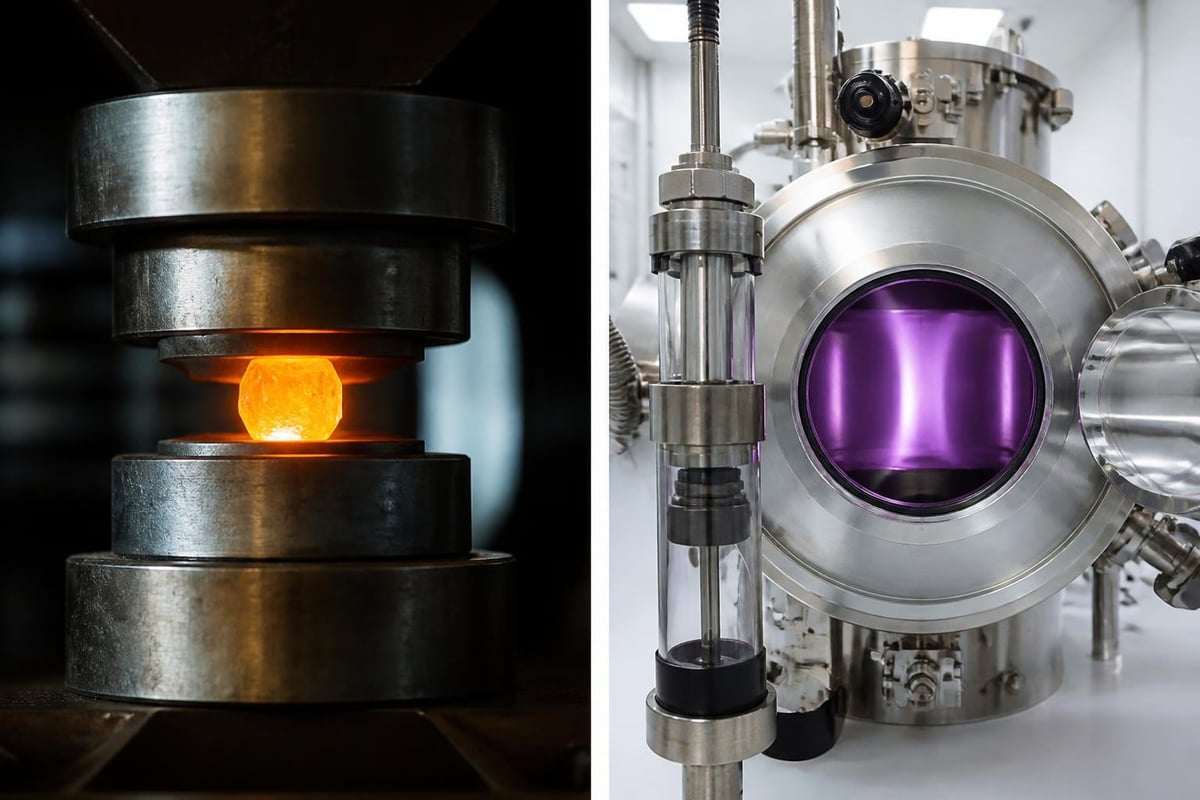
CVD technology operates differently by using a carbon-rich gas mixture in a vacuum chamber where plasma breaks down the gas molecules, allowing carbon atoms to deposit layer by layer onto a diamond seed. Research into optical properties and color variations demonstrates how controlled nitrogen exposure during CVD growth creates predictable yellow color intensities.
Understanding Color Intensity Grades
The Gemological Institute of America (GIA) grades yellow diamonds on a scale that measures color intensity and saturation. This grading system applies equally to both natural and lab grown diamonds yellow, ensuring consistent evaluation standards across the industry.
The color grades progress through the following hierarchy:
- Faint Yellow - Subtle yellow tint barely perceptible
- Very Light Yellow - Noticeable yellow hue with light saturation
- Light Yellow - Obvious yellow color with moderate intensity
- Fancy Light Yellow - Clear yellow with enhanced saturation
- Fancy Yellow - Vivid yellow with strong saturation
- Fancy Intense Yellow - Deep yellow with exceptional saturation
- Fancy Vivid Yellow - Maximum yellow saturation and brilliance
- Fancy Deep Yellow - Rich yellow with darker tone
Each grade represents a distinct price point and aesthetic appeal. Collectors seeking exquisite pieces from curated collections often prioritize stones graded Fancy Yellow or higher for their superior visual impact and investment potential.
Quality Factors That Define Value
Several critical characteristics determine the overall quality and value of lab grown diamonds yellow beyond color intensity. These factors work together to create the gem's ultimate appeal and market position.
Cut Precision and Light Performance
The cutting quality dramatically influences how lab grown diamonds yellow interact with light. Master cutters must balance proportions, symmetry, and polish to maximize brilliance and fire while maintaining optimal color distribution throughout the stone.
| Cut Grade | Light Return | Color Display | Price Impact |
|---|---|---|---|
| Excellent | 95-100% | Uniform saturation | Premium pricing |
| Very Good | 85-94% | Consistent color | Moderate premium |
| Good | 75-84% | Acceptable distribution | Standard pricing |
| Fair | 65-74% | Uneven appearance | Value pricing |
Popular cuts for yellow diamonds include radiant, cushion, and oval shapes that maximize face-up color while providing exceptional sparkle. Round brilliants work beautifully for lighter yellow intensities, while fancy shapes often enhance the perceived color saturation in deeper yellows.
Clarity Considerations
Clarity grades measure the presence of inclusions and blemishes within the diamond structure. Lab grown diamonds yellow typically exhibit fewer clarity issues than their natural counterparts due to controlled growth environments.
The clarity scale ranges from Flawless (FL) to Included (I3), with most fine jewelry featuring stones graded VS2 or higher. Yellow color naturally masks minor inclusions more effectively than colorless diamonds, allowing buyers to select slightly lower clarity grades without sacrificing visual appeal. This characteristic provides additional value optimization when selecting stones for rings or other prominent jewelry pieces.
Market Dynamics and Pricing Structures
The market for lab grown diamonds yellow has evolved significantly as consumer awareness and acceptance have grown throughout 2026. Industry analysis of market dynamics reveals compelling pricing advantages compared to natural fancy yellow diamonds.
Price Comparison Framework:
Lab grown diamonds yellow typically cost 60-80% less than equivalent natural fancy yellow diamonds. A one-carat Fancy Intense Yellow lab grown diamond might retail for $2,500-$4,000, while a comparable natural stone could command $8,000-$15,000 or more depending on specific quality factors.
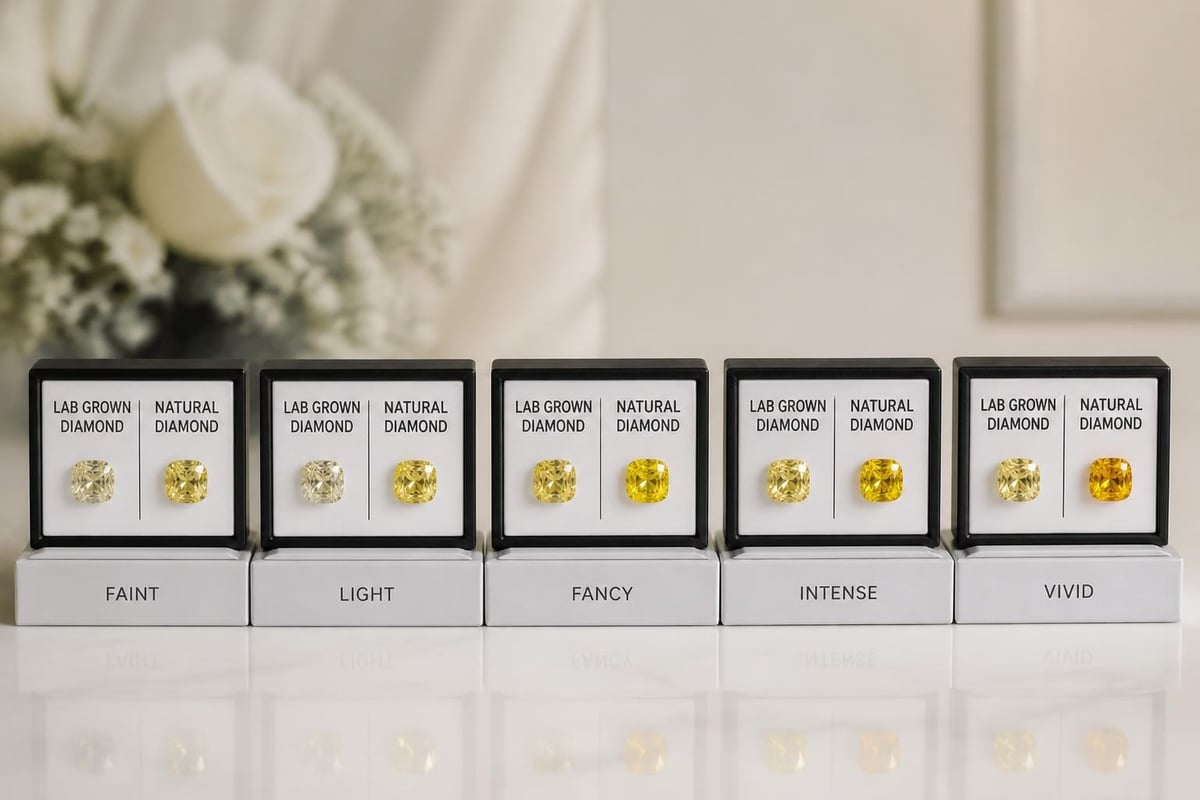
This pricing differential expands as carat weight increases. Larger lab grown yellow diamonds maintain proportional pricing, while natural stones experience exponential price increases due to rarity factors. A three-carat Fancy Vivid Yellow lab grown diamond might cost $15,000-$25,000, whereas the natural equivalent could exceed $100,000.
Investment and Resale Considerations
While lab grown diamonds yellow offer exceptional initial value, buyers should understand current market realities regarding long-term investment potential. Natural fancy colored diamonds have historically maintained stronger resale values due to rarity and traditional collector preferences.
However, the equation shifts when considering total acquisition cost versus enjoyment value. Purchasing a higher quality or larger lab grown yellow diamond for the same budget as a smaller natural stone may provide greater satisfaction and aesthetic impact even if resale values differ.
Ethical and Environmental Perspectives
Conscious consumers increasingly prioritize ethical sourcing and environmental responsibility when purchasing luxury goods. Ethical and environmental considerations position lab grown diamonds yellow as transparent alternatives to mined stones.
Environmental Impact Assessment
Laboratory diamond production requires significant energy input, primarily for generating the extreme temperatures and pressures needed for synthesis. Progressive manufacturers increasingly power their facilities with renewable energy sources, reducing the carbon footprint associated with lab grown diamonds yellow.
Mining operations for natural diamonds involve substantial land disruption, water usage, and ecosystem disturbance. Large-scale earth moving equipment, extensive water processing, and habitat displacement create environmental challenges that laboratory production avoids entirely.
Supply Chain Transparency
Lab grown diamonds yellow offer complete supply chain visibility from creation to final sale. Buyers can trace their stones directly to the specific laboratory and growth batch, ensuring ethical production standards and conflict-free sourcing.
This transparency appeals particularly to younger consumers who value authenticity and corporate responsibility. The ability to verify origin and production methods provides peace of mind that aligns with contemporary values regarding sustainable luxury.
Identification and Certification Standards
Professional gemologists employ sophisticated testing methods to distinguish lab grown diamonds yellow from natural stones. Identification guides for lab grown yellow diamonds detail the techniques and equipment used by certification laboratories.
Testing Methodologies
Modern gemological instruments can detect subtle differences in growth patterns, fluorescence characteristics, and spectroscopic signatures that reveal a diamond's origin. These non-destructive tests include:
- Spectroscopy analysis examining nitrogen distribution patterns
- Fluorescence imaging revealing growth structures under UV light
- Photoluminescence spectroscopy identifying specific impurity centers
- Microscopic examination detecting metallic inclusions in HPHT stones
- Laser inscription verification confirming laboratory certification numbers
Reputable sellers always provide independent certification from recognized laboratories such as GIA, IGI (International Gemological Institute), or GCAL (Gem Certification and Assurance Lab). These reports document all relevant characteristics including color grade, clarity, cut quality, and laboratory origin disclosure.
Certification Importance
Purchasing lab grown diamonds yellow without proper certification introduces unnecessary risk. Third-party certification ensures accurate grading, confirms laboratory origin, and provides essential documentation for insurance purposes.
The certification report serves as a permanent record of the stone's characteristics and authenticity. This documentation becomes particularly valuable for jewelry sets where matching stones require consistent quality verification.
Design Applications and Style Versatility
Lab grown diamonds yellow excel in diverse jewelry applications ranging from classic solitaire settings to contemporary multi-stone designs. Their vibrant color creates stunning focal points while complementing various metal choices and design aesthetics.
Metal Pairing Strategies
Different precious metals interact uniquely with yellow diamond color:
| Metal Type | Color Enhancement | Style Profile | Best Applications |
|---|---|---|---|
| Yellow Gold | Amplifies warmth | Traditional elegance | Classic solitaires, vintage designs |
| White Gold | Creates contrast | Modern sophistication | Contemporary settings, halos |
| Rose Gold | Adds romantic depth | Feminine appeal | Fashion rings, pendants |
| Platinum | Maximizes color pop | Timeless luxury | Statement pieces, investment jewelry |
Yellow gold creates a harmonious monochromatic effect that intensifies the perceived warmth of lab grown diamonds yellow. White metals provide dramatic contrast that makes the yellow color appear more vibrant and distinct. Rose gold offers a middle ground with complementary warm tones that enhance without overwhelming.
Popular Setting Styles
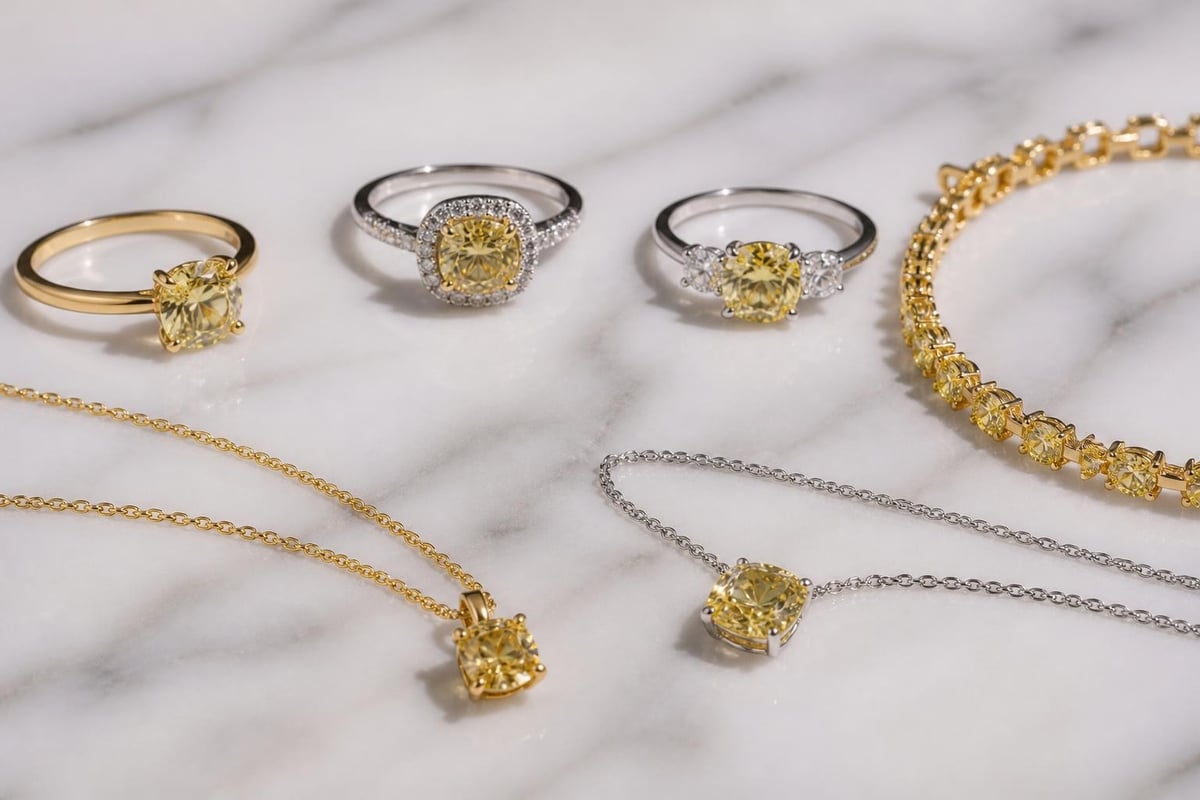
Contemporary designers embrace lab grown diamonds yellow in innovative ways that showcase their unique color properties. Halo settings surround the center stone with smaller white diamonds, creating brilliant contrast and increased perceived size. Three-stone designs pair yellow centers with white diamond accents for balanced sophistication.
Necklaces featuring graduated yellow diamonds create dynamic color progressions from intense centers to lighter accents. Tennis bracelets alternating between yellow and white diamonds offer versatile elegance suitable for both formal occasions and everyday luxury.
Care and Maintenance Guidelines
Lab grown diamonds yellow possess identical physical properties to natural diamonds, including the same 10 rating on the Mohs hardness scale. This exceptional durability makes them suitable for daily wear with minimal maintenance requirements.
Cleaning Best Practices
Regular cleaning maintains the brilliant sparkle that makes yellow diamonds captivating:
- Weekly routine: Soak in warm water with mild dish soap for 20-30 minutes, then gently brush with a soft toothbrush
- Monthly deep clean: Use ultrasonic cleaners for thorough cleaning (avoid if stones have fracture-filled inclusions)
- Professional service: Annual inspection and professional cleaning by qualified jewelers
- Storage protocol: Keep pieces separated in soft pouches to prevent scratching from metal-on-metal contact
Avoid exposing lab grown diamonds yellow to harsh chemicals, chlorine bleach, or abrasive cleaning compounds that might damage metal settings even though the diamonds themselves remain unaffected.
Long-Term Preservation
Proper storage and handling ensure lab grown yellow diamonds maintain their beauty across generations. Check prong settings regularly for security, especially on frequently worn rings and bracelets. Schedule professional inspections annually to identify potential issues before stones become loose or settings sustain damage.
Selecting the Perfect Yellow Diamond
Choosing lab grown diamonds yellow requires balancing multiple factors including color intensity preferences, size priorities, budget parameters, and intended jewelry application. This decision-making framework guides optimal selection:
Priority Assessment Questions:
- What color intensity creates your desired visual impact?
- How important is carat size versus color saturation?
- Which clarity grade meets your standards while optimizing budget?
- What cut shape best suits your design vision?
- How will you balance these factors within budget constraints?
Buyers seeking maximum color impact should prioritize Fancy Intense or Fancy Vivid grades even if accepting slightly smaller carat weights. Those preferring larger stones might select Fancy Light or Fancy Yellow grades that offer excellent value at increased sizes.
Working with knowledgeable jewelers who understand lab grown diamonds yellow ensures access to quality inventory and expert guidance. Examining multiple stones in person reveals subtle variations in tone and saturation that photographs cannot fully capture. Consider viewing stones in various lighting conditions including natural daylight, incandescent, and LED illumination to understand their appearance across different environments.
The growing selection of loose precious stones allows buyers to select unmounted diamonds for custom design projects, creating truly personalized jewelry that reflects individual style preferences and quality standards.
Future Outlook for Lab Grown Yellow Diamonds
Technology advances continue improving the quality, consistency, and production efficiency of lab grown diamonds yellow. Enhanced growth techniques enable larger stones with more uniform color distribution, while automated quality control systems ensure consistent output meeting rigorous gemological standards.
Consumer education efforts have demystified laboratory diamond production, reducing misconceptions and building confidence in these scientifically advanced gemstones. As awareness grows, lab grown diamonds yellow increasingly appear in haute jewelry collections alongside traditional gemstones, reflecting their acceptance within the luxury market.
Production capacity expansion by established laboratories and new market entrants suggests continued competitive pricing that benefits consumers. This market maturation provides stable supply chains and diverse selection across all color grades and size ranges.
The integration of blockchain technology and digital certification systems promises enhanced traceability and authentication capabilities. These innovations will further strengthen consumer confidence while combating potential fraud in the laboratory diamond market.
Lab grown diamonds yellow represent an exceptional fusion of natural beauty and scientific innovation, offering discerning buyers access to stunning fancy colored diamonds with transparent sourcing and compelling value. Whether selecting a statement engagement ring, building a collection of investment-quality pieces, or creating custom jewelry designs, these laboratory-created gems deliver the same visual magnificence as their natural counterparts while embracing contemporary values. La Maison Val D'or specializes in curating exquisite fine jewelry and gemstones that exemplify timeless elegance and superior craftsmanship. Explore our collection to discover how lab grown yellow diamonds can elevate your jewelry collection with pieces designed to become cherished heirlooms for generations.