
The gemstone world has witnessed remarkable technological advancement, with laboratory-created stones now rivaling their natural counterparts in beauty and quality. Among these innovations, lab grown alexandrite stands out as particularly fascinating due to its distinctive color-changing properties and complex crystal structure. For discerning collectors and jewelry enthusiasts seeking this rare gemstone's captivating qualities, understanding the differences between laboratory-created and natural alexandrite becomes essential for making informed purchasing decisions.
Understanding Alexandrite: Natural vs Laboratory-Created Origins
Natural alexandrite forms deep within the earth under extraordinarily specific conditions, requiring the presence of chromium, beryllium, and aluminum in precise proportions. This geological rarity makes natural alexandrite one of the world's most expensive gemstones, often commanding prices exceeding fine sapphires and rubies.
Lab grown alexandrite replicates this natural formation process using advanced crystallization techniques. Scientists recreate the same chemical composition and crystal structure in controlled laboratory environments, producing gemstones that are chemically, physically, and optically identical to their natural counterparts.
The Creation Process
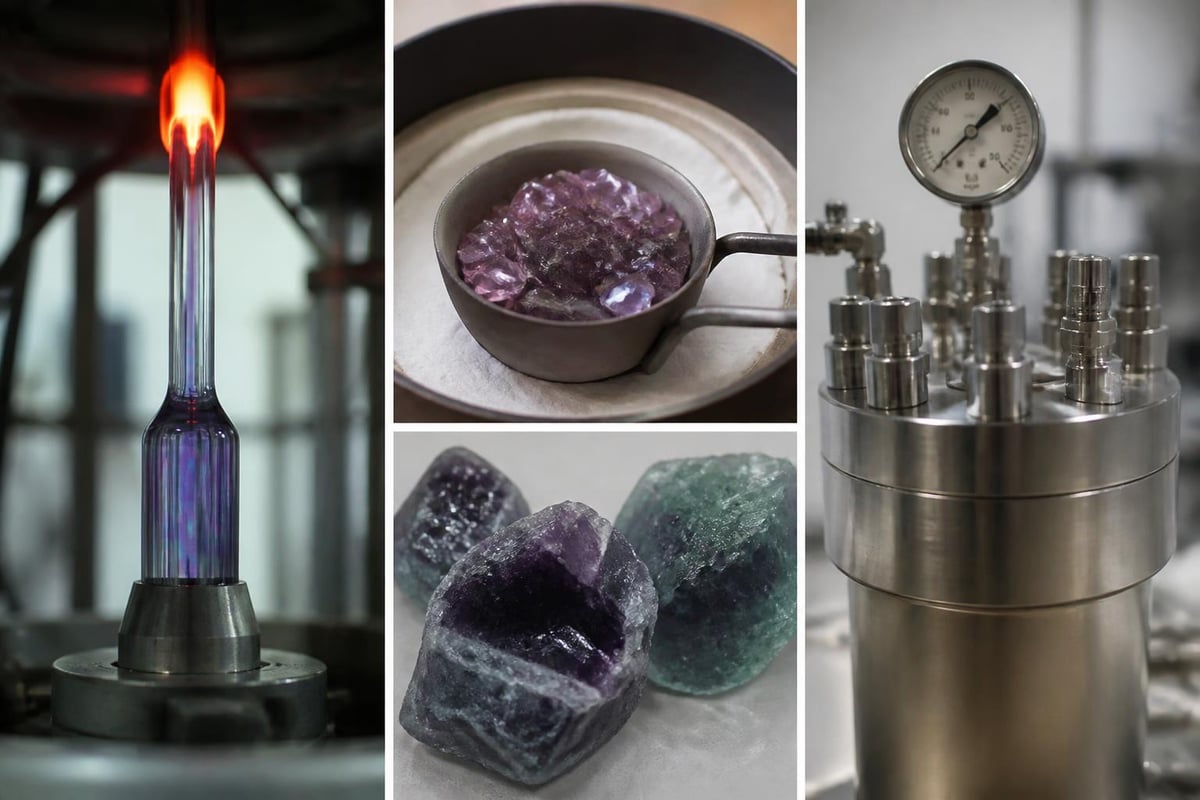
Two primary methods dominate laboratory alexandrite production:
- Czochralski (pulled) method: A seed crystal is dipped into molten material and slowly withdrawn, forming a cylindrical crystal
- Flux growth method: Nutrients dissolved in molten flux crystallize slowly over months, creating more natural-looking inclusions
- Hydrothermal synthesis: Mimics natural geological conditions using high pressure and temperature in water-based solutions
The flux method typically produces lab grown alexandrite with superior color change and more natural-appearing characteristics, though it requires significantly more time than the Czochralski technique.
| Method | Production Time | Color Quality | Inclusion Pattern | Cost |
|---|---|---|---|---|
| Czochralski | 2-4 weeks | Good | Curved striations | Lower |
| Flux Growth | 6-12 months | Excellent | Natural-looking | Higher |
| Hydrothermal | 3-6 months | Very Good | Minimal | Moderate |
Color Change Properties: The Defining Characteristic
Alexandrite's most celebrated feature is its dramatic color transformation under different lighting conditions. This phenomenon, called the "alexandrite effect," results from the way chromium ions within the crystal structure absorb and transmit light wavelengths.
Quality lab grown alexandrite exhibits this color change just as vividly as natural stones. Under daylight or fluorescent lighting, premium specimens display rich green to bluish-green hues, while incandescent or candlelight reveals deep red to purplish-red tones.
Evaluating color change strength:
- Excellent: 100% color transformation from vivid green to vibrant red-purple
- Very Good: 80-90% change with strong saturation in both states
- Good: 60-80% change with moderate color intensity
- Fair: Less than 60% change or weak color saturation
The percentage and vividness of color change significantly impacts value for both natural and laboratory-created stones. The most desirable lab grown alexandrite demonstrates a complete transition between two distinctly different, saturated colors.
Color Grading Considerations
Beyond the color change itself, gemologists evaluate alexandrite using modified criteria adapted from traditional colored stone grading. Tone (lightness or darkness), saturation (color intensity), and hue distribution all factor into quality assessment.
Superior lab grown alexandrite displays medium to medium-dark tone with vivid saturation. Stones that appear too light often show weak color change, while overly dark specimens may appear nearly black under certain lighting conditions, obscuring the color transformation.
Price Comparison: Investment Value Analysis
The economic difference between natural and lab grown alexandrite represents one of the most compelling reasons collectors consider laboratory-created options. Natural alexandrite of fine quality can command $15,000 to $70,000 per carat for stones exceeding one carat, with exceptional specimens reaching even higher prices.
Lab grown alexandrite offers the same visual impact at a fraction of the cost. Premium laboratory-created stones typically range from $300 to $1,200 per carat, depending on size, color change quality, and clarity.
| Stone Type | 1 Carat | 3 Carat | 5 Carat | Color Change |
|---|---|---|---|---|
| Natural Alexandrite | $15,000-$25,000 | $50,000-$90,000 | $100,000+ | Excellent |
| Lab Grown (Flux) | $500-$800 | $1,200-$2,000 | $2,500-$4,000 | Excellent |
| Lab Grown (Czochralski) | $300-$500 | $800-$1,200 | $1,500-$2,500 | Good-Very Good |
This dramatic price differential allows jewelry enthusiasts to acquire larger, finer-quality stones for custom designs. A three-carat natural alexandrite might represent an investment beyond most budgets, while a comparable lab grown alexandrite enables spectacular centerpiece designs at accessible price points.
Long-Term Value Considerations
Natural alexandrite's rarity ensures strong value retention and potential appreciation. As a finite natural resource, high-quality natural specimens become increasingly scarce, supporting collector demand.
Lab grown alexandrite serves a different market position. While these stones don't appreciate as investments, they provide exceptional value for those prioritizing beauty and wearability over investment potential. For fine jewelry intended for personal enjoyment rather than asset accumulation, laboratory-created options deliver uncompromising aesthetics.
Quality Assessment: What to Look For
Whether considering natural or lab grown alexandrite, consistent evaluation criteria help identify superior specimens. The same gemological standards apply to both categories, though certain characteristics may vary in prevalence.
Clarity evaluation points:
- Eye-clean stones (no visible inclusions without magnification) command premium prices
- Minor inclusions that don't impact color change or durability remain acceptable
- Flux-grown lab alexandrite may contain small platinum or flux inclusions
- Czochralski stones often show curved growth lines visible under magnification
Cut quality dramatically affects alexandrite's color change presentation. Well-proportioned faceting maximizes light return and color saturation in both daylight and incandescent conditions. Poor cutting can result in windowing (seeing through the stone) or extinction (dark areas lacking brilliance).
Certification and Authentication
Reputable gemological laboratories can definitively identify whether alexandrite is natural or laboratory-created through advanced spectroscopic analysis. For natural stones, certification from GIA, AGL, or Gübelin provides authentication and quality documentation.
Lab grown alexandrite should be disclosed as such by reputable sellers. Many laboratory-created stones receive certification from IGI or other labs that specifically note the synthetic origin while documenting color change quality, measurements, and characteristics. When exploring fine jewelry collections, always verify the origin and certification status of any alexandrite pieces.
Design Applications: Setting and Style Considerations
Lab grown alexandrite's accessibility opens creative possibilities for custom jewelry design. Where natural alexandrite's rarity might restrict use to smaller accent stones, laboratory-created options enable bold centerpiece designs.
Popular Setting Styles
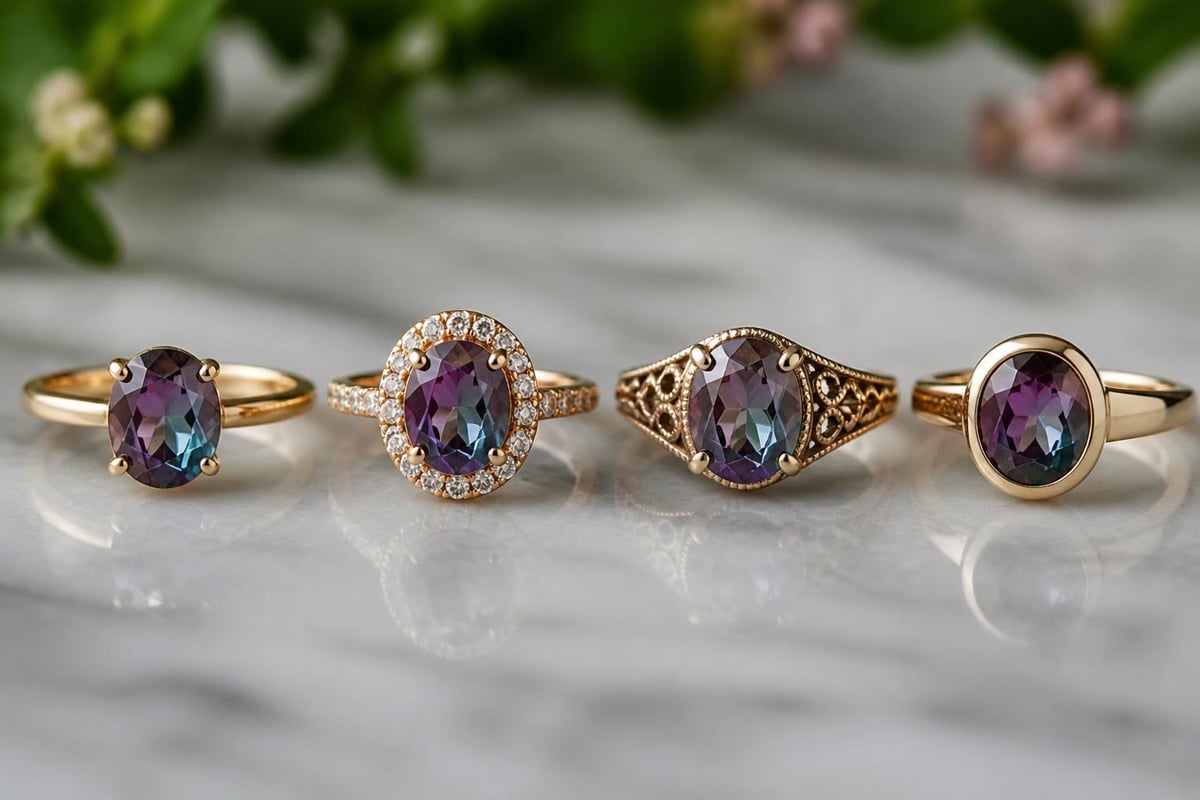
Solitaire designs showcase alexandrite's color change most effectively. Clean, simple settings with minimal metalwork allow the stone to be viewed under various lighting conditions, demonstrating the full transformation effect.
Halo settings enhance smaller lab grown alexandrite stones with surrounding diamond or gemstone accents. This approach creates visual impact while keeping the alexandrite as the focal point.
Three-stone configurations work beautifully with alexandrite centers flanked by diamonds or other complementary gemstones. This classic style suits both rings and pendants.
| Setting Type | Metal Choice | Best For | Design Notes |
|---|---|---|---|
| Solitaire | Platinum, White Gold | Showcasing color change | Minimal prongs, open sides |
| Halo | Yellow Gold, Rose Gold | Smaller stones (under 2ct) | Contrasting metal enhances color |
| Vintage-Inspired | Yellow Gold, Platinum | All sizes | Milgrain, filigree details |
| Modern Bezel | White Gold, Platinum | Active wear | Maximum protection |
The choice between white and yellow gold affects color perception. White metals (platinum, white gold) provide neutral backgrounds that don't influence color appearance, while yellow gold can warm the stone's green phase and intensify the red phase.
Care and Durability: Practical Ownership Considerations
Both natural and lab grown alexandrite share identical physical properties, including exceptional durability. With a Mohs hardness of 8.5, alexandrite ranks among the most durable gemstones suitable for everyday wear, exceeded only by sapphire, ruby, and diamond.
Maintenance requirements:
- Clean with warm water, mild soap, and soft brush
- Avoid ultrasonic cleaners with heavily included stones
- Store separately from diamonds to prevent surface abrasion
- Remove during activities involving harsh chemicals or impact
This durability makes alexandrite particularly suitable for engagement rings and other jewelry subject to daily wear. Unlike softer gemstones requiring careful handling, alexandrite maintains its polish and facet edges through years of use.
Special Handling Notes
While durable, alexandrite can experience thermal shock if exposed to extreme temperature changes. Avoid wearing alexandrite jewelry when moving between very hot and very cold environments. The stone itself won't crack easily, but rapid temperature shifts could stress certain inclusion patterns in flux-grown specimens.
Professional cleaning and inspection annually ensures prong security and maintains optimal appearance. Jewelers familiar with colored gemstones can verify setting integrity and restore polish if surface scratches occur over time.
Ethical and Environmental Perspectives
The laboratory creation of alexandrite addresses several concerns relevant to conscientious luxury consumers. Natural alexandrite mining involves environmental disruption and occurs primarily in limited geographic regions, raising supply chain transparency questions.
Lab grown alexandrite production occurs in controlled facilities with regulated working conditions and environmental standards. The reduced energy and land use compared to mining appeals to sustainability-focused buyers.
However, laboratory synthesis requires significant energy input, particularly for flux-grown stones requiring months of controlled heating. The environmental equation balances extraction impact against manufacturing energy consumption.
Transparency in the Market
The fine jewelry industry increasingly emphasizes disclosure regarding stone origins. Reputable jewelers clearly distinguish between natural and laboratory-created gemstones, allowing informed purchasing decisions. When working with established houses like those featured on jewelry professional sites, expect complete transparency regarding alexandrite origin.
Misleading marketing occasionally occurs, with some sellers presenting lab grown alexandrite without clear disclosure or using terms like "created" or "synthetic" in fine print. Federal Trade Commission guidelines require clear, conspicuous disclosure of laboratory origin.
Size Availability and Selection Range
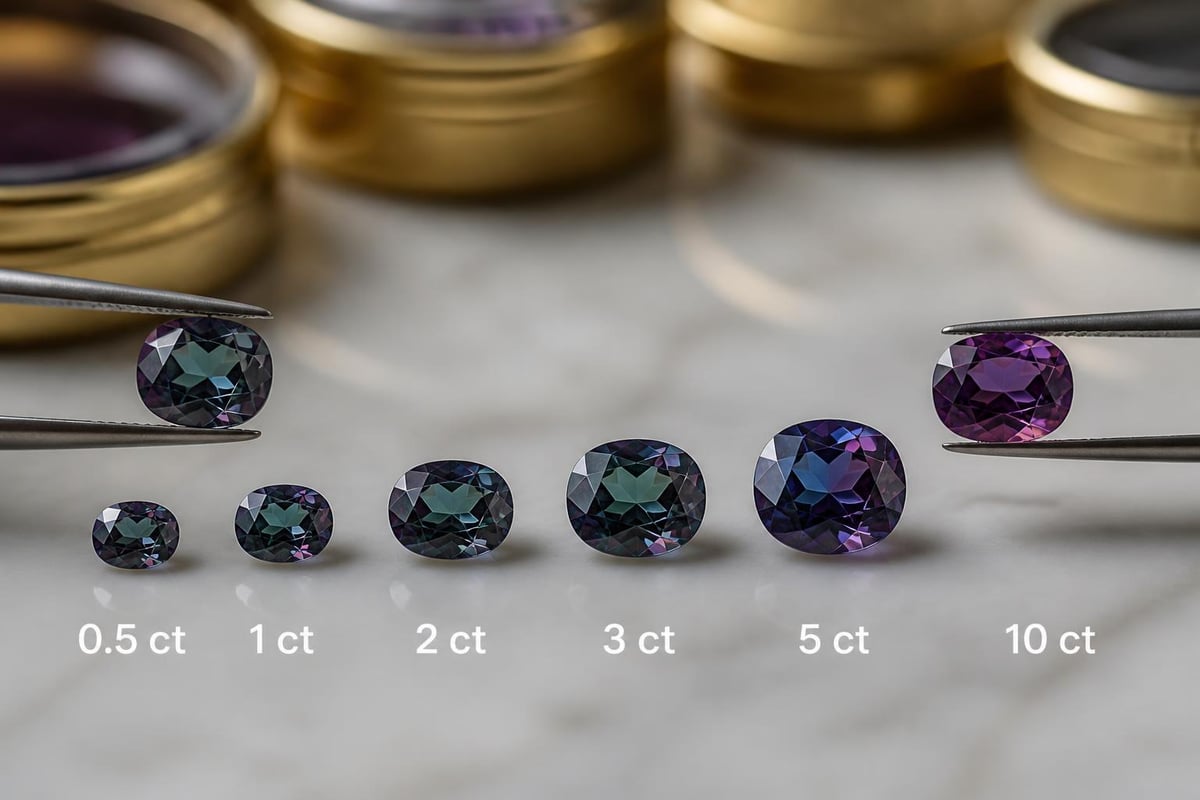
Natural alexandrite above three carats becomes extremely rare, with five-carat stones representing exceptional finds that command premium pricing. Most natural alexandrite jewelry features stones under one carat due to availability constraints.
Lab grown alexandrite faces no such size limitations. Laboratory processes can produce large, clean crystals from which substantial finished gemstones are cut. Finding lab grown alexandrite in sizes of five, seven, or even ten carats presents no difficulty, enabling dramatic jewelry designs impossible with natural material.
Common size categories:
- Under 1 carat: Ideal for earrings, accent stones, delicate rings
- 1-3 carats: Popular for engagement rings, pendants, statement rings
- 3-5 carats: Dramatic cocktail rings, important pendants
- 5+ carats: Collector pieces, museum-quality jewelry, custom commissions
This size flexibility particularly benefits those seeking matched pairs for earrings. Locating two natural alexandrites of identical size, color change quality, and clarity proves challenging and expensive. Laboratory creation easily produces perfectly matched pairs in any desired size.
Making Your Selection: Decision Framework
Choosing between natural and lab grown alexandrite ultimately depends on individual priorities, budget considerations, and intended use. Both categories offer distinct advantages serving different collector preferences.
Natural alexandrite advantages:
- Geological rarity and historical significance
- Investment potential and value appreciation
- Traditional gemstone collecting appeal
- Status as finite natural resource
Lab grown alexandrite advantages:
- Exceptional value proposition and affordability
- Larger size availability without premium pricing
- Identical optical and physical properties
- Reduced environmental extraction impact
- Perfect for custom designs requiring specific sizes
For those prioritizing the gemstone's visual beauty and color-changing properties above all else, lab grown alexandrite delivers identical performance at accessible pricing. The stone's appearance, durability, and daily wearability remain indistinguishable from natural counterparts.
Collectors seeking alexandrite as a geological specimen or investment asset may prefer natural stones despite higher costs. The scarcity factor and potential appreciation provide different value beyond aesthetic considerations.
Quality Over Origin
Regardless of origin choice, prioritize quality within your selected category. A superior lab grown alexandrite with excellent color change significantly outperforms a poor-quality natural stone showing weak transformation. Similarly, well-cut laboratory stones display better brilliance than poorly proportioned natural specimens.
Focus evaluation on color change strength, clarity, cut quality, and overall appearance. Origin represents just one factor in the comprehensive assessment of any alexandrite gemstone's desirability and suitability for your specific application.
Working With Jewelers: Custom Design Opportunities
The accessibility of lab grown alexandrite opens possibilities for bespoke jewelry creation. Many fine jewelers welcome custom commissions incorporating laboratory-created gemstones, recognizing their clients' desire for unique designs featuring exceptional stones at reasonable investment levels.
Custom design allows precise control over stone selection, setting style, metal choice, and finished piece dimensions. You can personally evaluate multiple lab grown alexandrite options, observing color change under different lighting conditions before final selection.
Custom design process:
- Consultation to discuss design vision, budget, and preferences
- Stone selection from available inventory or sourcing specific qualities
- Design development with sketches or CAD renderings
- Approval and fabrication timeline establishment
- Setting and finishing work
- Final inspection and delivery
This collaborative approach ensures the finished piece perfectly matches your vision while incorporating lab grown alexandrite that meets your specific quality standards. For those interested in exploring custom possibilities, reaching out through contact pages of established jewelers provides a starting point for these conversations.
Alexandrite in Contemporary Jewelry Trends
Modern jewelry design increasingly embraces colored gemstones as alternatives to traditional diamond-centric pieces. Lab grown alexandrite's unique color-changing property positions it perfectly within this trend, offering distinctive visual interest that photographs beautifully and generates conversation.
Younger collectors particularly appreciate alexandrite's rarity and unusual characteristics. The stone's ability to transform from green to red creates natural storytelling opportunities, with the color change serving as a metaphor for transformation, duality, or complexity.
Contemporary designers incorporate alexandrite in unexpected ways beyond traditional ring and pendant applications. Alexandrite tennis bracelets, stackable rings featuring multiple smaller stones, and asymmetric earring designs showcase the gemstone's versatility.
The availability of lab grown alexandrite in various sizes enables these creative applications without prohibitive costs. Designers can experiment with bold concepts that would prove financially impractical using natural alexandrite.
Understanding the distinctions between natural and lab grown alexandrite empowers you to make choices aligned with your preferences, budget, and values. Both categories offer the mesmerizing color-change phenomenon that makes alexandrite so captivating, with laboratory-created options providing exceptional accessibility without compromising beauty. Whether you're drawn to natural alexandrite's geological rarity or lab grown stones' practical advantages, La Maison Val D'or offers curated selections of exquisite jewelry featuring the finest gemstones, combining expert knowledge with timeless elegance to help you discover pieces that reflect your individual style and appreciation for exceptional craftsmanship.
Article written using RankPill.