
CT Diamond Ring: Complete Guide to Carat Weight Selection
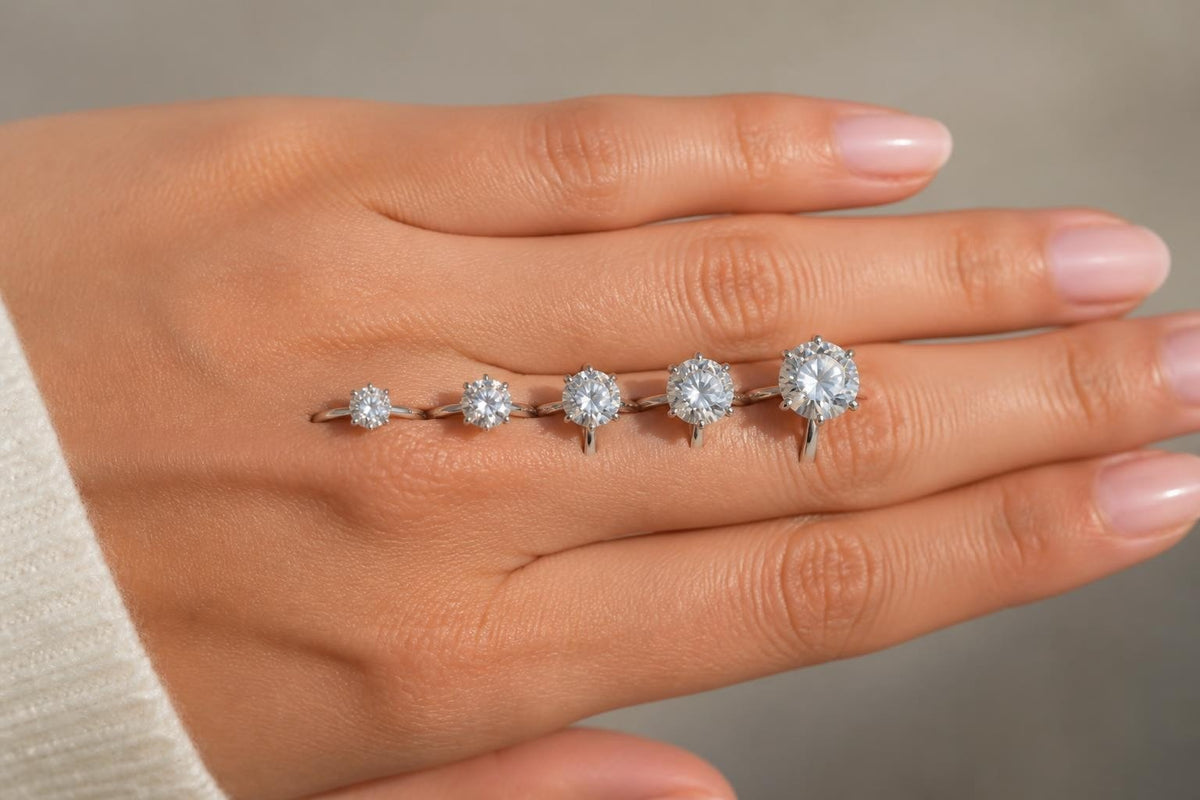
Selecting a ct diamond ring represents one of the most significant jewelry investments many individuals will make in their lifetime. The carat weight of a diamond fundamentally influences not only its visual presence but also its price point, making it essential to understand how this metric affects your purchase decision. At La Maison Val D'or, we recognize that navigating the world of diamond carat weights requires both knowledge and guidance to ensure you select a piece that reflects your personal style while maintaining exceptional value and quality standards.
Understanding Diamond Carat Weight Fundamentals
Carat weight serves as the primary unit of measurement for diamonds, with one carat equaling 200 milligrams. However, the relationship between carat weight and visual size is not always straightforward. A ct diamond ring may appear different in size depending on its cut quality, shape, and setting style.
The term "ct" represents carat, though buyers should understand that two diamonds of identical carat weight can possess vastly different values. Cut quality, color grade, and clarity significantly impact a diamond's brilliance and overall appearance. When evaluating options at La Maison Val D'or, connoisseurs recognize that carat weight must be considered alongside these other quality factors.
How Carat Weight Affects Visual Impact
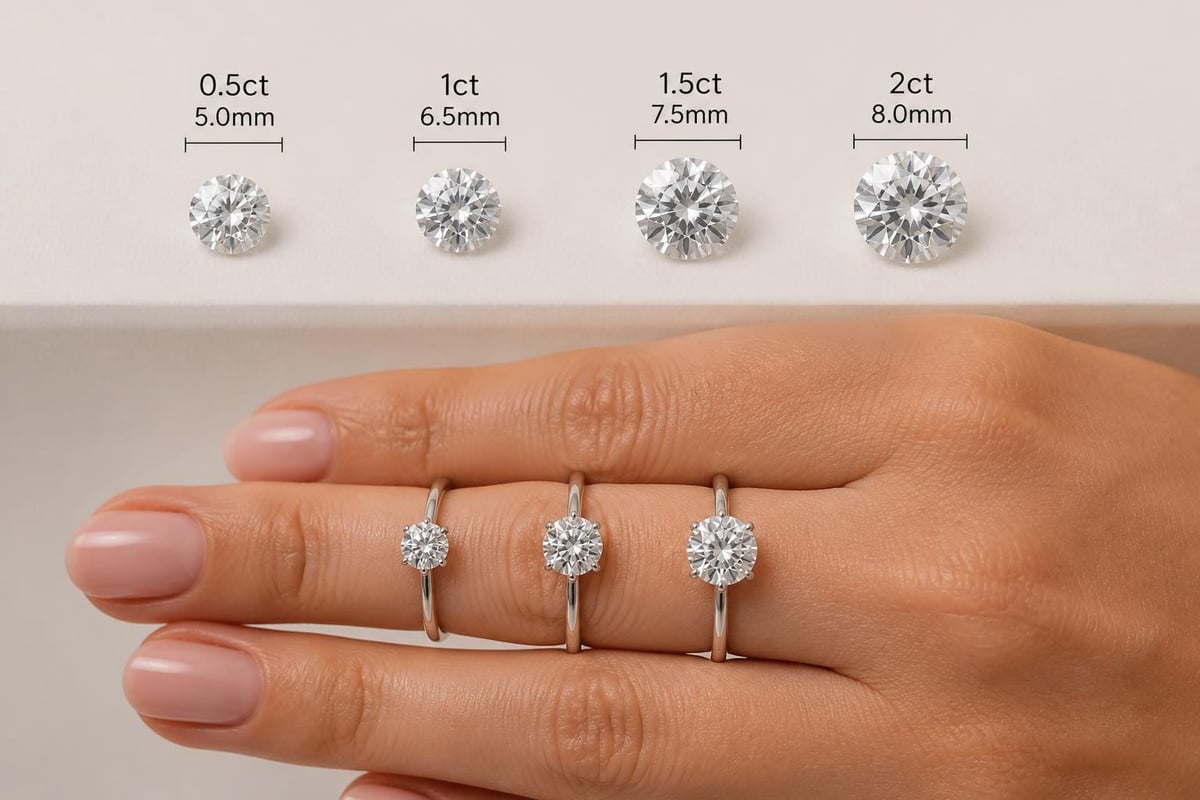
Many assume that doubling the carat weight doubles the diamond's visual size. This assumption proves incorrect due to how diamonds distribute their weight. A 2ct diamond appears approximately 50% larger in diameter than a 1ct stone, not twice as large.
- 0.5ct diamonds: Diameter approximately 5.2mm, ideal for delicate designs
- 1.0ct diamonds: Diameter approximately 6.5mm, classic choice for engagement rings
- 1.5ct diamonds: Diameter approximately 7.4mm, substantial presence
- 2.0ct diamonds: Diameter approximately 8.2mm, statement piece
The cut quality dramatically influences how large a ct diamond ring appears. A well-cut diamond maximizes light return, creating the illusion of greater size and brilliance compared to a poorly cut stone of identical weight.
Popular Carat Weight Ranges and Their Appeal
Different carat weights attract various buyers based on budget, personal preference, and lifestyle considerations. Understanding these ranges helps narrow your selection when choosing a ct diamond ring.
The Half-Carat to One-Carat Range
This range represents the most popular choice for engagement rings in 2026. A 0.75ct to 1ct diamond offers excellent balance between visual presence and affordability. These sizes suit individuals seeking elegance without excessive cost, particularly when paired with quality settings from curated collections like those at La Maison Val D'or's rings collection.
The psychological appeal of reaching the "one-carat milestone" drives many buyers toward this range. However, a 0.90ct diamond often provides exceptional value, appearing nearly identical to a 1ct stone while commanding a lower price due to market premiums at whole-carat increments.
The Premium One to Two-Carat Category
For those seeking more substantial presence, the 1.25ct to 2ct range delivers impressive visual impact. A 1.5ct diamond ring makes a bold statement while remaining appropriate for daily wear. This category appeals to buyers who prioritize size but maintain awareness of quality standards.
| Carat Weight | Approximate Price Premium | Ideal For |
|---|---|---|
| 1.25ct | 15-20% over 1ct | Subtle upgrade seekers |
| 1.50ct | 35-45% over 1ct | Balance of size and value |
| 1.75ct | 55-65% over 1ct | Statement without excess |
| 2.00ct | 80-100% over 1ct | Milestone achievement |
Exceptional Three-Carat and Beyond
Diamonds exceeding 3ct enter the realm of exceptional luxury jewelry. These stones require expert cutting and superior clarity grades to maintain their beauty at larger sizes. A 3ct diamond ring commands attention and represents a significant investment in both monetary terms and personal significance.
Factors Beyond Carat Weight in Ring Selection
While carat weight captures immediate attention, discerning buyers evaluate multiple characteristics when selecting a ct diamond ring. The interplay between these factors determines the stone's overall beauty and value.
The Four Cs Integration
Cut quality remains the most crucial factor affecting a diamond's appearance. A superbly cut 0.90ct diamond outshines a poorly cut 1.25ct stone in brilliance and fire. Color and clarity grades similarly influence value, with higher grades commanding premium prices.
Critical considerations include:
- Cut grade (Excellent or Ideal preferred)
- Color grade (D-F colorless, G-J near-colorless)
- Clarity grade (VS2 or higher for most sizes)
- Certification from reputable laboratories
Shape and Setting Influence
Diamond shape significantly affects how carat weight translates to visual size. Round brilliant cuts exhibit smaller face-up dimensions compared to elongated shapes like oval, marquise, or emerald cuts at identical carat weights. This phenomenon allows buyers to maximize visual impact while managing budget constraints.
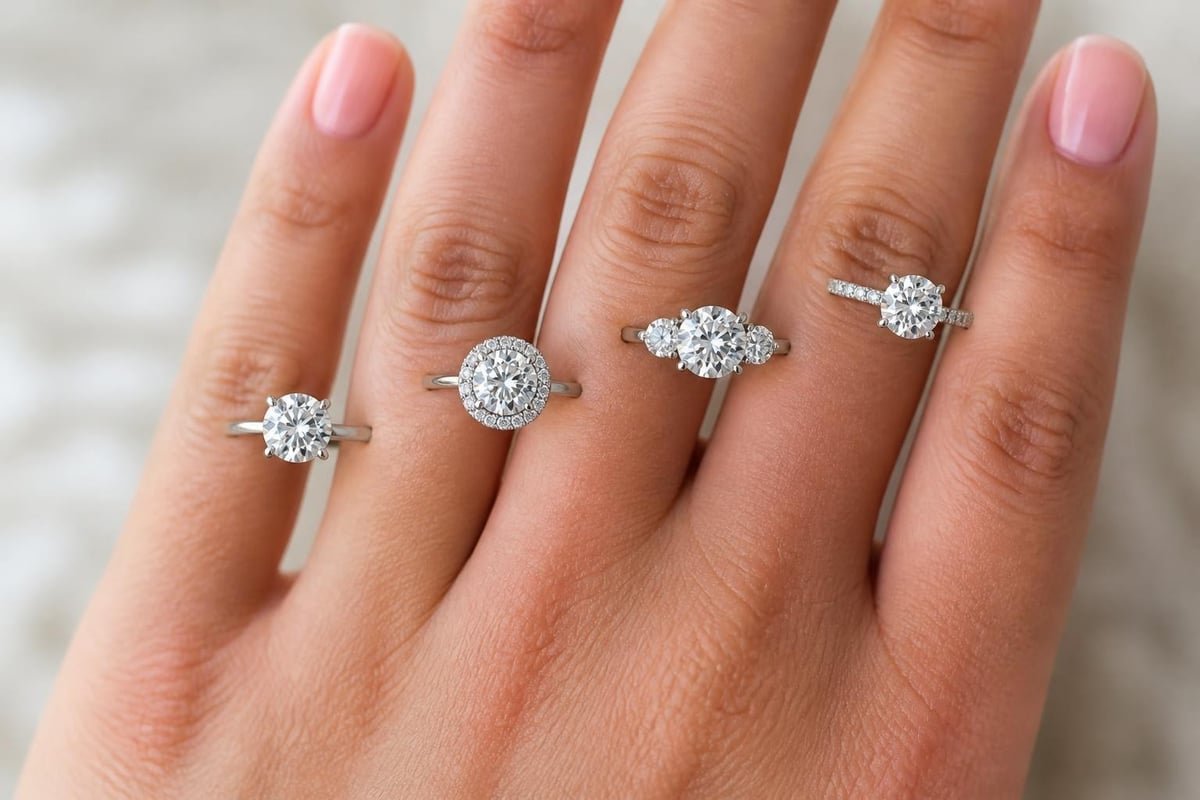
Setting styles further enhance or diminish perceived size. Halo settings add visual weight, making a 0.75ct center stone appear closer to 1ct. Solitaire settings showcase the diamond's true dimensions, ideal for those prioritizing the center stone's inherent beauty.
Pricing Dynamics for CT Diamond Rings
Understanding diamond pricing helps buyers make informed decisions and maximize value. Price per carat increases exponentially rather than linearly, with premium jumps at popular weight thresholds.
The Price-Per-Carat Calculation
Diamonds are priced per carat, but total cost equals price per carat multiplied by total carat weight. A 1ct diamond priced at $8,000 per carat costs $8,000 total. A 2ct diamond at $11,000 per carat costs $22,000 total, demonstrating the exponential price increase.
Premium thresholds occur at:
- 0.50ct
- 0.75ct
- 1.00ct
- 1.50ct
- 2.00ct
Purchasing slightly below these thresholds (0.90ct instead of 1.00ct, for example) can yield significant savings with minimal visual difference.
Quality Grades and Budget Allocation
Smart buyers allocate their budget strategically across the four Cs. For a ct diamond ring intended for daily wear, prioritizing cut quality and slightly compromising on color or clarity grades often delivers superior visual results compared to maximizing carat weight alone.
Budget allocation strategy:
- 40% toward cut quality
- 25% toward carat weight
- 20% toward color grade
- 15% toward clarity grade
This approach ensures exceptional brilliance while maximizing size within budget constraints. Premium collections, such as those featuring exquisite necklaces and rings, demonstrate how quality prioritization creates lasting beauty.
Lifestyle Considerations for Carat Selection
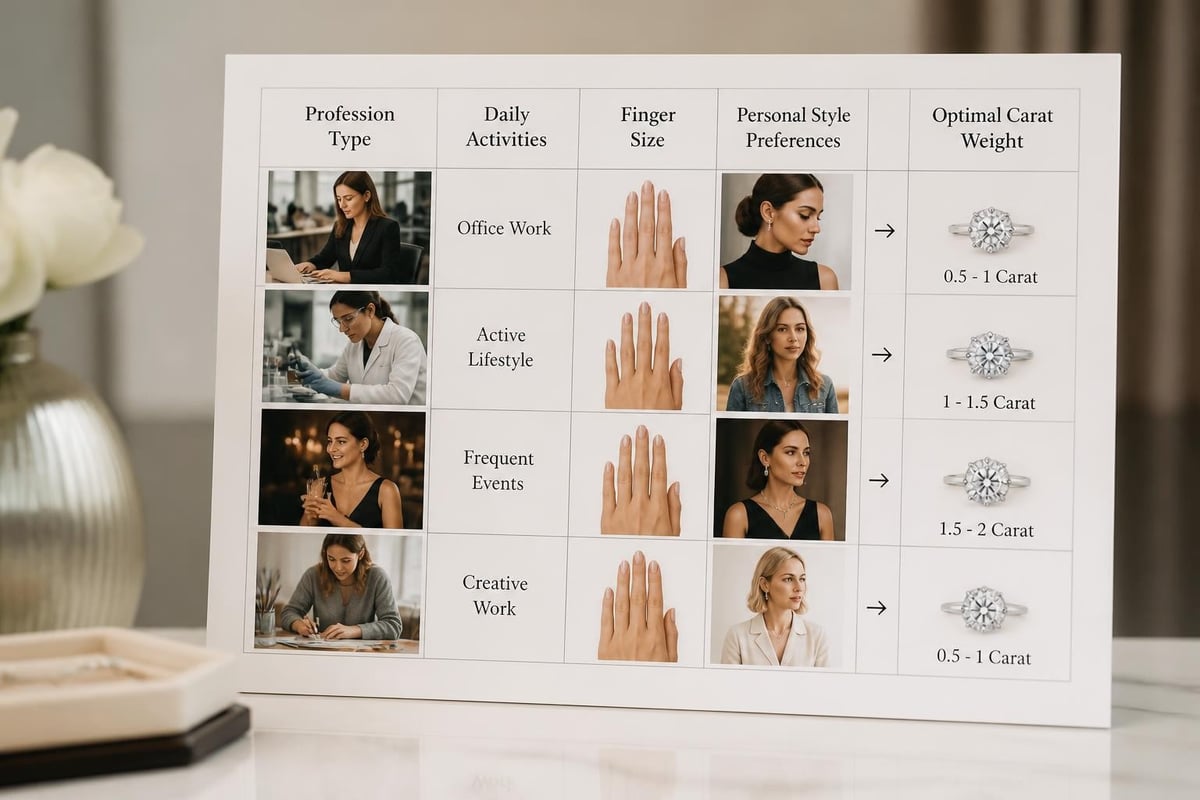
Practical lifestyle factors should influence your ct diamond ring selection. Daily activities, professional environments, and personal comfort all play roles in determining the ideal carat weight.
Professional and Social Contexts
Certain professions favor understated elegance, making 0.75ct to 1.25ct diamonds ideal. Medical professionals, those working with their hands, or individuals in conservative industries often prefer this range. Conversely, entertainment, fashion, and entrepreneurial fields may embrace larger stones as expressions of personal success.
Social expectations vary by region and community. Urban coastal areas typically see larger average diamond sizes compared to other regions, though personal preference should always supersede external pressures.
Practical Wearing Comfort
Larger diamonds require consideration of wearing comfort and security. A 2ct or 3ct diamond sits higher in its setting, potentially catching on clothing or feeling unbalanced on smaller fingers. Ring size and finger proportions affect how different carat weights appear and feel.
| Ring Size | Ideal Carat Range | Visual Balance |
|---|---|---|
| 4-5 | 0.50-1.25ct | Proportional, comfortable |
| 5.5-6.5 | 0.75-1.75ct | Balanced presence |
| 7-8 | 1.00-2.50ct | Suits larger proportions |
| 8.5+ | 1.50ct-3.00ct+ | Maintains proportion |
Durability and Security
Larger diamonds require secure settings with protective prongs or bezels. Insurance considerations increase with carat weight, as replacement costs rise exponentially. Regular maintenance, including prong tightening and professional cleaning, becomes more critical for valuable ct diamond rings.
Investment Value and Resale Considerations
A ct diamond ring represents both emotional and financial investment. Understanding resale dynamics and long-term value retention helps buyers make strategic choices that preserve wealth while celebrating meaningful moments.
Market Demand Patterns
Certain carat weights maintain stronger resale value due to consistent market demand. Whole-carat weights (1.00ct, 2.00ct, 3.00ct) generally resell more readily than intermediate sizes, though premium prices at purchase offset this advantage. Classic round brilliant cuts typically retain value better than fancy shapes, though trends evolve over time.
Quality certifications from GIA (Gemological Institute of America) or AGS (American Gem Society) significantly enhance resale potential. Uncertified diamonds face skepticism in secondary markets, potentially limiting buyer pools and negotiating power.
Long-Term Appreciation Factors
Elements supporting value retention:
- Exceptional cut grades (Excellent or Ideal)
- Higher color grades (D-F colorless range)
- Superior clarity (VVS2 and above)
- Classic shapes and timeless settings
- Comprehensive certification documentation
Diamonds meeting these criteria from prestigious sources like La Maison Val D'or's curated collections tend to maintain value more effectively than lower-quality alternatives.
Customization Options for Your CT Diamond Ring
Modern buyers increasingly seek personalized designs that reflect individual style while incorporating quality diamonds. Customization allows optimization of carat weight, setting design, and metal choice to create truly unique pieces.
Design Flexibility With Different Carat Weights
Smaller carat weights (0.50ct to 1.00ct) offer greater design flexibility, as the budget saved on the center stone can be allocated toward intricate settings, side stones, or premium metals. Alternatively, buyers may choose larger center stones with simpler settings to emphasize the diamond itself.
Three-stone designs beautifully showcase ct diamond rings, with the center stone typically 50-75% larger than side stones. This configuration allows a 1.00ct center stone paired with 0.30ct side stones, creating a total diamond weight of 1.60ct while managing costs effectively.
Metal Selection and Its Impact
Platinum and 18k gold settings suit diamonds of all sizes, though metal choice affects overall aesthetic and price. Platinum's naturally white color complements colorless diamonds (D-F grades) without causing color tinting. Yellow gold can actually make near-colorless diamonds (G-J grades) appear whiter through contrast, a consideration when selecting your ct diamond ring.
The metal weight and setting complexity influence final pricing. Intricate vintage-inspired designs or modern architectural settings require more precious metal and skilled craftsmanship, factors reflected in total investment beyond the diamond itself.
Certification and Quality Assurance
Purchasing a ct diamond ring demands verification of quality claims through independent certification. This documentation protects your investment and provides objective assessment of the diamond's characteristics.
Understanding Diamond Certificates
Reputable grading laboratories provide detailed analyses of diamonds, documenting the four Cs and additional characteristics. GIA reports are industry standard, offering comprehensive evaluations trusted worldwide. Other respected laboratories include AGS, IGI (International Gemological Institute), and HRD (Hoge Raad voor Diamant).
Certificates should include:
- Precise carat weight (to hundredths)
- Color grade on standard scale
- Clarity grade with plotting diagram
- Cut grade assessment
- Measurements and proportions
- Fluorescence level
- Unique report number
Avoiding Common Certification Pitfalls
Some laboratories employ more lenient grading standards, potentially inflating quality assessments. Diamonds certified by lesser-known organizations may be graded one or two levels more favorably than they would receive from GIA. This discrepancy creates false value perceptions and complicates resale efforts.
Always verify certificate authenticity through the issuing laboratory's website using the unique report number. This simple step confirms legitimacy and ensures your ct diamond ring documentation matches the actual stone you receive.
Current Market Trends for 2026
The diamond market continually evolves, with shifting preferences affecting which carat weights and styles gain popularity. Understanding current trends helps buyers make contemporary choices while maintaining timeless appeal.
Size Preferences and Consumer Behavior
Recent data indicates average engagement ring diamond sizes have stabilized around 1.0ct to 1.2ct, reflecting balanced priorities between size and quality. Younger buyers increasingly prioritize cut quality and ethical sourcing over maximum carat weight, demonstrating sophisticated understanding of diamond value.
Lab-grown diamonds have expanded options for buyers seeking larger carat weights at reduced prices. While this article focuses on natural diamonds, the market's evolution affects pricing dynamics across all categories. Collections featuring jewelry sets demonstrate how coordinated pieces create cohesive luxury aesthetics.
Design Aesthetic Shifts
Minimalist solitaire settings continue dominating engagement ring preferences, though vintage-inspired designs featuring milgrain detailing and side accents are gaining traction. These styles suit various carat weights, from delicate 0.50ct options to substantial 2.00ct center stones.
Colored gemstone accents flanking diamond centers add personality without significantly increasing costs. Sapphire, emerald, or ruby side stones complement ct diamond rings while introducing color and symbolic meaning to the design.
Smart Shopping Strategies for Maximum Value
Savvy buyers employ specific strategies to maximize value when purchasing a ct diamond ring. These approaches balance quality, size, and budget to achieve optimal results.
The "Near-Miss" Approach
Purchasing diamonds slightly below premium weight thresholds delivers exceptional value. A 0.95ct diamond appears virtually identical to a 1.00ct stone but costs 10-15% less. Similarly, 1.90ct diamonds offer the presence of 2.00ct stones without the psychological premium.
This strategy works particularly well when prioritizing cut quality. The savings from the marginal carat reduction can be allocated toward upgrading to Excellent cut grade, significantly enhancing brilliance and visual appeal.
Seasonal and Market Timing
Diamond prices fluctuate based on supply dynamics and seasonal demand. Purchasing during slower retail periods (late summer, early fall) may yield better negotiating positions compared to peak engagement season (November through February). However, extraordinary pieces from curated sources like La Maison Val D'or merit acquisition regardless of timing when they align with your specific criteria.
Value optimization checklist:
- Compare multiple diamonds within your target range
- Verify certification from reputable laboratories
- Examine cut quality grading and proportions
- Consider near-threshold carat weights
- Evaluate total design, not just center stone
- Request detailed photography and specifications
- Understand return and upgrade policies
Building Relationships With Reputable Jewelers
Establishing relationships with knowledgeable jewelers provides access to expertise, inventory insights, and potential accommodation on pricing or terms. Specialists at establishments like La Maison Val D'or offer guidance through the selection process, ensuring your ct diamond ring meets exacting standards while reflecting personal preferences.
Trusted jewelers can source specific diamonds matching your criteria, potentially accessing inventory beyond standard displays. This personalized service proves invaluable when seeking particular combinations of carat weight, quality grades, and pricing.
Maintenance and Care for Your Investment
Proper maintenance preserves your ct diamond ring's beauty and structural integrity. Regular care routines and professional services protect this significant investment throughout its lifetime.
Daily Care Practices
Remove your ring during activities involving chemicals, abrasives, or potential impact. Household cleaners, chlorine, and harsh soaps can damage metal settings or cause buildup that diminishes diamond brilliance. Store your ring separately from other jewelry to prevent scratching, ideally in a fabric-lined box or pouch.
Clean your ct diamond ring regularly using warm water, mild dish soap, and a soft brush. Gently scrub the diamond and setting, paying attention to areas where oils and debris accumulate. Rinse thoroughly and dry with a lint-free cloth.
Professional Maintenance Schedule
Schedule professional inspections every six months to verify prong security, check for loose stones, and address any wear issues. Jewelers can professionally clean your ring using ultrasonic cleaners and steam, restoring maximum brilliance.
Annual maintenance should include:
- Thorough prong inspection and tightening
- Setting integrity verification
- Professional deep cleaning
- Polish and refinishing as needed
- Insurance appraisal updates
This preventive approach protects against stone loss and maintains your ring's pristine condition, preserving both aesthetic appeal and monetary value.
Making Your Final Selection
Choosing a ct diamond ring represents a deeply personal decision combining aesthetic preferences, practical considerations, and financial planning. The perfect ring balances all these elements while creating emotional resonance that transcends technical specifications.
Trust your instincts when viewing diamonds in person. While certificates provide objective data, the emotional connection you feel when examining a particular stone matters significantly. Observe how different carat weights appear on your hand, how settings complement your style, and which combinations resonate most strongly.
Consider your partner's preferences if selecting an engagement ring. Some individuals prefer classic elegance with moderate carat weights, while others embrace bold statements with larger stones. Subtle observation of their existing jewelry collection provides valuable insights into their aesthetic preferences.
Budget realistically, accounting for the complete ring cost including setting, customization, and any additional features. Allocate resources strategically across the four Cs rather than focusing exclusively on carat weight. This balanced approach delivers superior overall beauty and lasting satisfaction with your investment.
Selecting the perfect ct diamond ring requires balancing numerous factors, from understanding how carat weight affects visual presence to evaluating quality grades and setting options. By prioritizing cut quality, considering lifestyle needs, and working with trusted specialists, you can acquire a piece that delivers exceptional beauty while maintaining strong value retention. Explore La Maison Val D'or for curated collections of fine jewelry featuring exquisite diamonds and expert guidance throughout your selection journey, ensuring your investment reflects both technical excellence and timeless elegance.