Selecting a diamond for an engagement ring or fine jewelry piece requires careful consideration of multiple factors, particularly when approaching the prestigious one-carat milestone. A 1.01 ct diamond represents a strategic choice that combines visual impact with value optimization, offering discerning buyers the prestige of a one-carat stone while potentially accessing more favorable pricing structures. Understanding the nuances of this specific carat weight helps collectors and jewelry enthusiasts make informed decisions when investing in exceptional gemstones.
Understanding the Strategic Value of 1.01 Carat Diamonds
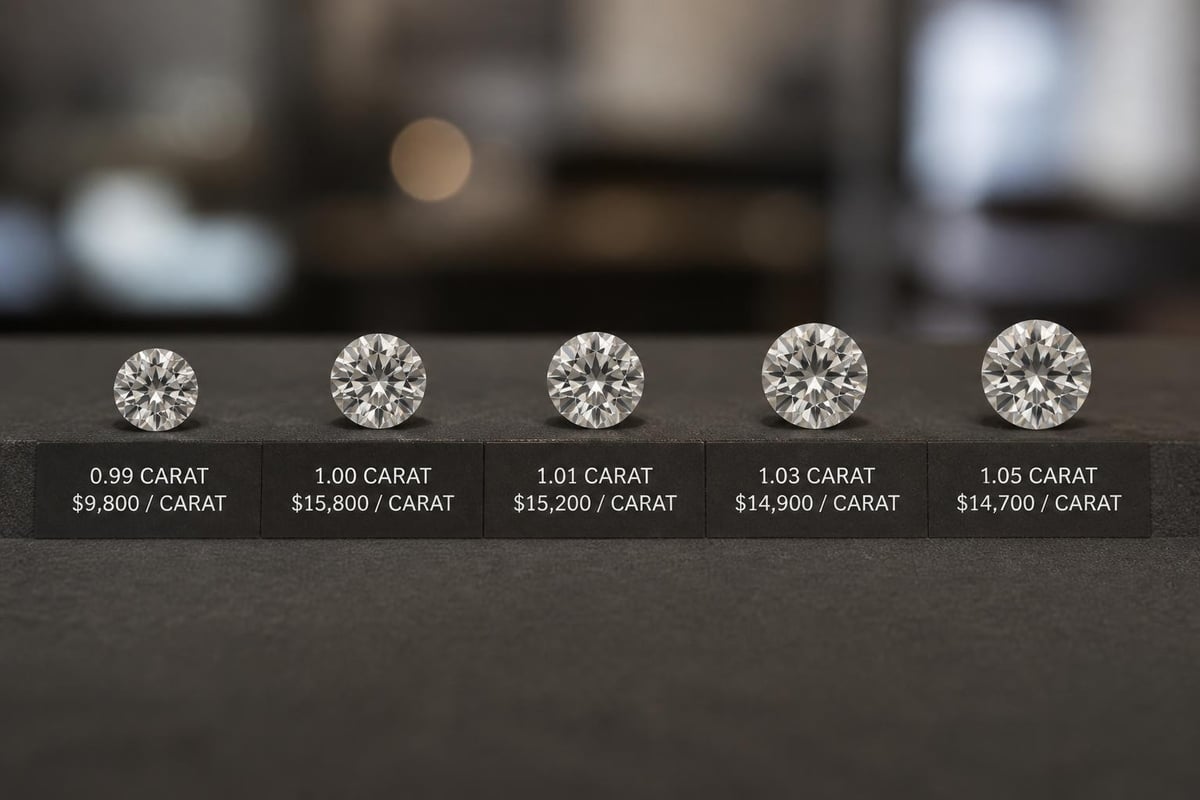
The 1.01 ct diamond occupies a unique position in the diamond market. This weight sits just above the psychologically significant one-carat threshold, a milestone that has traditionally commanded premium pricing due to its symbolic importance and rarity. Diamonds are priced per carat, but the relationship between weight and price is not linear.
Price per carat increases at certain weight thresholds, creating what industry professionals call "magic sizes." These critical weights include 0.50, 0.75, 1.00, 1.50, and 2.00 carats. When a diamond crosses one of these thresholds, even by a minimal amount, it enters a new pricing category. However, understanding how diamond prices change at weight thresholds reveals opportunities for strategic purchasing.
Price Comparison Across Similar Weights
| Carat Weight | Average Price Range | Price Per Carat | Visual Difference |
|---|---|---|---|
| 0.99 ct | $3,800 - $6,200 | $3,838 - $6,263 | Minimal |
| 1.00 ct | $4,200 - $7,000 | $4,200 - $7,000 | Essentially identical |
| 1.01 ct | $4,250 - $7,100 | $4,208 - $7,030 | Negligible |
| 1.05 ct | $4,400 - $7,400 | $4,190 - $7,048 | Slight increase |
The table demonstrates that while a 1.01 ct diamond has crossed the one-carat threshold, it often carries similar per-carat pricing to stones at exactly 1.00 carats, making it an attractive option for buyers seeking maximum value.
Quality Factors That Define a 1.01 ct Diamond
Beyond carat weight, three additional characteristics determine a diamond's overall quality and value: cut, color, and clarity. These elements work together to create the visual appeal and brilliance that distinguish exceptional stones from ordinary ones.
Cut Quality and Light Performance
Cut grade represents the most crucial factor affecting a diamond's beauty. A well-cut 1.01 ct diamond will exhibit superior brilliance, fire, and scintillation compared to a poorly cut stone of greater weight. The Gemological Institute of America (GIA) grades round brilliant diamonds on a scale from Excellent to Poor.
For round brilliant diamonds specifically, prioritize these cut parameters:
- Table percentage: 54-57% for optimal brilliance
- Depth percentage: 61-62.5% for ideal proportions
- Crown angle: 34-35 degrees for maximum fire
- Pavilion angle: 40.6-41 degrees for proper light return
- Symmetry and polish: Excellent or Very Good grades
A 1.01 ct diamond with an Excellent cut grade will appear larger and more brilliant than a 1.10 carat diamond with a Good or Fair cut. This principle makes cut quality the foundation of diamond selection, regardless of carat weight.
Color Grading Considerations
Diamond color grades range from D (colorless) to Z (light yellow or brown). For a 1.01 ct diamond, color becomes increasingly noticeable as size increases. The strategic selection of color grade balances budget considerations with visual appeal.
Optimal color grade selection by setting type:
- Platinum or white gold settings: G-H color grades offer excellent value
- Yellow gold settings: I-J color grades blend beautifully with warm metal
- Rose gold settings: H-I color grades complement the pink tones
- Investment pieces: D-F colorless grades maximize long-term value
The detailed specifications of various 1.01 carat diamonds demonstrate how color influences pricing, with each color grade step typically representing a 10-15% price difference in the near-colorless range.
Clarity Grade Selection
Clarity measures the presence of internal inclusions and external blemishes. For a 1.01 ct diamond, certain clarity grades provide optimal value by appearing eye-clean while maintaining attractive pricing.
| Clarity Grade | Visibility | Value Proposition | Recommended For |
|---|---|---|---|
| FL-IF | Flawless to Internally Flawless | Premium pricing, collector grade | Investment pieces |
| VVS1-VVS2 | Inclusions difficult to see at 10x | Excellent quality, high clarity | Discerning buyers |
| VS1-VS2 | Minor inclusions at 10x, eye-clean | Best value for quality | Engagement rings |
| SI1-SI2 | Noticeable at 10x, often eye-clean | Budget-conscious choice | Daily wear jewelry |
For most buyers, a VS2 or SI1 clarity grade in a 1.01 ct diamond represents the sweet spot between quality and value. These grades typically appear completely clean to the naked eye while costing significantly less than higher clarity grades.
Market Trends and Pricing Dynamics in 2026
The diamond market has experienced notable shifts in recent years, influenced by economic conditions, changing consumer preferences, and the emergence of laboratory-grown alternatives. Understanding these trends helps buyers make informed decisions when purchasing a 1.01 ct diamond.
Natural Diamond Pricing Patterns
Natural diamond prices fluctuated through 2025 and into 2026, with updated analyses showing that one-carat natural diamonds currently range from $1,800 to $12,000 depending on quality grades. A well-graded 1.01 ct diamond with G color and VS2 clarity typically falls in the $4,500 to $6,500 range from reputable retailers.
Several factors influence current pricing:
- Global economic conditions affecting luxury spending
- Mining supply constraints from major producers
- Increasing demand from Asian markets, particularly China and India
- Consumer awareness of ethical sourcing and certification
- Competition from laboratory-grown diamond alternatives
The market has seen stabilization in 2026 after volatility in previous years, creating favorable conditions for buyers seeking natural diamonds with certified quality and provenance.
Certification and Documentation Requirements
Professional gemological certification provides essential verification of a diamond's characteristics and serves as crucial documentation for insurance and resale purposes. For a 1.01 ct diamond, certification from recognized laboratories offers peace of mind and market credibility.
Leading Gemological Laboratories
Gemological Institute of America (GIA): The industry's gold standard, GIA certification offers the most conservative and consistent grading. GIA reports provide comprehensive analysis including proportions, clarity plotting, and quality assessments. For significant purchases like a 1.01 ct diamond, GIA certification commands the highest resale value and market recognition.
International Gemological Institute (IGI): Widely recognized globally, IGI provides detailed certification with particular strength in laboratory-grown diamond grading. IGI reports include similar comprehensive information to GIA, though some market participants consider their grading slightly more lenient in certain categories.
American Gem Society (AGS): Known for rigorous cut grading standards, AGS uses a numerical scale (0-10) rather than descriptive terms. AGS certification particularly benefits buyers prioritizing cut quality in their 1.01 ct diamond selection.
Essential Certification Elements
Every reputable certificate for a 1.01 ct diamond should include:
- Exact carat weight to two decimal places
- Color grade with methodology notation
- Clarity grade with characteristic plotting
- Cut grade (for round brilliants) or proportions analysis
- Measurements in millimeters (length, width, depth)
- Fluorescence intensity and color
- Polish and symmetry grades
- Unique report number and security features
The certification also serves as the foundation for insurance appraisals and facilitates future resale or upgrading opportunities through La Maison Val D'or's curated collections.
Shape Selection for 1.01 Carat Diamonds
While round brilliant cuts represent the most popular choice, a 1.01 ct diamond can be fashioned in numerous shapes, each offering distinct aesthetic characteristics and value propositions. Shape selection significantly impacts both appearance and pricing.
Round Brilliant Cut Advantages
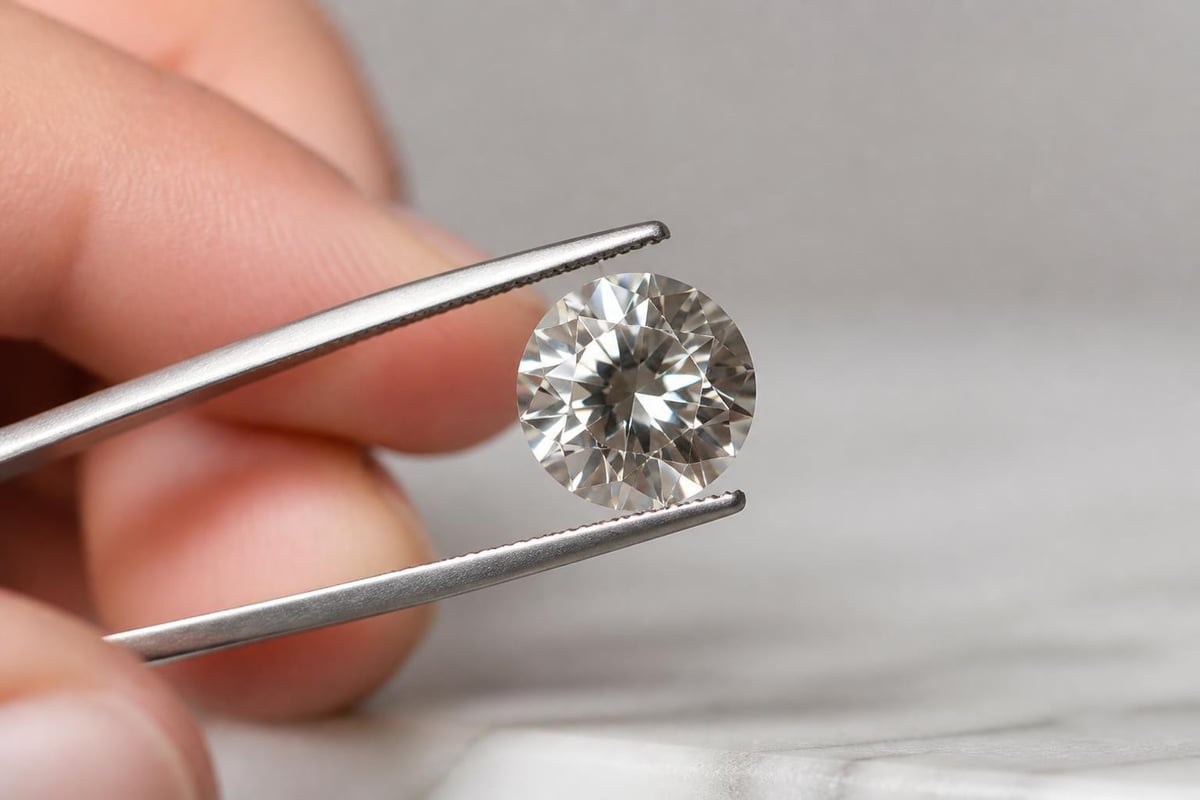
Round brilliant diamonds maximize light performance through 58 precisely arranged facets. This shape demonstrates the most consistent pricing data and maintains the strongest resale value. A 1.01 ct diamond in round brilliant cut appears approximately 6.4-6.5mm in diameter, creating substantial visual presence.
Premium pricing: Round brilliants typically cost 25-35% more than comparable fancy shapes due to higher rough diamond waste during cutting and consistent market demand.
Fancy Shape Options
Alternative shapes for a 1.01 ct diamond include:
- Princess cut: Square shape with brilliant faceting, appears 5.5mm per side
- Oval cut: Elongated appearance creates larger perceived size, approximately 8.0 x 6.0mm
- Cushion cut: Romantic pillow shape with larger facets, approximately 6.0 x 6.0mm
- Emerald cut: Rectangular step-cut showcasing clarity, approximately 7.5 x 5.5mm
- Pear cut: Teardrop shape combining brilliant and step-cut elements
- Radiant cut: Trimmed corners with brilliant faceting for maximum sparkle
Each shape distributes the 1.01 carat weight differently, affecting face-up appearance. Elongated shapes like oval, pear, and emerald cuts create the impression of greater size compared to round or square shapes of identical weight.
Setting Considerations for Maximum Impact
The setting chosen for a 1.01 ct diamond dramatically influences its visual presentation and wearability. Proper setting selection enhances the stone's beauty while providing secure mounting and complementary metal choices.
Popular Setting Styles
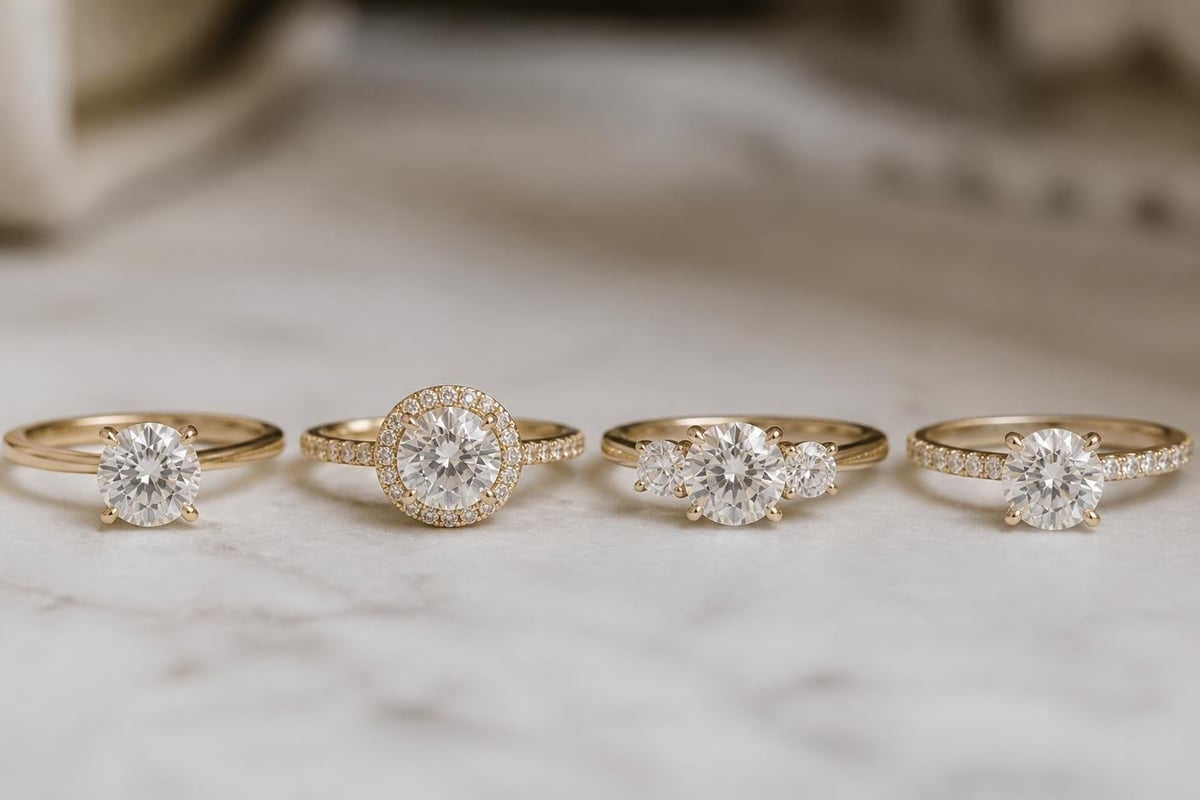
Solitaire settings: Classic and timeless, solitaire settings allow a 1.01 ct diamond to command complete attention without competing elements. Four-prong or six-prong configurations offer varying levels of security and metal visibility. This style particularly suits engagement rings where the diamond serves as the focal point.
Halo settings: Surrounding the center stone with smaller accent diamonds, halo settings increase perceived size and add additional sparkle. A 1.01 ct diamond in a halo setting can appear equivalent to a 1.25-1.50 carat solitaire while maintaining more accessible pricing.
Three-stone settings: Flanking the 1.01 ct diamond with two smaller stones creates symbolic meaning (past, present, future) while adding visual balance. Side stones typically range from 0.25-0.40 carats each, creating substantial overall presence.
Pavé or channel settings: Adding smaller diamonds along the band enhances overall brilliance without overwhelming the 1.01 ct center stone. These accent stones typically total 0.25-0.50 additional carats.
Settings also impact how color appears in near-colorless grades. White metals like platinum or white gold maintain true color appearance, while yellow gold can make an I or J color 1.01 ct diamond appear warmer. For exquisite pieces that complement various gemstones, explore fine necklaces and pendants that showcase different setting approaches.
Investment Value and Long-Term Considerations
A 1.01 ct diamond represents a significant financial commitment, making investment potential an important consideration. While diamonds should primarily be valued for their aesthetic and emotional significance, understanding market factors helps protect long-term value.
Factors Supporting Value Retention
Natural diamonds of quality grades maintain value through inherent scarcity and consistent demand. A 1.01 ct diamond with excellent cut, color in the G-H range, and clarity of VS2 or better represents a balanced investment profile.
Key value retention factors:
- Certification from GIA or AGS documenting quality
- Excellent or Very Good cut grades maximizing beauty
- Color grades in the near-colorless range (G-I)
- Clarity grades allowing eye-clean appearance (VS2-SI1)
- Classic shapes with consistent demand (round, princess, oval)
Diamonds do not appreciate like stocks or real estate but maintain stable value over decades. Exceptional stones with superior characteristics demonstrate the strongest value retention and potential appreciation.
Upgrade Pathways
Many fine jewelers, including specialized retailers focusing on exceptional rings, offer upgrade programs allowing future trade-in of a 1.01 ct diamond toward larger or higher quality stones. Understanding these policies before purchase creates flexibility for evolving preferences or celebrating future milestones.
Typical upgrade programs require:
- Original purchase documentation and certification
- Minimum upgrade value (often 2x original purchase price)
- Stone remains in saleable condition without damage
- Trade toward a new piece from the same retailer
Practical Buying Strategies for Optimal Value
Purchasing a 1.01 ct diamond requires strategic planning to maximize quality while respecting budget parameters. Several approaches help buyers secure exceptional stones at favorable pricing.
Prioritizing the Four Cs
Not all quality factors equally impact visual appeal. Strategic prioritization allows buyers to allocate budget toward characteristics that maximize beauty:
- Cut quality first: Always prioritize Excellent or Very Good cut grades, as this determines brilliance
- Select eye-clean clarity: VS2 or SI1 grades often appear flawless while saving 20-40% compared to higher clarity
- Optimize color for setting: G-H in white metals, I-J in yellow gold maintains beautiful appearance
- Consider just-above weights: A 1.01 ct diamond costs similar to 1.00 but psychologically crosses the threshold
Timing and Market Conditions
Diamond pricing responds to seasonal demand patterns and broader economic conditions. Strategic timing can yield savings of 10-15% on identical quality stones.
Optimal purchasing periods:
- January-February: Post-holiday slowdown reduces demand
- July-August: Summer months traditionally see decreased jewelry purchases
- Economic uncertainty: Market corrections create buying opportunities for patient purchasers
However, exceptional stones meeting specific criteria appear irregularly. When finding a 1.01 ct diamond that meets all requirements, timing considerations become secondary to securing the ideal stone.
Comparing Multiple Stones
Technology now allows buyers to compare numerous 1.01 ct diamond options simultaneously. Comprehensive comparison tools demonstrate how subtle differences in grades affect both pricing and appearance, enabling informed decision-making.
When comparing options, evaluate:
- Actual photographs or video showing light performance
- Complete certification documentation with accurate grading
- Proportions and measurements confirming optimal cutting
- Price relative to comparable stones in the market
- Retailer reputation and return policy protections
Laboratory-Grown Alternatives
The emergence of laboratory-grown diamonds has created additional options for buyers considering a 1.01 ct diamond. These stones possess identical chemical, physical, and optical properties to natural diamonds while offering substantially different pricing structures.
Price Differences
Laboratory-grown diamonds typically cost 60-80% less than comparable natural stones. A 1.01 ct diamond that costs $5,000 as a natural stone might be available for $1,000-$2,000 as a laboratory-grown alternative with identical quality grades.
Considerations for laboratory-grown options:
- Same brilliance and durability as natural diamonds
- Identical certification processes through GIA and IGI
- Significantly lower environmental impact from production
- Uncertain long-term value retention compared to natural stones
- Growing market acceptance, particularly among younger buyers
Both natural and laboratory-grown diamonds serve different buyer priorities. Natural stones emphasize rarity, traditional value, and long-term investment potential. Laboratory-grown alternatives prioritize maximizing size and quality within budget constraints or supporting environmental considerations.
For buyers specifically seeking natural gemstones with certified provenance, curated loose precious stones provide verified quality and authentic documentation.
Caring for Your 1.01 ct Diamond
Proper maintenance ensures a 1.01 ct diamond maintains its brilliance and beauty throughout decades of wear. Despite being the hardest natural substance, diamonds require appropriate care to prevent damage and preserve optimal light performance.
Daily Wear Precautions
While diamonds resist scratching, they can chip or fracture if struck against hard surfaces at vulnerable angles. Remove diamond jewelry during:
- Heavy physical activity or exercise
- Household cleaning with harsh chemicals
- Swimming in chlorinated pools
- Gardening or manual labor
- Contact sports or high-impact activities
These precautions protect both the stone and its setting from unnecessary stress and potential damage.
Cleaning and Maintenance
Regular cleaning maintains the brilliance that makes a 1.01 ct diamond captivating. Oil, lotion, and everyday residue accumulate on diamond surfaces, dulling their natural sparkle.
Home cleaning method:
- Create a solution of warm water and mild dish soap
- Soak the diamond jewelry for 20-30 minutes
- Gently brush with a soft toothbrush, especially around the setting
- Rinse thoroughly under warm running water
- Dry with a lint-free cloth
Professional cleaning and inspection every six months ensures setting security and removes deposits that home cleaning cannot address. Many jewelers provide complimentary cleaning services for pieces purchased from their collections.
Selecting a 1.01 ct diamond requires balancing quality factors, market conditions, and personal preferences to find a stone that delivers lasting beauty and value. Understanding how cut, color, clarity, and certification interact empowers buyers to make confident decisions when investing in exceptional gemstones. Whether choosing a natural diamond with traditional value retention or exploring laboratory-grown alternatives, the 1.01 carat weight threshold offers substantial visual presence while potentially providing pricing advantages over perfectly round one-carat weights. For those seeking expertly curated diamonds and fine jewelry that embodies timeless elegance, La Maison Val D'or offers personalized guidance and exceptional selections to help you discover the perfect piece for your unique vision.