
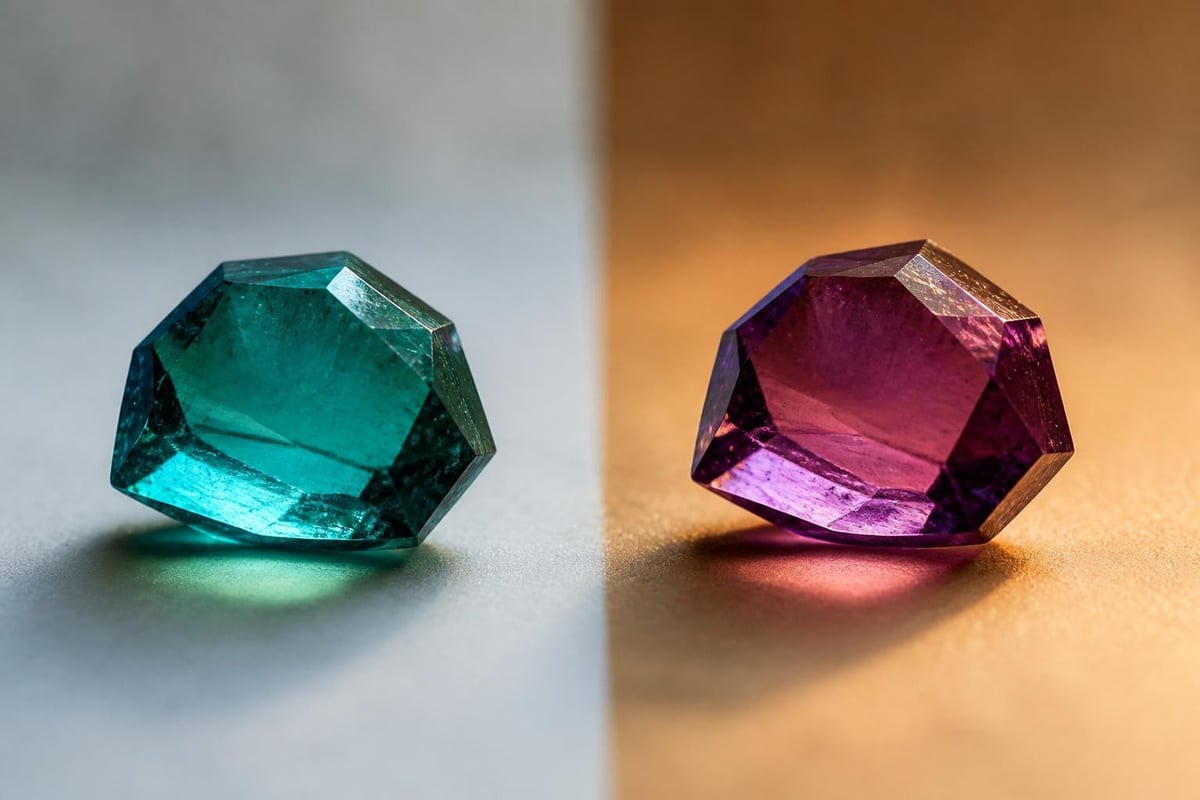
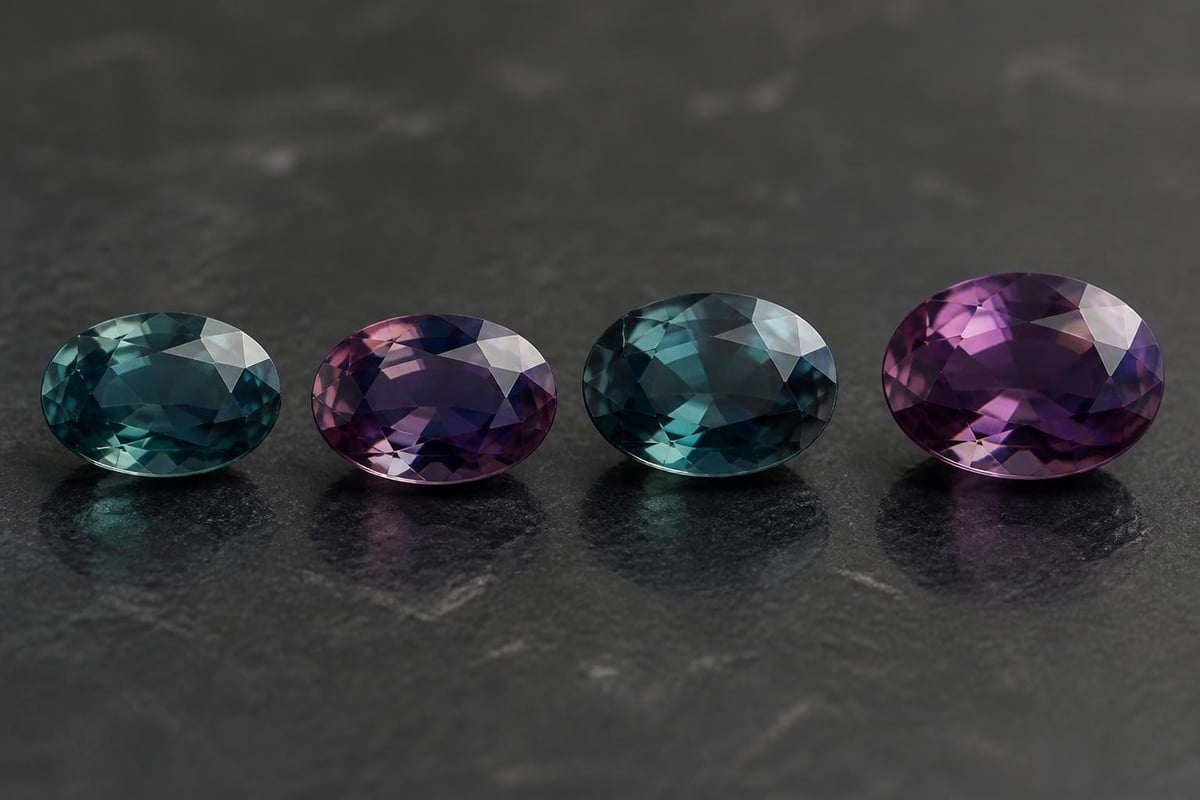
Authentic alexandrite stands as one of the rarest and most coveted gemstones in the world, captivating collectors and jewelry enthusiasts with its remarkable color-changing properties. First discovered in Russia's Ural Mountains in the 1830s, this extraordinary chrysoberyl variety displays green to bluish-green hues in daylight and transforms to purplish-red or raspberry tones under incandescent light. As we navigate 2026's sophisticated gemstone market, understanding how to identify and value authentic alexandrite has become increasingly important for discerning buyers seeking investment-grade pieces.
The Scientific Phenomenon Behind Alexandrite's Color Change
The distinctive characteristic that defines authentic alexandrite lies in its pleochroism, a rare optical phenomenon caused by chromium ions within the crystal structure. This element absorbs yellow and green wavelengths while transmitting blue and red wavelengths differently depending on the light source.
Understanding the Alexandrite Effect
The intensity of color change separates exceptional specimens from ordinary ones. Gemologists measure this transformation on a scale from weak to strong, with the most valuable stones showing dramatic shifts between green and red.
Key factors influencing color change:
- Chromium concentration levels
- Crystal lattice structure
- Trace element composition
- Light source temperature (measured in Kelvin)
Natural daylight contains balanced wavelengths across the spectrum, emphasizing the cooler green tones. Incandescent bulbs emit more red wavelengths, triggering the warm color transformation. This dual personality has earned authentic alexandrite the nickname "emerald by day, ruby by night."
Identifying Authentic Alexandrite: Professional Evaluation Criteria
Distinguishing genuine alexandrite from imitations and synthetic versions requires careful examination and professional expertise. The market in 2026 sees numerous simulants marketed as alexandrite, making authentication crucial.
Laboratory Testing Methods
| Test Type | What It Reveals | Reliability |
|---|---|---|
| Spectroscopy | Chromium absorption lines | Extremely High |
| Refractive Index | 1.746-1.755 range confirms chrysoberyl | High |
| Specific Gravity | 3.70-3.78 density measurement | High |
| Chelsea Filter | Red appearance under filter | Moderate |
| Microscopic Inclusion Analysis | Natural growth patterns vs. synthetic markers | Very High |
Professional gemological laboratories such as GIA, AGL, and Gübelin provide detailed reports documenting a stone's authenticity, origin, and any treatments. These certifications have become essential for high-value transactions.
Visual Inspection Techniques
Experienced gemologists examine several visual indicators when assessing authentic alexandrite. The color change should appear throughout the entire stone, not just on the surface. Natural specimens often display subtle green or brown overtones, while synthetic versions may show overly saturated, "too perfect" colors.
Common natural inclusions in authentic alexandrite:
- Needle-like rutile crystals
- Two-phase liquid-gas inclusions
- Fingerprint patterns
- Growth tubes
Global Sources and Origin Significance
The geographic source of authentic alexandrite significantly impacts both its characteristics and market value. Russian alexandrites remain the benchmark for quality, though production from the original Ural deposits ceased decades ago.
Modern Production Regions
Brazil emerged as a major source in the 1980s, producing stones with strong color change but typically lighter tones than Russian material. Mines in Minas Gerais state yield alexandrites ranging from small accent stones to rare larger specimens.
Sri Lanka produces alexandrites with excellent color change, often displaying superior clarity compared to other sources. These stones typically show olive-green to brownish-red transformations.
East Africa, particularly Tanzania and Madagascar, has become increasingly important since 2000. These deposits produce material with varying quality levels, from commercial grade to exceptional specimens rivaling historical Russian stones.
| Origin | Typical Color Change | Clarity | Market Premium |
|---|---|---|---|
| Russia (historic) | Blue-green to red | Moderate inclusions | 300-500% |
| Brazil | Green to red | Good to excellent | 100-150% |
| Sri Lanka | Olive-green to brownish-red | Excellent | 80-120% |
| East Africa | Variable | Variable | Standard baseline |
Valuation Factors for Authentic Alexandrite
Pricing authentic alexandrite requires analyzing multiple quality factors simultaneously. The rarity of this gemstone means that even modest-quality specimens command premium prices compared to most colored stones.
The Four Critical Value Drivers
Color Change Strength dominates value considerations. A complete transformation from pure green to pure red represents the ideal, commanding exponential price increases. Stones showing 80-100% color change can cost five to ten times more than those with 30-50% change.
Size dramatically affects per-carat pricing. Authentic alexandrite above one carat becomes exponentially rarer, with stones exceeding three carats entering the realm of museum-quality specimens. The price jump between half-carat and one-carat stones often exceeds 300%.
Clarity balances against color in alexandrite evaluation. While eye-clean specimens bring premium prices, collectors accept moderate inclusions in stones with exceptional color change. The finest clarity grades (IF-VVS) can double a stone's value when combined with strong color change.
Cut Quality maximizes the color-changing effect through proper orientation and proportioning. Master cutters position the table facet perpendicular to the c-axis to optimize pleochroism. Well-executed cuts can enhance apparent color change by 20-30%.
Synthetic and Simulated Alexandrites in Today's Market
Understanding the difference between synthetic and simulated stones protects buyers from misrepresentation. Both categories flood the market, often sold with misleading terminology.
Synthetic Alexandrite Production
Laboratory-grown alexandrite possesses identical chemical composition and crystal structure to natural material. Modern synthesis methods, particularly flux growth and Czochralski pulling, produce gem-quality material virtually indistinguishable from natural stones without professional testing.
Characteristics of synthetic alexandrite:
- Often displays stronger color change than natural
- Usually shows better clarity
- May contain flux inclusions or curved growth lines
- Costs 90-95% less than natural equivalent
The key distinction: synthetic alexandrite is real alexandrite created in controlled conditions rather than geologically. Ethical sellers clearly disclose synthetic origin, but misrepresentation occurs frequently in retail settings.
Common Simulants
Color-change garnet, sapphire, and spinel are frequently marketed as alexandrite. While these stones do change color under different lighting, they lack alexandrite's specific chemistry and optical properties.
Simulant comparison:
- Color-change garnet: Brown-green to pink-brown (weaker change)
- Color-change sapphire: Blue to purple (different color range)
- Color-change spinel: Gray-blue to purple (subtle change)
- Lab-created corundum: Often shows garish, unnatural colors
Investment Potential and Market Trends
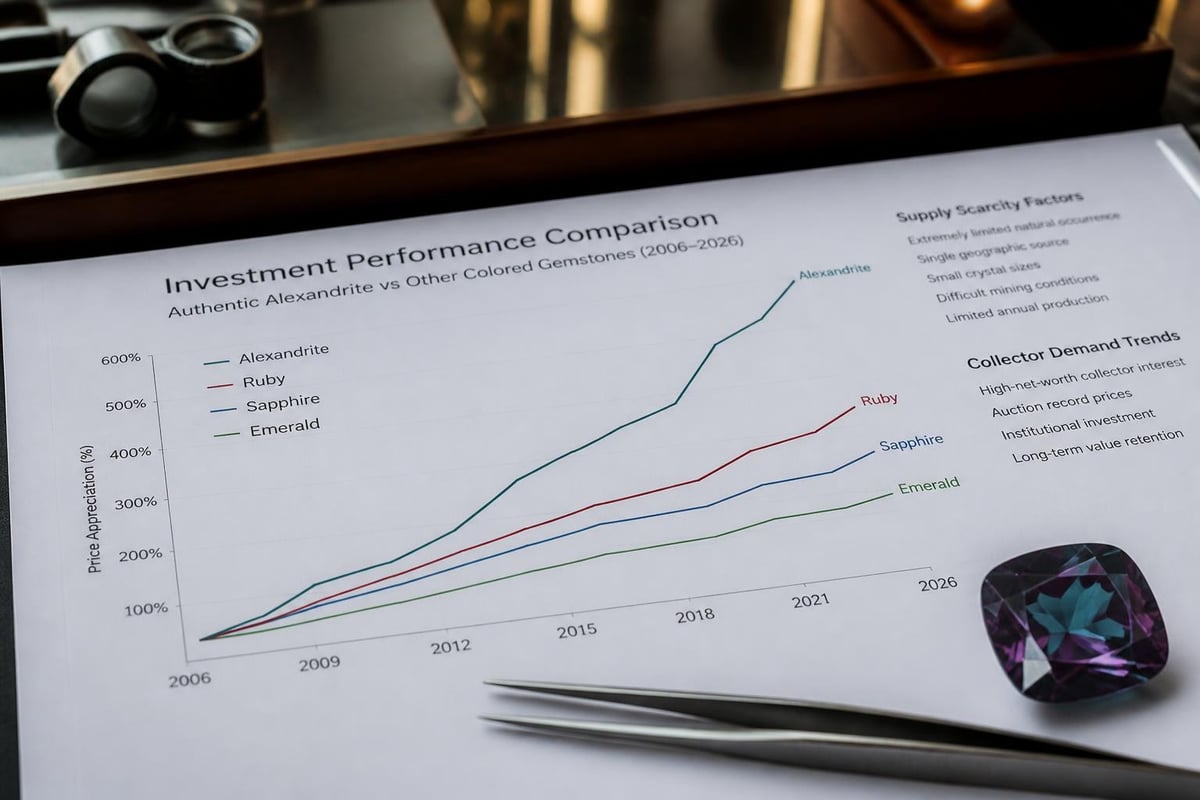
The authentic alexandrite market has shown consistent appreciation over the past two decades, with exceptional specimens achieving record prices at major auction houses. In 2026, this trend continues as collectors recognize alexandrite's extreme rarity.
Current Market Dynamics
Fine-quality authentic alexandrite above two carats has become virtually unavailable through traditional retail channels. Most significant stones now trade through specialized dealers, auction houses, or private sales between collectors.
Price ranges per carat (2026 market):
- Commercial quality (weak change, included): $2,000-$5,000
- Good quality (moderate change, eye-clean): $8,000-$15,000
- Fine quality (strong change, minor inclusions): $20,000-$40,000
- Exceptional quality (complete change, eye-clean): $50,000-$100,000+
- Museum quality (large, flawless, complete change): $150,000+
When considering loose precious stones for investment purposes, authentic alexandrite offers advantages of portability, durability (8.5 Mohs hardness), and historical price stability. However, liquidity can be limited for very high-value specimens.
Setting and Designing with Authentic Alexandrite
The unique properties of authentic alexandrite present both opportunities and challenges for jewelry design. Proper setting selection enhances the color-changing effect while protecting this valuable gemstone.
Optimal Setting Styles
Solitaire designs remain the most popular choice for authentic alexandrite, allowing maximum light penetration from all angles. This exposure ensures the color change displays dramatically under varying lighting conditions. High-set prong mountings work particularly well for rings, while bezel settings offer additional security for active wearers.
Halo settings can complement smaller alexandrites effectively, though designers must carefully select accent stones. Diamonds provide neutral contrast, while colored gemstones can interfere with alexandrite's color perception. White gold and platinum settings showcase the color change without competing for attention.
Three-stone designs featuring authentic alexandrite as the center stone create compelling narratives. Some collectors choose matching alexandrites for all three positions, while others pair alexandrite with emerald and ruby to symbolize its dual nature.
Metal Selection Considerations
The choice of metal significantly impacts how authentic alexandrite appears. White metals (platinum, white gold, palladium) provide neutral backgrounds that don't influence color perception. Yellow gold can warm the stone's appearance slightly, while rose gold may complement the red phase.
Setting recommendations by alexandrite size:
- Under 0.5 carats: Delicate solitaire or accent piece
- 0.5-1.0 carats: Classic solitaire or small halo
- 1.0-2.0 carats: Statement solitaire or three-stone
- Above 2.0 carats: Museum-quality mounting with maximum security
Authentication Services and Documentation
Proper documentation transforms authentic alexandrite from a beautiful gemstone into a verifiable asset. Comprehensive certification provides essential information for insurance, resale, and estate planning purposes.
Professional Gemological Reports
Leading laboratories issue detailed reports identifying alexandrite and documenting its characteristics. These reports typically include high-resolution photography, spectroscopic analysis, and origin determination when possible.
Essential report components:
- Species and variety confirmation
- Weight and measurements
- Color description in multiple lighting conditions
- Clarity grade
- Treatment disclosure
- Origin opinion (when determinable)
GIA reports for authentic alexandrite cost between $150-$500 depending on stone size and required services. This investment provides crucial protection against misrepresentation and supports future authentication needs.
Origin Determination Challenges
Unlike rubies and sapphires, authentic alexandrite origin determination remains challenging even for expert gemologists. The chemical and physical properties overlap between sources, making definitive attribution difficult without comparing inclusion patterns against extensive reference collections.
Advanced techniques including LA-ICP-MS (Laser Ablation Inductively Coupled Plasma Mass Spectrometry) analyze trace element concentrations to suggest probable origin. However, even sophisticated testing may only narrow the source to a geographic region rather than a specific locality.
Care and Maintenance Guidelines
Authentic alexandrite's durability makes it suitable for daily wear, yet proper care ensures long-term beauty and value preservation. Understanding the specific requirements for this gemstone prevents damage and maintains its remarkable optical properties.
Cleaning Protocols
Safe cleaning methods:
- Warm water with mild dish soap
- Soft brush (baby toothbrush) for gentle scrubbing
- Ultrasonic cleaning (for untreated, uncracked stones)
- Professional steam cleaning (with caution)
Avoid harsh chemicals, including chlorine bleach and acids, which can damage metal settings rather than the alexandrite itself. Remove jewelry before swimming, cleaning, or engaging in activities involving chemical exposure.
Storage Best Practices
Store authentic alexandrite separately from harder gemstones (diamonds, sapphires) that might scratch other pieces. Soft cloth pouches or individual compartments in jewelry boxes prevent contact damage. For valuable specimens, climate-controlled storage maintains stable conditions.
Annual maintenance schedule:
- Professional inspection of prongs and settings
- Cleaning by qualified jeweler
- Documentation photography update
- Insurance appraisal review (every 3-5 years)
Making Informed Purchase Decisions
Acquiring authentic alexandrite requires careful vetting of both the gemstone and the seller. The prevalence of synthetics and simulants demands that buyers work with reputable sources offering transparent disclosure and return policies.
Selecting Qualified Vendors
Established jewelry houses with gemological expertise provide the most reliable source for authentic alexandrite. Look for sellers who maintain relationships with major laboratories and offer certified stones as standard practice. When exploring jewelry sets or individual pieces, verify the seller's credentials and authentication guarantees.
Questions to ask potential sellers:
- Can you provide independent laboratory certification?
- What is your return policy for certified stones?
- Do you guarantee natural origin with money-back assurance?
- Can you provide references from previous alexandrite clients?
- What documentation will accompany the purchase?
Red Flags and Warning Signs
Certain marketing language should trigger additional scrutiny. Phrases like "alexandrite-like," "created alexandrite" (without lab-grown disclosure), or "Russian formula" often indicate synthetic or simulated material. Prices significantly below market rates almost certainly indicate non-natural stones.
Common misrepresentation tactics:
- Selling synthetic as natural without clear disclosure
- Marketing color-change garnet as "alexandrite"
- Claiming Russian origin without supporting evidence
- Offering "wholesale" prices on large, high-quality stones
- Providing certificates from unknown laboratories
The Cultural and Historical Significance
Beyond its gemological properties, authentic alexandrite carries rich cultural symbolism and historical importance. Named for Czar Alexander II of Russia, the stone's discovery coincided with his coming of age in 1834, creating an immediate association with Russian imperial heritage.
Symbolic Meanings and Traditions
The dual-color nature of authentic alexandrite has inspired various symbolic interpretations across cultures. Russian tradition associates the stone with balance and good fortune, while modern crystal healing practitioners attribute properties of emotional balance and intuition enhancement.
Anniversary and birthstone associations:
- Traditional 55th wedding anniversary gemstone
- Alternative June birthstone (alongside pearl and moonstone)
- Zodiac stone for Gemini (reflecting duality)
Collectors prize authentic alexandrite not merely for beauty or rarity, but for the connection to gemological history and the romance of discovery. Each significant specimen represents a tangible link to earth's geological processes spanning millions of years.
Future Outlook for Authentic Alexandrite
As we progress through 2026, the market for authentic alexandrite faces several converging trends. Primary deposit depletion continues worldwide, with no major new discoveries in recent years. Meanwhile, global wealth expansion increases collector demand, particularly from Asian markets where colored gemstone appreciation has surged.
Supply Constraints and Price Projections
Industry experts project continued price appreciation for fine-quality authentic alexandrite, particularly for stones above one carat with strong color change. The gap between commercial and fine quality specimens will likely widen as collectors compete for increasingly scarce top-tier material.
Factors supporting long-term value:
- Geological rarity (extremely limited formation conditions)
- Mining depletion of known deposits
- Growing collector base in emerging markets
- Increasing recognition among mainstream jewelry buyers
- Superior durability for heirloom pieces
Some analysts predict that exceptional authentic alexandrite specimens may rival fine-quality Kashmir sapphires and Burmese rubies in per-carat pricing within the next decade. This trajectory depends on sustained collector interest and continued supply constraints.
Authentic alexandrite represents the pinnacle of colored gemstone collecting, combining extraordinary optical phenomena with genuine geological rarity. Whether you seek a stunning centerpiece for necklaces or bracelets, or wish to acquire investment-grade loose stones, proper authentication and expert guidance ensure confident purchases. La Maison Val D'or specializes in curating exceptional gemstones with verified authenticity, providing collectors and jewelry enthusiasts access to rare treasures backed by comprehensive documentation and expert knowledge.