
The term "diamond precious" encompasses far more than simple beauty. It represents a convergence of geological rarity, exceptional quality characteristics, and enduring value that has captivated collectors and connoisseurs for centuries. Understanding what elevates a diamond from merely attractive to genuinely precious requires knowledge of scientific grading standards, market dynamics, and the specific attributes that create lasting worth. For discerning buyers seeking ultra-fine jewelry investments, recognizing these distinctions ensures acquisition of pieces that maintain both aesthetic appeal and financial significance.
The Foundation of Diamond Precious Value
Every diamond precious designation begins with understanding the fundamental characteristics that determine quality and rarity. The industry relies on standardized grading systems to evaluate these attributes objectively, providing buyers with reliable metrics for comparison and valuation.
The 4Cs Framework
The comprehensive diamond grading system known as the 4Cs forms the cornerstone of diamond precious evaluation. These four characteristics work interdependently to establish overall quality:
- Carat Weight: Measures mass with one carat equaling 200 milligrams
- Clarity: Evaluates internal inclusions and external blemishes
- Color: Grades absence of color in white diamonds or saturation in fancy colors
- Cut: Assesses proportions, symmetry, and polish affecting light performance
Carat weight often receives disproportionate attention, yet it represents only one dimension of value. Two diamonds of identical carat weight can differ dramatically in worth based on the remaining three factors. The relationship between carat weight and rarity intensifies exponentially rather than linearly-a two-carat diamond of equivalent quality typically costs more than double a one-carat stone.
Clarity Characteristics in Precious Diamonds
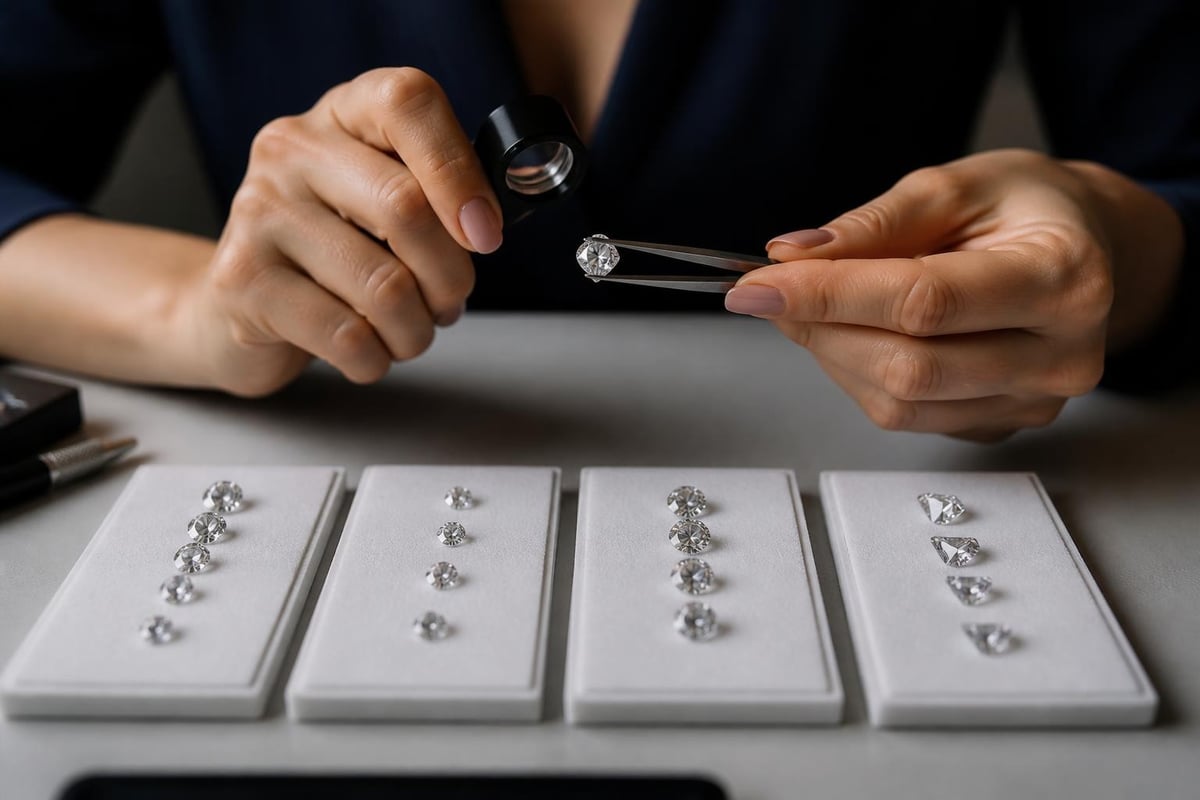
Diamond clarity grading examines the nature, size, position, and number of internal characteristics. The Gemological Institute of America (GIA) scale ranges from Flawless (FL) to Included (I3), with eleven distinct grades.
| Clarity Grade | Visibility | Diamond Precious Status |
|---|---|---|
| FL/IF | No inclusions under 10x magnification | Extremely rare, highest tier |
| VVS1/VVS2 | Very difficult to see under 10x | Premium precious category |
| VS1/VS2 | Difficult to see under 10x | Excellent precious quality |
| SI1/SI2 | Noticeable under 10x | Good value precious stones |
| I1/I2/I3 | Visible to naked eye | Generally not precious tier |
For ultra-fine jewelry applications, diamonds grading VS2 or higher typically qualify as diamond precious specimens. These stones exhibit excellent transparency without visible inclusions that compromise brilliance. Position matters significantly-inclusions near the table facet impact appearance more substantially than those near the girdle.
Color Grading and Precious Diamond Classification
The presence or absence of color fundamentally influences diamond precious designation. White diamonds are graded on a scale from D (colorless) to Z (light yellow or brown), while colored diamonds follow entirely different evaluation criteria.
Colorless to Near-Colorless Range
Diamonds grading D through F appear completely colorless to the untrained eye and command premium pricing. The G through J range, classified as near-colorless, offers exceptional value while maintaining the appearance of colorlessness when mounted in jewelry settings.
For those building collections at La Maison Val D'or, understanding these subtle distinctions enables strategic acquisition. An H-color diamond of superior cut quality often appears more brilliant than a D-color stone with mediocre cut proportions, demonstrating why holistic evaluation matters.
The chemical composition and physical properties of diamonds explain color variations. Trace elements and structural anomalies during formation create color-nitrogen produces yellow, boron creates blue, and radiation exposure can generate green hues.
Fancy Colored Diamond Precious Stones
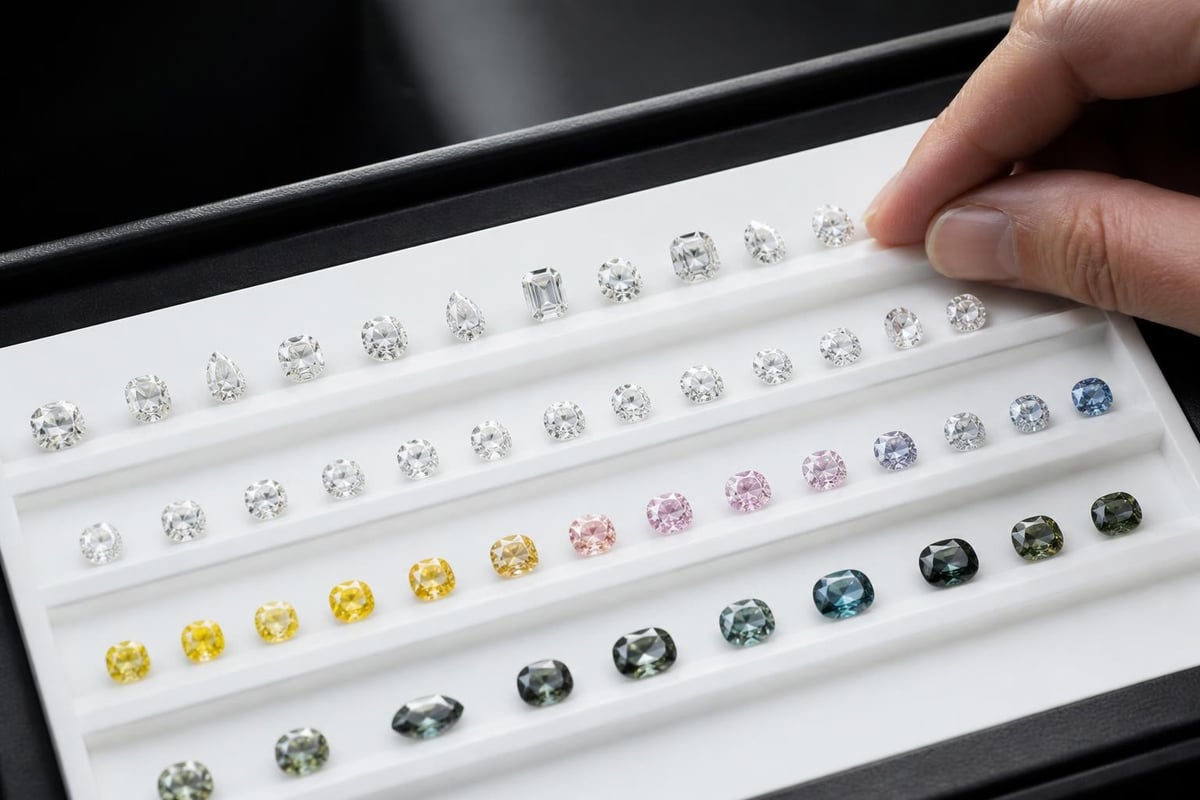
Fancy colored diamonds represent the apex of rarity and value. These stones exhibit deliberate, saturated color beyond the Z-grade on the white diamond scale. Pink, blue, and red diamonds achieve astronomical prices at auction, with certain specimens exceeding $1 million per carat.
Grading fancy colored diamonds involves three components:
- Hue: The primary color (red, orange, yellow, green, blue, violet, purple, pink, brown, gray, black, white)
- Tone: How light or dark the color appears
- Saturation: The color's intensity or strength
Descriptive modifiers like "Fancy Vivid," "Fancy Intense," and "Fancy Deep" indicate saturation levels. A Fancy Vivid Pink diamond precious stone represents exceptional rarity, as natural pink diamonds occur in approximately one in 100,000 mined diamonds.
Cut Quality: The Human Contribution to Diamond Precious Appeal
Unlike carat, color, and clarity-characteristics determined by nature-cut quality reflects human artistry and precision. The fundamental aspects of diamond cut directly impact light performance, creating the brilliance, fire, and scintillation that distinguish exceptional stones.
Cut Grade Components
Professional cut grading evaluates multiple dimensions beyond basic shape. The GIA assigns cut grades from Excellent to Poor for round brilliant diamonds based on:
- Proportions (table percentage, crown angle, pavilion depth)
- Symmetry precision
- Polish quality
- Weight ratio optimization
Excellent cut diamonds maximize light return through optimal facet angles. When light enters through the table, proper pavilion angles reflect it internally before returning through the crown, creating maximum brilliance. Poorly cut diamonds leak light through the pavilion, appearing lifeless despite high color and clarity grades.
Shape Selection and Precious Diamond Investment
While round brilliant diamonds dominate the market with superior light performance, fancy shapes-marquise, oval, pear, emerald, asscher, cushion, radiant, and princess-offer distinctive aesthetics and value propositions.
| Shape | Light Performance | Typical Price vs Round | Best For |
|---|---|---|---|
| Round Brilliant | Maximum brilliance | Baseline (100%) | Engagement rings, classic pieces |
| Oval | Excellent, elongates finger | 20-30% less | Modern elegance |
| Emerald | Subtle elegance, step-cut | 25-35% less | Sophisticated designs |
| Cushion | Romantic fire | 20-30% less | Vintage-inspired jewelry |
| Asscher | Art deco appeal | 25-30% less | Statement pieces |
Collectors exploring necklaces and pendants should consider how shape complements design. Emerald-cut diamonds excel in linear arrangements, while round brilliants suit halo settings and tennis necklaces.
Certification and Diamond Precious Authentication
Reputable gemological laboratories provide independent verification of diamond characteristics, essential for establishing diamond precious credentials. Third-party certification removes subjectivity and provides documentation for insurance, resale, and estate purposes.
Leading Certification Bodies
The Gemological Institute of America (GIA) maintains industry-leading standards for consistency and conservative grading. Other respected laboratories include the American Gem Society (AGS), known for rigorous cut grading, and the International Gemological Institute (IGI), frequently used for laboratory-grown diamonds.
Certificate components typically include:
- Carat weight to hundredths
- Color and clarity grades
- Cut grade (for round brilliants)
- Measurements and proportions
- Fluorescence intensity
- Plotting diagram showing inclusions
- Security features and report number
Purchasing certified diamonds ensures transparency and facilitates accurate comparison. When examining loose precious stones, certification provides verification of quality claims independent of seller representation.
Rarity Factors Beyond the 4Cs
While the 4Cs provide standardized evaluation metrics, additional rarity factors influence diamond precious classification and valuation. These characteristics create uniqueness that transcends conventional grading parameters.
Fluorescence Considerations
Approximately 25-35% of diamonds exhibit fluorescence-visible light emission when exposed to ultraviolet radiation. Blue fluorescence, most common in diamonds, can appear in varying intensities from Faint to Very Strong.
Market perceptions of fluorescence remain complex. Medium to Strong blue fluorescence may slightly decrease value in colorless diamonds (D-F) while potentially enhancing appearance in near-colorless grades (G-J) by counteracting faint yellow tints. For discerning collectors, fluorescence represents a nuance requiring individual aesthetic judgment rather than automatic disqualification.
Provenance and Historical Significance
Diamonds with documented history or famous previous ownership achieve premium valuations beyond their physical characteristics. Stones from historically significant mines (such as Golconda in India, known for Type IIa diamonds) or those featured in royal collections carry provenance premiums.
Modern traceability programs tracking diamonds from mine to market appeal to ethically conscious buyers. Blockchain technology and laser inscription enable verification of origin, providing assurance about sourcing practices-an increasingly valued attribute in diamond precious acquisitions.
Investment Perspective on Diamond Precious Acquisitions
Approaching diamonds as investment vehicles requires different considerations than purely aesthetic purchases. While all fine jewelry holds intrinsic value, certain diamond characteristics enhance investment potential.
Investment-Grade Characteristics
Optimal investment diamonds typically exhibit:
- Certification from GIA or AGS
- Carat weight exceeding one carat (preferably 2+ carats)
- Color grade D through G
- Clarity VS2 or higher
- Excellent or Ideal cut grade
- No strong fluorescence
- Classic shapes (round brilliant, emerald, cushion)
Fancy colored diamonds, particularly pink, blue, and red specimens with Fancy Intense or Fancy Vivid saturation, represent alternative investment vehicles with historical price appreciation exceeding white diamonds. However, these stones require specialized expertise and authentication.
Market Liquidity Considerations
Unlike publicly traded securities, diamond resale involves finding qualified buyers willing to pay fair market value. Established auction houses, specialized dealers, and private collectors constitute the secondary market. Building relationships with reputable dealers facilitates eventual disposition if needed.
For those considering tennis necklaces as investment pieces, matching stones of consistent quality throughout the piece maintains value integrity. Uniformity in color, clarity, and cut creates cohesive appeal that transcends individual stone value.
Natural Versus Laboratory-Grown Diamond Precious Stones
Technological advances enable creation of laboratory-grown diamonds chemically and physically identical to natural stones. These diamonds exhibit the same crystal structure, optical properties, and hardness (10 on the Mohs scale) as mined diamonds, yet market perception and pricing differ substantially.
Distinguishing Natural and Laboratory-Grown Stones
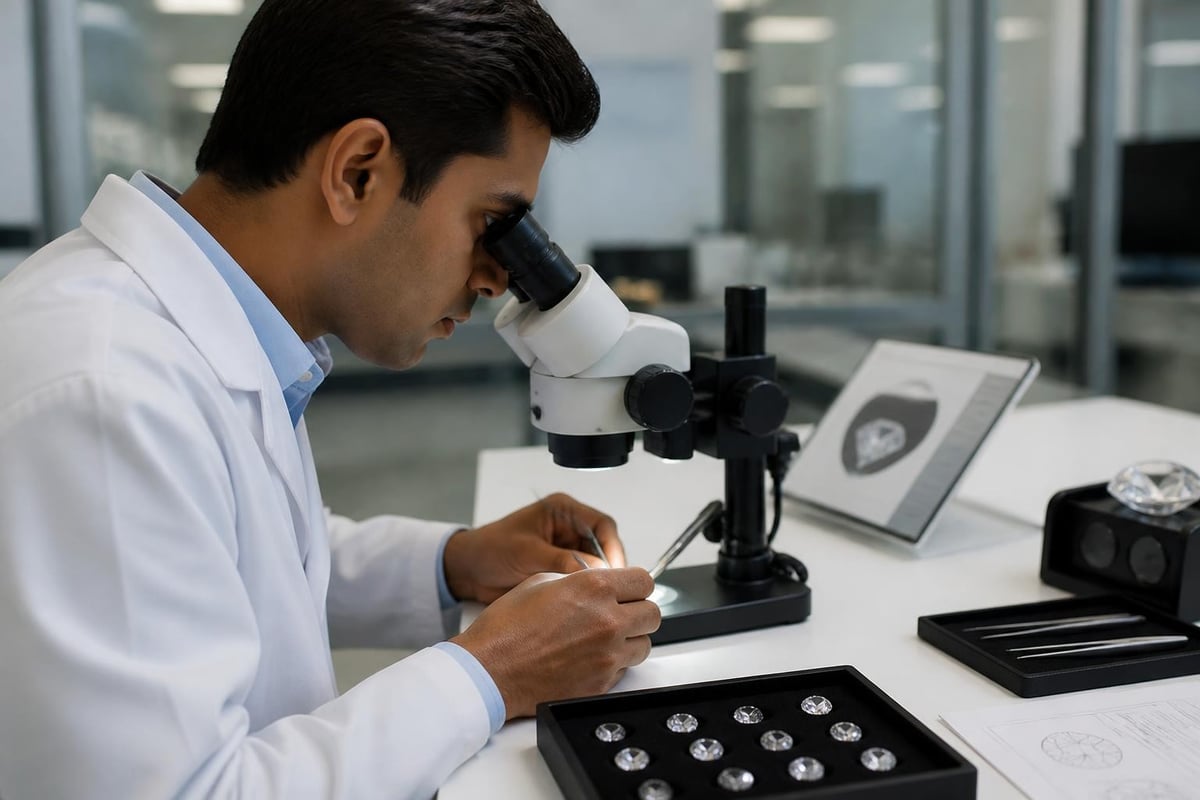
Advanced gemological equipment detects growth patterns distinguishing natural from laboratory-grown diamonds. Natural diamonds form over billions of years under extreme pressure and temperature, developing characteristic inclusion patterns and growth structures. Laboratory-grown stones, produced in weeks through Chemical Vapor Deposition (CVD) or High Pressure High Temperature (HPHT) methods, exhibit different strain patterns visible under specialized magnification.
Certification explicitly identifies origin, with laboratory-grown diamonds receiving reports noting "Laboratory Grown" or similar designation. The detailed anatomy and structure of diamonds remains identical regardless of origin, though formation context differs fundamentally.
Value Proposition Comparison
| Characteristic | Natural Diamond Precious | Laboratory-Grown Diamond |
|---|---|---|
| Price Point | Baseline (100%) | 60-80% less |
| Rarity Status | Geologically scarce | Unlimited production potential |
| Resale Value | Established secondary market | Limited resale infrastructure |
| Certification | GIA, AGS standard | IGI, GCAL common |
| Investment Potential | Historical appreciation | Uncertain long-term value |
For ultra-fine jewelry collectors prioritizing geological rarity and investment preservation, natural diamonds maintain advantage. Laboratory-grown alternatives offer accessibility for those emphasizing ethical considerations or maximizing physical size within budget constraints.
Caring for Diamond Precious Jewelry
Proper maintenance preserves diamond beauty and protects mounting integrity. Despite ranking as the hardest natural substance, diamonds require thoughtful care to maintain optimal appearance.
Cleaning and Maintenance Best Practices
Regular cleaning removes oils, lotions, and debris that diminish brilliance:
- Weekly cleaning: Soak in warm water with mild dish soap, gently brush with soft toothbrush, rinse thoroughly, pat dry with lint-free cloth
- Professional cleaning: Annual ultrasonic cleaning and inspection by qualified jeweler
- Prong inspection: Semi-annual examination of prong security prevents stone loss
- Separate storage: Individual compartments prevent diamonds from scratching other jewelry
Activities requiring removal include:
- Gardening and manual labor
- Swimming (chlorine affects certain metal settings)
- Applying cosmetics and hairspray
- Vigorous exercise
When exploring jewelry sets, ensure complementary pieces receive coordinated care to maintain uniform appearance across the collection.
Market Trends Influencing Diamond Precious Values
The diamond market responds to economic conditions, consumer preferences, and supply dynamics. Understanding these trends informs acquisition timing and selection strategy.
Current Market Dynamics (2026)
Recent years have witnessed shifts in diamond demand patterns. Millennial and Generation Z buyers demonstrate increased interest in sustainability and ethical sourcing, influencing purchasing decisions. Traceability programs and certified conflict-free sourcing gain importance alongside traditional quality metrics.
Fancy shape diamonds experience growing popularity relative to round brilliants, with oval, pear, and emerald cuts gaining market share. This trend creates value opportunities as fancy shapes typically price below comparable round diamonds while offering distinctive aesthetics.
Larger stones (2+ carats) maintain strong demand from collectors and investors, while smaller diamonds (under 0.50 carats) face pricing pressure from laboratory-grown competition. The middle market (0.75-1.50 carats) demonstrates stability, balancing accessibility with meaningful size.
Geographic Market Variations
Asian markets, particularly China and India, influence global diamond demand significantly. Cultural preferences in these regions favor larger carat weights and warmer color grades (J-M range), creating pricing variations across markets. Western markets traditionally emphasize colorless grades and optimal cut quality.
Collectors working with curated fine jewelry specialists benefit from expertise navigating these market nuances to identify exceptional value opportunities aligned with personal preferences and investment objectives.
Understanding what makes a diamond precious extends beyond simple beauty to encompass measurable quality characteristics, geological rarity, and market dynamics that determine lasting value. By mastering the 4Cs framework, recognizing certification importance, and appreciating factors influencing rarity and investment potential, collectors make informed decisions that bring both aesthetic satisfaction and financial prudence. Whether seeking statement pieces, building comprehensive collections, or acquiring investment-grade stones, La Maison Val D'or offers expertly curated selections of diamond precious jewelry backed by quality certification and knowledgeable guidance tailored to discerning connoisseurs of ultra-fine jewelry.